![[2026 Egypt History Tours] Nile Cruise Luxor Aswan: 3-Night Journey Through Pharaonic Time (Valley of Kings & Philae Temple)](https://boddatours.me/images/hq/westbank-hq.jpg)
Nile Cruise Luxor Aswan: The River That Remembers Everything
The Nile does not flow. It remembers. Every felucca sail that catches the morning breeze, every call to prayer that drifts across the water at dawn, every child waving from a mud-brick bank — they all become part of the current. I've stood on the deck of a dahabiya at 5 AM watching the sun peel gold off the west bank cliffs, and I've felt the weight of five thousand years press gently against my shoulders. This is not a vacation. This is a homecoming to a story you already carry in your bones.
A Nile Cruise Luxor Aswan journey spans 220 kilometers of the world's most storied river. Three nights. Four days. You board in Luxor — ancient Thebes, the city of a hundred gates — and disembark in Aswan, the gateway to Nubia and Africa. Between them lies an open-air museum that no building can contain: Karnak's forest of columns, the Valley of the Kings' hidden tombs, Edfu's perfectly preserved falcon temple, Kom Ombo's dual dedication to Sobek and Horus, and Philae rising like a mirage from island waters. Each site is a chapter. Together they form the epic.
I'm Bodda. Born in Cairo, raised on stories of the pharaohs whispered by my grandfather while we drank mint tea on our balcony overlooking the Nile. I run Bodda Tours, a private tour company based in Cairo serving travelers who want Egypt without the filter — no shared buses, no rushed schedules, no tuktuk scams in Siwa, no middlemen marking up your experience. Just you, a Korean-speaking guide who knows every stone's story, and a private air-conditioned vehicle waiting wherever you land.
Why a Nile Cruise Luxor Aswan Journey Changes How You See History
Most visitors see Luxor and Aswan as separate day trips — fly in, rush the highlights, fly out. They photograph the stones but miss the silence between them. A Nile Cruise Luxor Aswan experience reverses this. The river sets the pace. You wake to the same horizon Hatshepsut's architects studied. You sleep to the same lapping water that soothed Ramses II after Kadesh. The monuments stop being attractions and start being neighbors.
The cruise itself becomes a moving sanctuary. Modern vessels range from 5-star floating hotels with pools and spas to traditional dahabiyas — two-masted sailing boats that move only by wind and current, the way Cleopatra traveled when she met Caesar. Either way, your cabin window frames a living scroll: farmers guiding water buffalo through emerald fields, herons stalking the shallows, minarets and bell towers sharing skylines, the desert's golden edge never more than a kilometer from the green ribbon of life.
The Three-Night Rhythm: What Each Day Holds
Night 1 — Luxor East Bank: Board after lunch. Afternoon at Karnak Temple — the largest religious complex ever built, constructed over 2,000 years from the Middle Kingdom through the Ptolemaic era. The Great Hypostyle Hall's 134 columns still bear traces of original paint. Evening sound and light show optional, or simply walk the illuminated avenue of sphinxes connecting Karnak to Luxor Temple.
Night 2 — Luxor West Bank & Sail to Edfu: Pre-dawn departure for the Valley of the Kings. Sixty-three royal tombs cut into limestone cliffs, including Tutankhamun's (KV62), discovered intact by Howard Carter in 1922. Nearby: Hatshepsut's terraced mortuary temple at Deir el-Bahri, the Colossi of Memnon singing at sunrise. Return for lunch as the boat casts off, passing Esna Lock — a modern engineering marvel where vessels rise 10 meters through twin chambers.
Night 3 — Edfu, Kom Ombo, Arrive Aswan: Morning horse carriage to Edfu Temple, dedicated to Horus the Falcon. Built between 237-57 BCE, it's the best-preserved Ptolemaic temple in Egypt — roof intact, reliefs crisp, the sacred barque shrine still in its sanctuary. Sail onward to Kom Ombo, unique dual temple honoring Sobek the crocodile god and Horus the Elder. Crocodile mummies displayed in the adjacent museum. Sunset arrival in Aswan.
Night 4 — Aswan & Disembark: Philae Temple on Agilkia Island, rescued stone by stone from rising waters after the High Dam's construction. The Unfinished Obelisk in its ancient quarry — 42 meters long, abandoned when a crack appeared. Optional Abu Simbel excursion (3 hours each way by road, 45 minutes by flight). Disembark by noon.
Luxor: The World's Greatest Open-Air Museum
Ancient Egyptians called it Waset. Greeks named it Thebes. Homer sang of its hundred gates and limitless wealth. For 1,500 years — from the 11th Dynasty (c. 2100 BCE) through the New Kingdom's twilight — this was Egypt's spiritual and political heart. The East Bank housed the living: temples, palaces, markets. The West Bank belonged to the dead: tombs, mortuary temples, the Valley of the Kings and Queens.
Karnak Temple: Two Thousand Years in Stone
Karnak is not a temple. It is a city of temples. The Precinct of Amun-Ra alone covers 61 acres — large enough to hold ten cathedrals. Construction began under Senusret I (Middle Kingdom, c. 1971-1926 BCE) and continued through the Ptolemaic period. Every pharaoh added, erased, rewrote. Seti I and Ramses II raised the Great Hypostyle Hall's 134 papyrus columns, the tallest reaching 21 meters. Hatshepsut erected twin obelisks; one still stands, 29 meters of single rose granite. Thutmose III built the Festival Hall with its botanical garden reliefs — plants and animals he brought from Syrian campaigns.
The sacred lake, where priests purified themselves at midnight, reflects the sky exactly as it did three millennia ago. The avenue of ram-headed sphinxes — originally 3 kilometers long, connecting Karnak to Luxor Temple — has been partially restored. Walking it at dusk, you understand why the Opet Festival drew the entire population: Amun's barque traveled this path annually, renewing the king's divine mandate.
Luxor Temple: The Southern Sanctuary
Smaller than Karnak but more intimate. Built primarily by Amenhotep III (c. 1390-1352 BCE) and Ramses II, it served a different purpose: not a cult center but the stage for the king's ka (spirit) renewal. The colonnade of Amenhotep III — seven pairs of open papyrus columns — leads to a sun court where Alexander the Great later added a chapel. Roman legionaries garrisoned here; their fortress walls incorporated temple stones. A 13th-century mosque, Abu Haggag, sits atop the ancient courtyard — Islam, Christianity, and Pharaonic faith sharing one sacred footprint.
Valley of the Kings: Where Pharaohs Slept
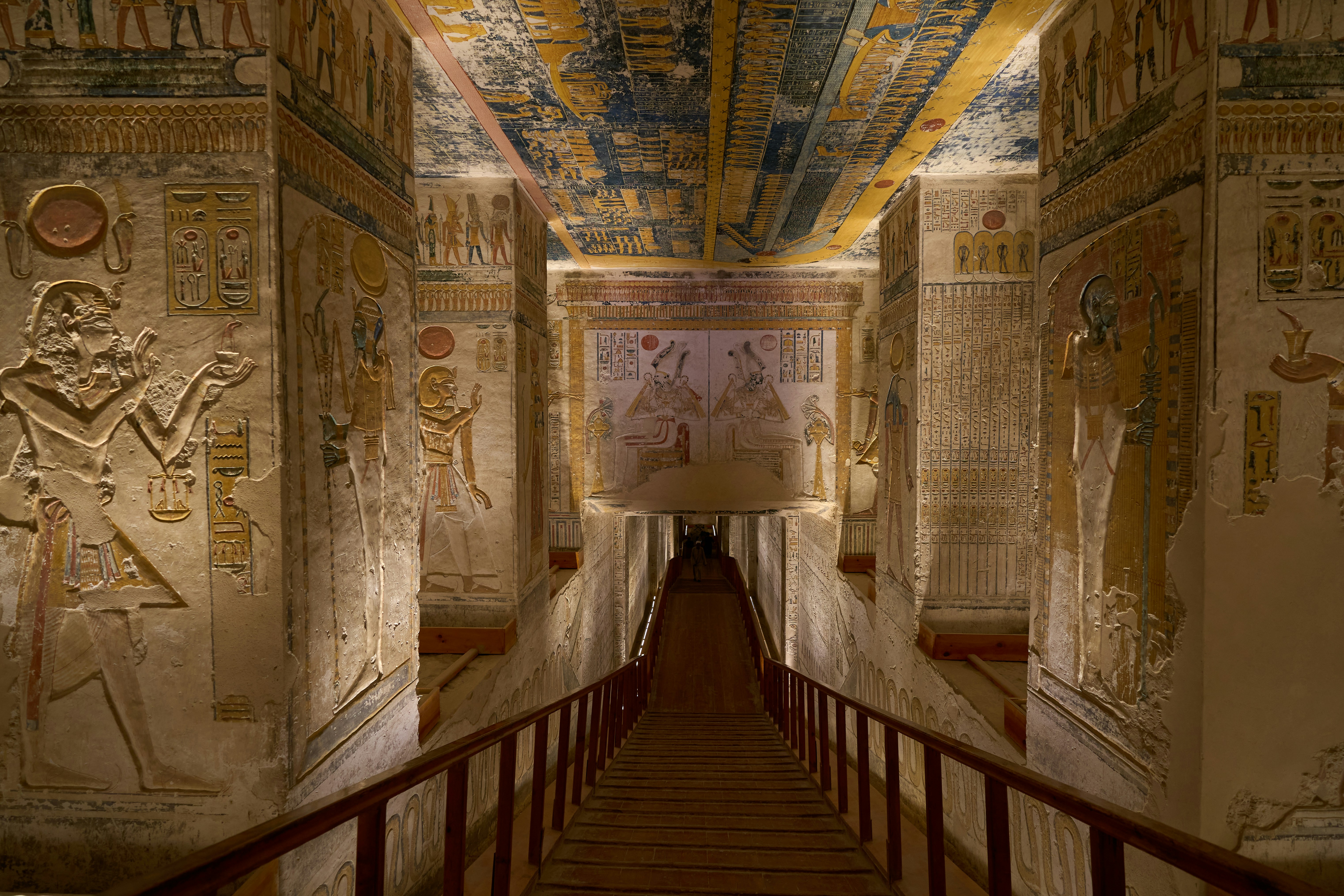
Behind the Theban peaks, a dry wadi hides 63 numbered tombs. Thutmose I chose this isolated valley c. 1500 BCE, breaking the pyramid tradition. His architect Ineni boasted: "I supervised the excavation of the tomb of His Majesty... alone, no one seeing, no one hearing." The secrecy failed. All but two tombs were robbed in antiquity. Tutankhamun's (KV62) survived because Ramses VI's workmen built their tomb entrance directly above it, burying the boy king's sealed doorway under debris for 3,300 years.
Each tomb follows a descending corridor plan: entrance, well chamber, pillared hall, burial chamber. Walls glow with the Book of the Dead, Amduat, Book of Gates — guides for the sun god's nightly journey through the underworld, which the deceased pharaoh joins. Colors remain startling: lapis lazuli blue, malachite green, red ochre, yellow ochre, all mixed with egg-white binder. KV17 (Seti I) stretches 137 meters with astronomical ceiling. KV9 (Ramses V/VI) shows the Book of the Earth. KV62 (Tutankhamun) is smallest but most famous — its treasures now in Cairo's Grand Egyptian Museum.
Hatshepsut's Temple: A Woman Who Became King
Deir el-Bahri's terraced masterpiece rises against golden cliffs like a modernist vision — but it was built c. 1470 BCE. Hatshepsut, daughter of Thutmose I, wife of Thutmose II, regent for infant Thutmose III, declared herself pharaoh. Her architect Senenmut designed three colonnaded terraces connected by ramps, aligned to the winter solstice sunrise. The Punt colonnade depicts her famous expedition to the Land of Punt (likely modern Eritrea/Somalia) — incense trees, myrrh, ebony, leopard skins, live baboons. After her death, Thutmose III erased her cartouches. The damage is still visible: chiseled-out names, smashed statues. Yet the temple endures, a testament to a woman who ruled as king for 22 years.
Sailing the Nile: The Landscape Between Monuments
The river between Luxor and Aswan is narrow — 1-2 kilometers wide — flanked by cultivated floodplain and then sheer desert cliffs. This compression creates intimacy. You see everything: the shaduf (counterweight water lift) unchanged since the Old Kingdom, the sakia (water wheel) introduced in Ptolemaic times, diesel pumps now replacing both. Date palms, mango orchards, sugar cane, alfalfa. Villages of baked mud brick with domed roofs and blue-painted doors against the evil eye.
Esna Lock is the only modern interruption. Built 1994-1996, its twin chambers lift vessels 10 meters past the Esna barrage. The wait — sometimes two hours — becomes a floating market: vendors in small boats toss up galabeyas, scarves, spices, plastic toys. Children dive for coins. It's chaos and charm in equal measure, a reminder that the Nile still feeds millions.
Edfu: The Falcon's Perfect Temple
Edfu (ancient Djeba, Greek Apollinopolis Magna) sits midway between Luxor and Aswan. Its temple, dedicated to Horus of Behdet, took 180 years to complete (237-57 BCE). The Ptolemies — Greek pharaohs — built it on New Kingdom foundations, following pharaonic architectural canon so precisely that Edfu reads like a textbook of Egyptian temple design.
The pylon towers 36 meters, decorated with Ptolemy XII smiting enemies before Horus. Beyond: open court, hypostyle hall, vestibule, sanctuary. The sanctuary still houses the black granite naos (shrine) of Nectanebo II (30th Dynasty, c. 360 BCE) — older than the temple itself. Reliefs depict the "Feast of the Beautiful Meeting": Hathor of Dendera sailing upstream to unite with Horus of Edfu, a 15-day festival of fertility and kingship renewal. The roof — accessible via stairwell — offers the best Nile view between Luxor and Aswan.
Crucially, Edfu's building inscriptions — the longest hieroglyphic texts in Egypt — record every construction phase, ritual, and donation. They are the Rosetta Stone of temple building. French archaeologist Auguste Mariette cleared the sand-buried temple in the 1860s; it had served as a village dump and stable, preserving the reliefs beneath centuries of debris.
Kom Ombo: Where Crocodile and Falcon Share a Sanctuary
Kom Ombo (ancient Nubt, "City of Gold") stands on a promontory overlooking a Nile bend. Its temple is unique: perfectly symmetrical, duplicated along a central axis. Left side honors Haroeris (Horus the Elder), sky god. Right side honors Sobek, crocodile god of Nile fertility and military prowess. Two entrances, two courts, two hypostyle halls, two sanctuaries. Even the priesthood was dual.
Built mainly under Ptolemy VI Philometor (180-145 BCE) with Roman additions, Kom Ombo reflects the region's dual nature: the fertile floodplain (Haroeris) and the dangerous marshland (Sobek). Crocodiles once basked on the riverbank here; mummified specimens fill the adjacent Crocodile Museum. A nilometer — staircase descending to the river with marked cubits — measured the annual flood, determining tax rates. Medical reliefs on the rear wall show surgical instruments: scalpels, forceps, probes, specula — the earliest known depictions of surgical tools.
Aswan: The Gateway to Nubia
Ancient Swenett ("Trade"), Greek Syene, Arabic Aswan. The Nile's first cataract — granite boulders churning the river — marked Egypt's southern frontier for millennia. Here the desert closes in; the floodplain narrows to a thread. Aswan was the gateway to Nubia, source of gold, ivory, ebony, incense, and warriors. The 4th Dynasty pharaoh Sneferu quarried granite here for his pyramids. The Unfinished Obelisk — 42 meters, 1,200 tons — still lies in the northern quarry, abandoned when a flaw cracked the stone. It would have been the largest monolith ever erected.
Philae Temple: The Pearl Rescued from Water
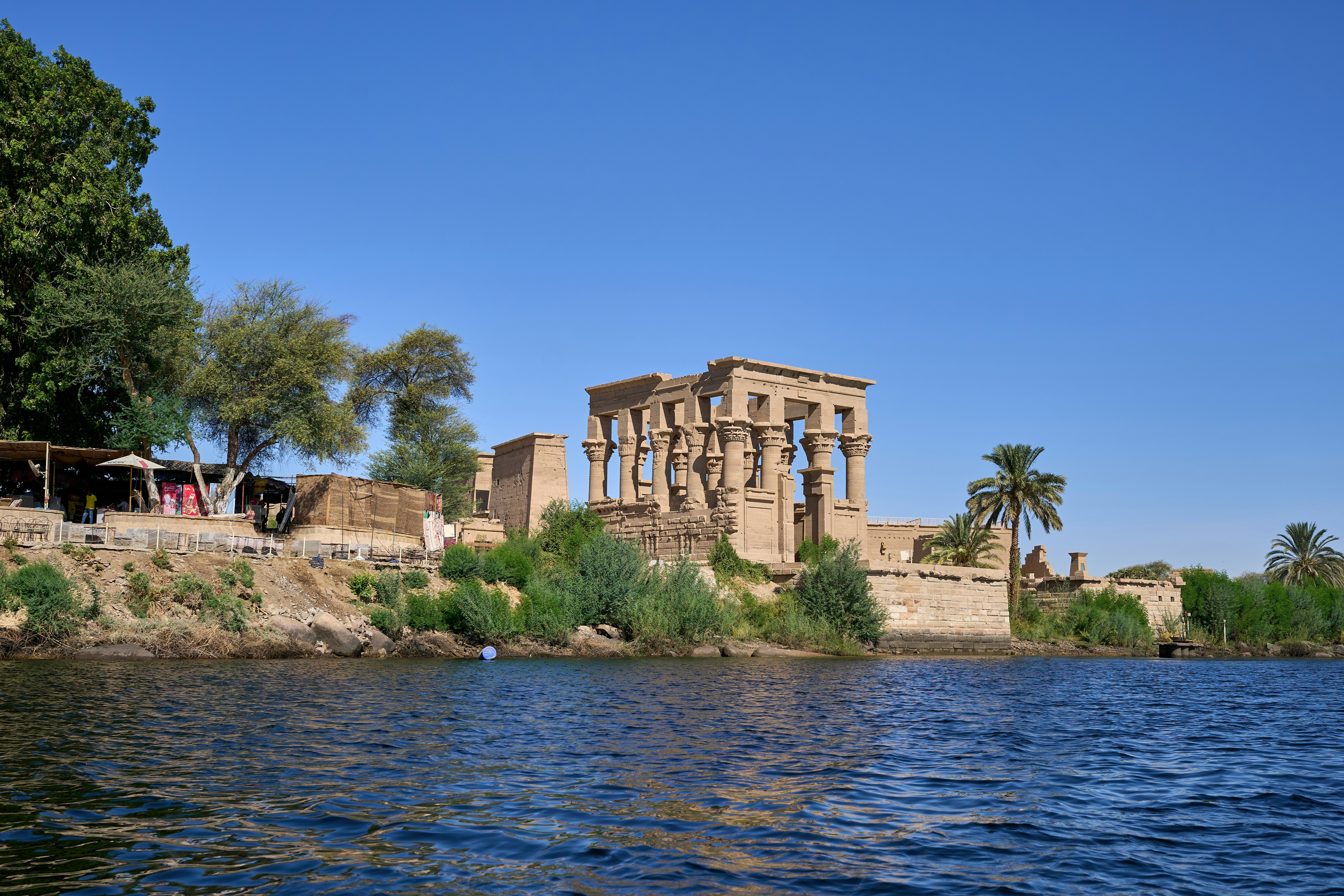
Philae (ancient Pilak, "Island of the End") was the last bastion of ancient Egyptian religion. Isis worship persisted here until 550 CE — centuries after Christianity became imperial. The temple complex, built mainly by Ptolemy II Philadelphus (285-246 BCE) and expanded by Romans, occupied the sacred island where Osiris's body parts were gathered by Isis.
The first Aswan Dam (1902) submerged Philae for half the year. The High Dam (1970) would have drowned it forever. UNESCO's 1972-1980 rescue operation dismantled 40,000 blocks, moved them to higher Agilkia Island, and reassembled the complex — a 10-year, $40 million feat of archaeology and engineering. Today Philae rises from turquoise water like a lotus: the Kiosk of Trajan ("Pharaoh's Bed"), the Temple of Isis with its birth house (mammisi), the Gate of Hadrian. Sound and light shows narrate the Isis-Osiris myth in multiple languages.
Abu Simbel: Ramses II's Eternal Sunrise
280 kilometers south of Aswan, near the Sudanese border, two temples carved into a mountainside face the rising sun. Ramses II built them c. 1264 BCE: the Great Temple for himself and Amun-Ra, Ra-Horakhty, Ptah; the Small Temple for his beloved queen Nefertari and Hathor. Four colossal seated Ramses statues (20 meters tall) guard the Great Temple entrance. Twice yearly — February 22 and October 22 — sunlight penetrates 65 meters to illuminate the inner sanctuary statues (Ptah, god of darkness, remains shadowed).
Like Philae, Abu Simbel faced drowning by Lake Nasser. The 1964-1968 UNESCO rescue cut the temples into 1,050 blocks (up to 30 tons each), lifted them 65 meters up the cliff, and reassembled them under an artificial mountain. The precision is staggering: the solar alignment still works. A 45-minute flight or 3-hour drive each way from Aswan makes this a long day — but standing before those colossi at dawn, you understand why Ramses wanted eternity to witness his power.
Best Time for a Nile Cruise Luxor Aswan Journey
The Nile flows year-round, but your comfort varies dramatically.
October-April (Peak Season): Daytime 25-30°C, nights 10-15°C. Perfect for tomb exploration and deck lounging. December-January sees highest crowds and prices. Book 6+ months ahead for best cabins.
May-September (Low Season): Daytime 38-45°C, nights 25-30°C. Fewer tourists, lower occupancy. Early morning and late afternoon excursions only. Midday heat confines you to air-conditioned spaces. Ramadan (shifts annually) affects opening hours and alcohol availability but adds cultural richness.
Shoulder Sweet Spots: Late October, March-April, late September. Comfortable temperatures, moderate crowds, good availability.
How to Reach Your Nile Cruise Luxor Aswan Departure
From Cairo to Luxor (embarkation point):
- Flight: 1 hour 15 minutes, multiple daily flights. EgyptAir, Nile Air, Air Cairo. Fastest, most reliable.
- Overnight Train: 9-10 hours (Watania sleeping cars). Departs Cairo 8 PM, arrives Luxor 6 AM. Romantic, scenic, saves a hotel night.
- Private Vehicle: 7-8 hours via desert highway. Door-to-door, flexible stops (Minya's Beni Hassan tombs, Amarna). Bodda Tours provides this with a professional driver and Korean-speaking guide.
From Aswan (disembarkation) onward:
- Flights to Cairo (1 hr 20 min), Abu Simbel (45 min), or international connections.
- Overnight train to Cairo.
- Private vehicle to Abu Simbel (3 hours) or back to Cairo (10-11 hours with stops).
- Extension to Hurghada/Red Sea (4 hours by road).
What to Expect Onboard: The Rhythm of River Life
Modern Nile cruise vessels (5-star category) typically offer: 50-150 cabins with Nile-view windows (not balconies — safety regulations), restaurant serving Egyptian and international buffets, sun deck with pool and bar, lounge with evening entertainment (Nubian music, belly dance, galabeya party), spa, gym, gift shop, clinic. Dahabiyas (4-12 cabins) trade amenities for intimacy: no engine noise, sail-only movement, access to smaller islands, chef-prepared meals, stargazing from mattress-topped deck.
Excursions are included in most packages: guided visits with Egyptologist, entrance tickets, transport (air-conditioned minibus or horse carriage for Edfu). Tipping is customary — guides, drivers, boat crew — but never required. Bodda Tours arranges private guides and vehicles for our guests even on shared cruises, so your pace and interests lead.
What to Wear: Respect, Comfort, Practicality
Temples and Tombs: Shoulders and knees covered for both genders. Loose linen or cotton trousers/long skirts, short-sleeve shirts (not tank tops). Light scarf handy for sudden modesty requirements. Comfortable closed shoes — tomb floors are uneven, dusty, sometimes slippery.
Onboard Daytime: Resort casual. Swimwear only at pool. Sun hat, sunglasses, high-SPF sunscreen essential — UV reflects off water and sand.
Evenings: Smart casual for dinner. Light jacket October-March (nights cool on deck). One galabeya party night — buy a colorful cotton galabeya in Luxor's market (great souvenir).
Abu Simbel Add-on: Very early departure (4 AM). Layer for pre-dawn chill, shed layers as desert heats rapidly.
Is a Nile Cruise Luxor Aswan Journey Worth It?
Short answer: Yes. It is the single most immersive way to experience Pharaonic Egypt.
Long answer: If you want to understand Egypt — not just see it — the Nile is the teacher. Flying between Luxor and Aswan gives you monuments without context. Driving gives you context without the river's perspective. Only sailing connects them as the ancients did. You witness the geographic logic: temples aligned to the river, quarries beside the water that floated their stones, cemeteries on the west where the sun dies. You meet the living Nile — farmers, fishermen, children, Nubian villagers — not just the dead one in museums.
The three-night format is the minimum. Four nights (adding a day at Dendera or Abydos from Luxor, or a second Aswan day) deepens the experience. Seven-night round-trip cruises (Luxor-Luxor) exist but repeat sites. One-way Luxor-Aswan or Aswan-Luxor is the classic arc.
Nearby Wonders: Extend Your Egypt Story
The Nile Cruise Luxor Aswan journey anchors a larger Egypt adventure. Bodda Tours designs seamless extensions:
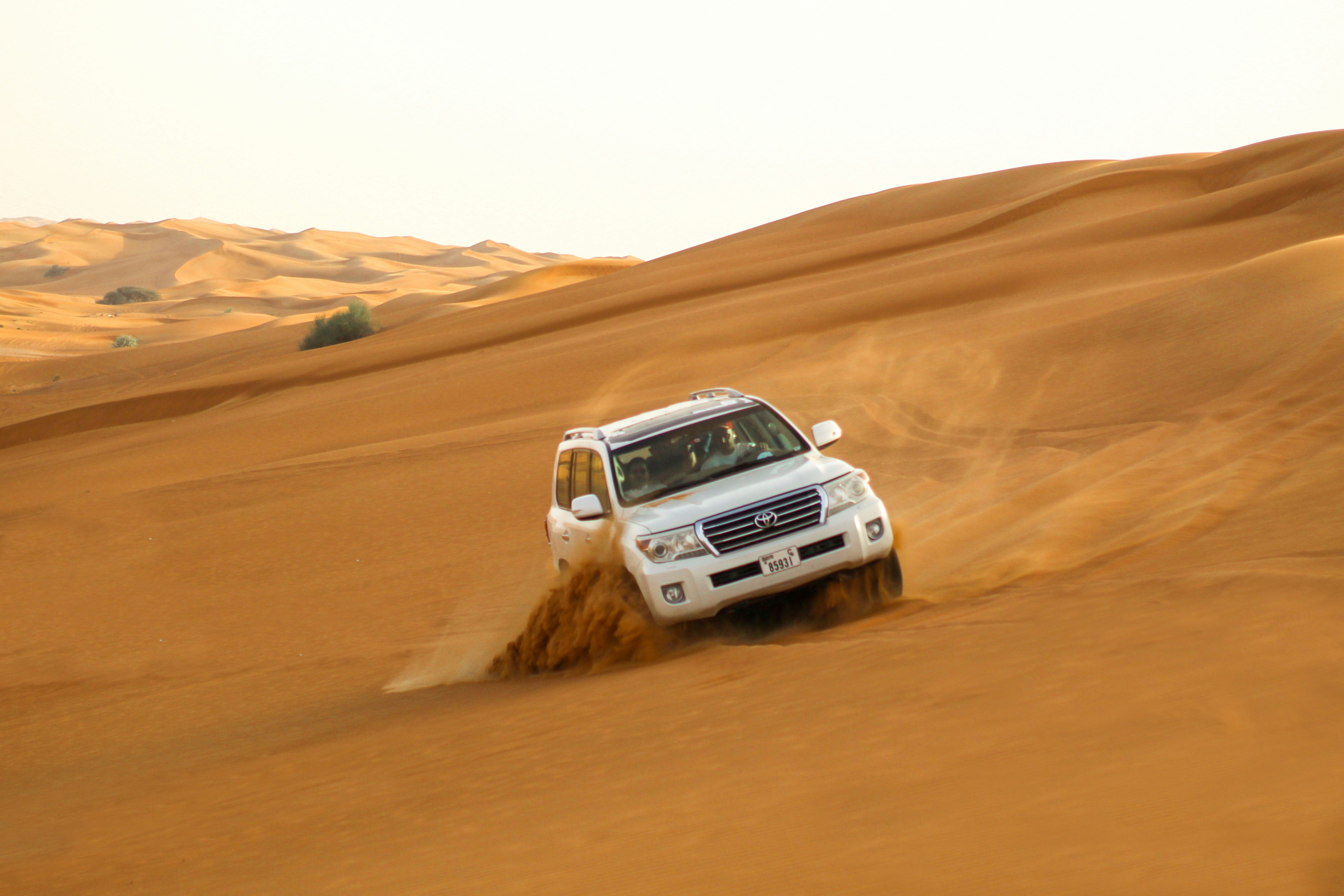
Siwa Oasis: 5th-century BCE Oracle of Amun where Alexander the Great was declared son of Zeus. Salt lakes, Shali Fortress, Cleopatra Spring, desert safari in real 4x4 jeeps (no tuktuk scams). 2-3 day private tours from Cairo.
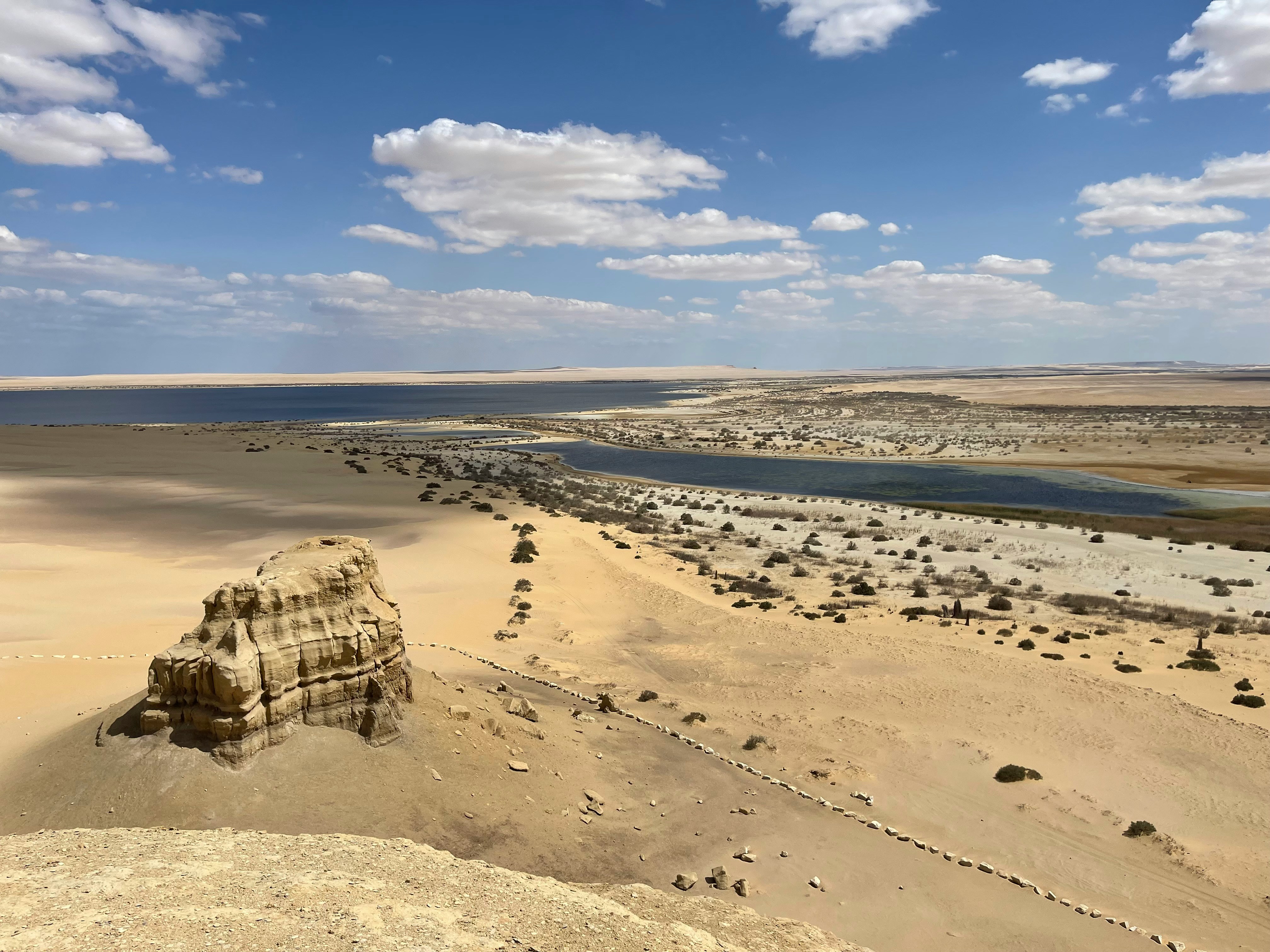
Fayoum Oasis: Valley of the Whales (Wadi Al-Hitan, UNESCO), Magic Lake, Wadi El-Rayan waterfalls, Tunis pottery village. Day trip from Cairo.
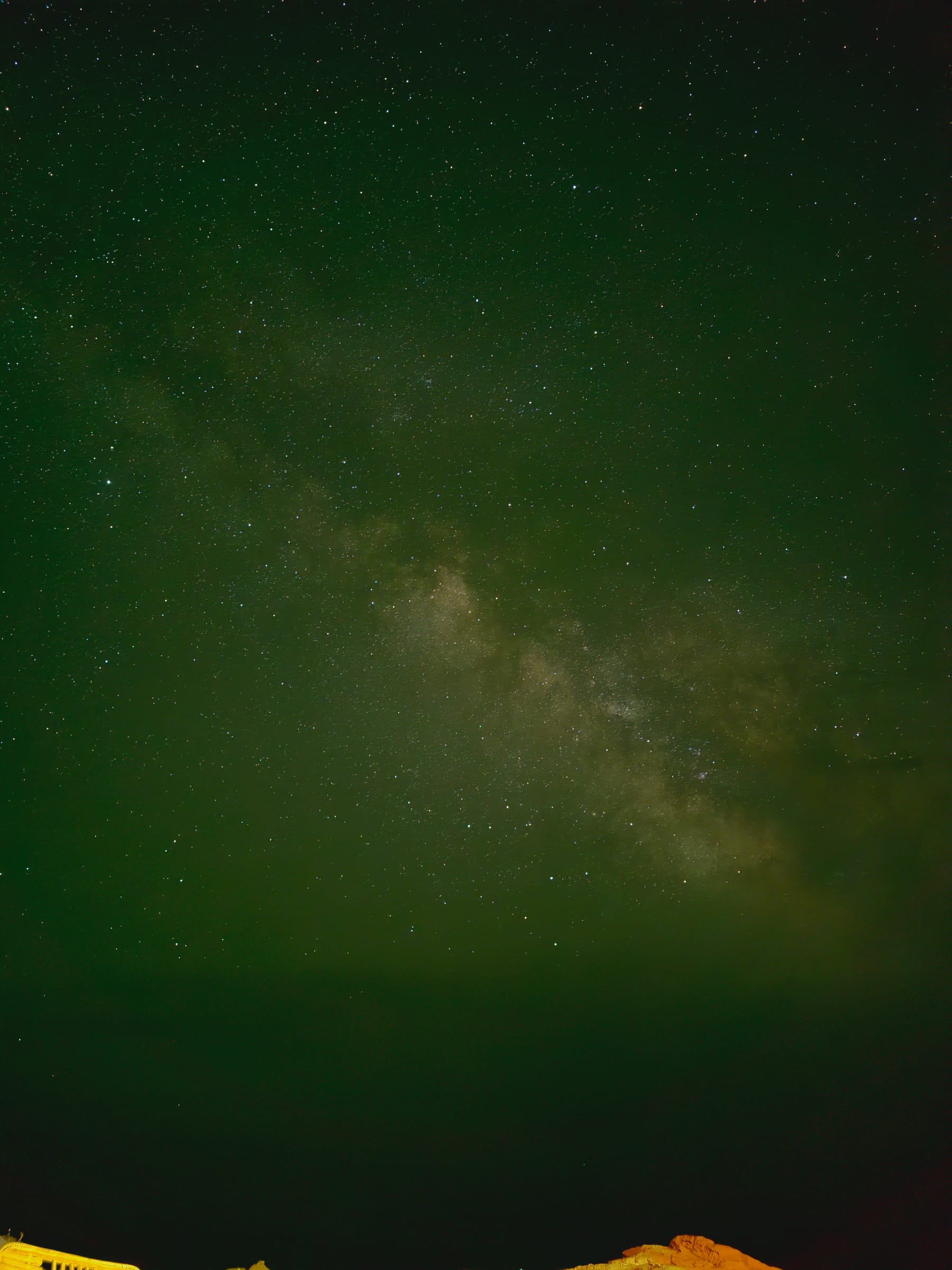
Black & White Desert: Bahariya Oasis base, surreal chalk formations, Bedouin camp under stars. Desert safari tours with professional drivers.
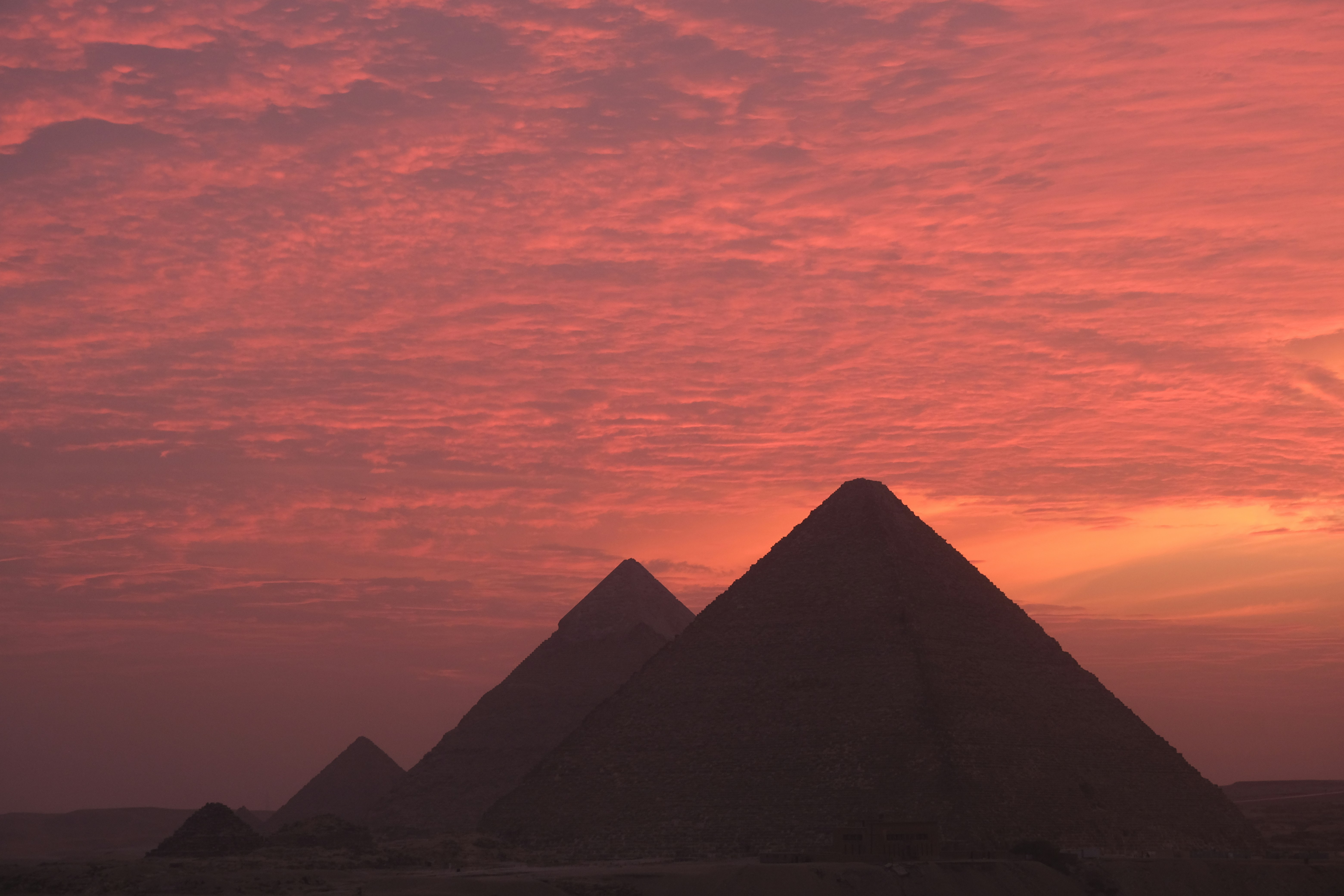
Cairo & Giza: Pyramids, Sphinx, Grand Egyptian Museum, Khan el-Khalili, Islamic Cairo, Saqqara Step Pyramid, Dahshur's Bent and Red Pyramids.
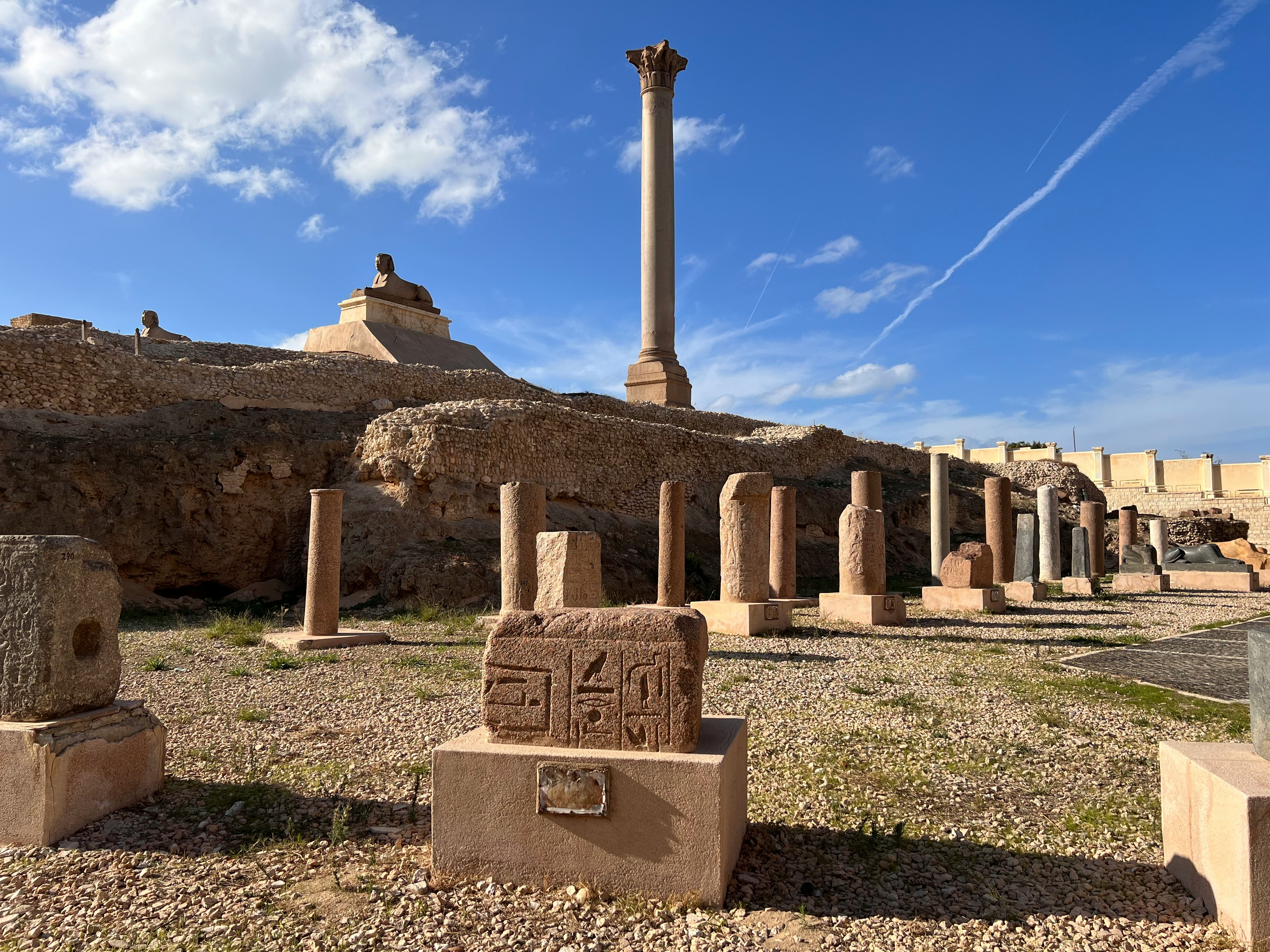
Alexandria: Bibliotheca Alexandrina, Qaitbay Citadel, Catacombs, Greco-Roman legacy.
Red Sea: Hurghada, Sharm El Sheikh, Dahab — diving, snorkeling, Bedouin culture.
Why Choose Bodda Tours for Your Nile Cruise Luxor Aswan Experience
You have options. Big platforms, hotel desks, street agents. Here is why travelers choose us:
- Korean-speaking guides: Zero language anxiety. Every nuance of history, every market negotiation, every menu question — handled in your language.
- 100% private tours: No shared buses. No cramped seats with strangers. No fixed schedules. Your vehicle, your guide, your pace.
- Comfort-focused transport: Modern air-conditioned vehicles, door-to-door service, airport pickup and hotel drop-off included.
- No scams, no surprises: Verified tours only. Transparent service. No hidden fees. No commission markups.
- No tuktuk fake safaris in Siwa: Some operators sell fake tuktuk "safaris" that are a total scam. Bodda uses only real 4x4 jeeps with professional drivers.
- Direct booking, direct service: Bodda is run by real local Egyptians who actually care — not a middleman, not a reseller. You book directly with the people who run the tours.
- No commission fees, no agent markups: The price you see is the price you pay.
- Fast WhatsApp response (avg under 10 minutes): Real human, not chatbot.
- Custom itineraries: Photography stops, food preferences, shopping time, your pace.
- Real traveler reviews available: Ask us for recent guest reviews and see what others experienced.
- If something goes wrong, we make it right: Compensation guarantee.
Ready to Explore Egypt? Contact Bodda Tours Today
Whether you dream of Siwa's salt lakes, Fayoum's waterfalls, a private pyramid tour, or sailing the Nile between Luxor and Aswan — Bodda Tours is here to make it happen. Reach out anytime between 07:00-22:00 daily.
- WhatsApp: wa.me/201040541153
- KakaoTalk: open.kakao.com/o/smU92Hfi
- Email: info@boddatours.me
- Website: boddatours.me
Sources & References
- UNESCO World Heritage Centre — "Ancient Thebes with its Necropolis" (Luxor) and "Nubian Monuments from Abu Simbel to Philae" (Aswan/Abu Simbel) official documentation
- Egyptian Ministry of Tourism and Antiquities — Official site guides for Karnak Temple, Luxor Temple, Valley of the Kings, Edfu Temple, Kom Ombo Temple, Philae Temple, Abu Simbel Temples
- Wikipedia — "Karnak," "Luxor Temple," "Valley of the Kings," "Hatshepsut's Temple," "Edfu Temple," "Kom Ombo Temple," "Philae," "Abu Simbel Temples," "Nile River" entries for historical timelines and architectural details
![[2026 Egypt Tours] Siwa Oasis Honest Review (Desert Safari & History)](https://boddatours.me/images/hq/siwa-salt-lake-hq.jpg)
![[2026 Egypt Tours] Luxor & Aswan: Unlocking Upper Egypt's Secrets](https://boddatours.me/images/hq/luxor-hq.jpg)
![[2026 Egypt Tours] Red Sea Diving Secrets (Ras Mohamed & Blue Hole)](https://boddatours.me/images/fallback-post.png)