![[2026 Egypt History Tours] Tanis Egypt Tour: Walking a Thousand Years Where Pharaohs Slept and Legends Woke (Religion Focus)](https://boddatours.me/images/fallback-post.png)
The Sand Remembers What Kings Forgot
You stand on ground that has not felt a royal footfall in three thousand years. The wind moves differently here — slower, heavier, as if it knows it carries stories too old for casual ears. Tanis Egypt tour is not a checklist of ruins. It is a conversation with silence. I have brought travelers here at dawn when the light spreads gold across broken columns and they forget to breathe. That is the real tour. Not the stones. The moment the stones make you feel.
Tanis sits in the northeastern Nile Delta, near the modern town of San el-Hagar. Ancient Egyptians called it Djanet. Greeks named it Tanis. The Bible knows it as Zoan. Three names for one city that wore crowns, buried kings, and watched empires rise and fall. When you search for a Tanis Egypt tour, you are not looking for a day trip. You are looking for a place where history did not just happen — it layered, like sediment, like prayer.
I grew up in Cairo. I have driven the desert road to Siwa, traced the whales of Fayoum, stood in the hypostyle hall of Karnak. But Tanis holds a different gravity. Maybe because it was lost for so long. Maybe because what was found here rewrote what we thought we knew about the Third Intermediate Period. Maybe because the Ark of the Covenant legend refuses to leave its shadows. Whatever the reason, when travelers ask me "Is Tanis worth it?" I do not answer with facts. I tell them: come see what the sand kept safe.
Where the Delta Meets the Divine
The Nile Delta is not the Egypt of postcards. No dramatic cliffs. No Valley of Kings carved into limestone. Here the river splits, spreads, softens. Marshes. Reeds. Canals that shift with seasons. Tanis rose on a sandy mound — a gezira — above the floodplain. Strategic. Sacred. Inaccessible enough to protect, connected enough to rule.
During the 21st Dynasty (circa 1069–945 BCE), when Thebes fractured under priestly power and Libyan chieftains pressed from the west, the royal court moved north. Tanis became the northern capital. Not a temporary camp. A deliberate mirror of Thebes. The Temple of Amun here was built to echo Karnak. The royal necropolis was designed to rival the Valley of Kings. The priests of Amun at Tanis carried the same titles, wore the same leopard skins, chanted the same hymns. But they answered to a different pharaoh.
Psusennes I. Amenemope. Osorkon II. Shoshenq I — the biblical Shishak who marched on Jerusalem. Their names are carved on blocks reused from Pi-Ramesses, from Memphis, from Heliopolis. Tanis is a city built from the bones of earlier capitals. Every stone tells two stories: the one it was cut for, and the one it was moved to serve. That is the nature of Egyptian history — not linear, but cyclical. Rebirth through reuse.
The Tanis archaeological site covers roughly 177 hectares. Only a fraction is excavated. The great Temple of Amun dominates the center, its mudbrick enclosure walls still standing in places, its sanctuary aligned to the winter solstice sunrise. North of the temple lies the royal necropolis — six tombs discovered by Pierre Montet in 1939–1940, the only intact royal burials ever found in Egypt outside of Tutankhamun. Let that sink in. Intact. Royal. Untouched by robbers.
The Tombs That Time Forgot to Rob
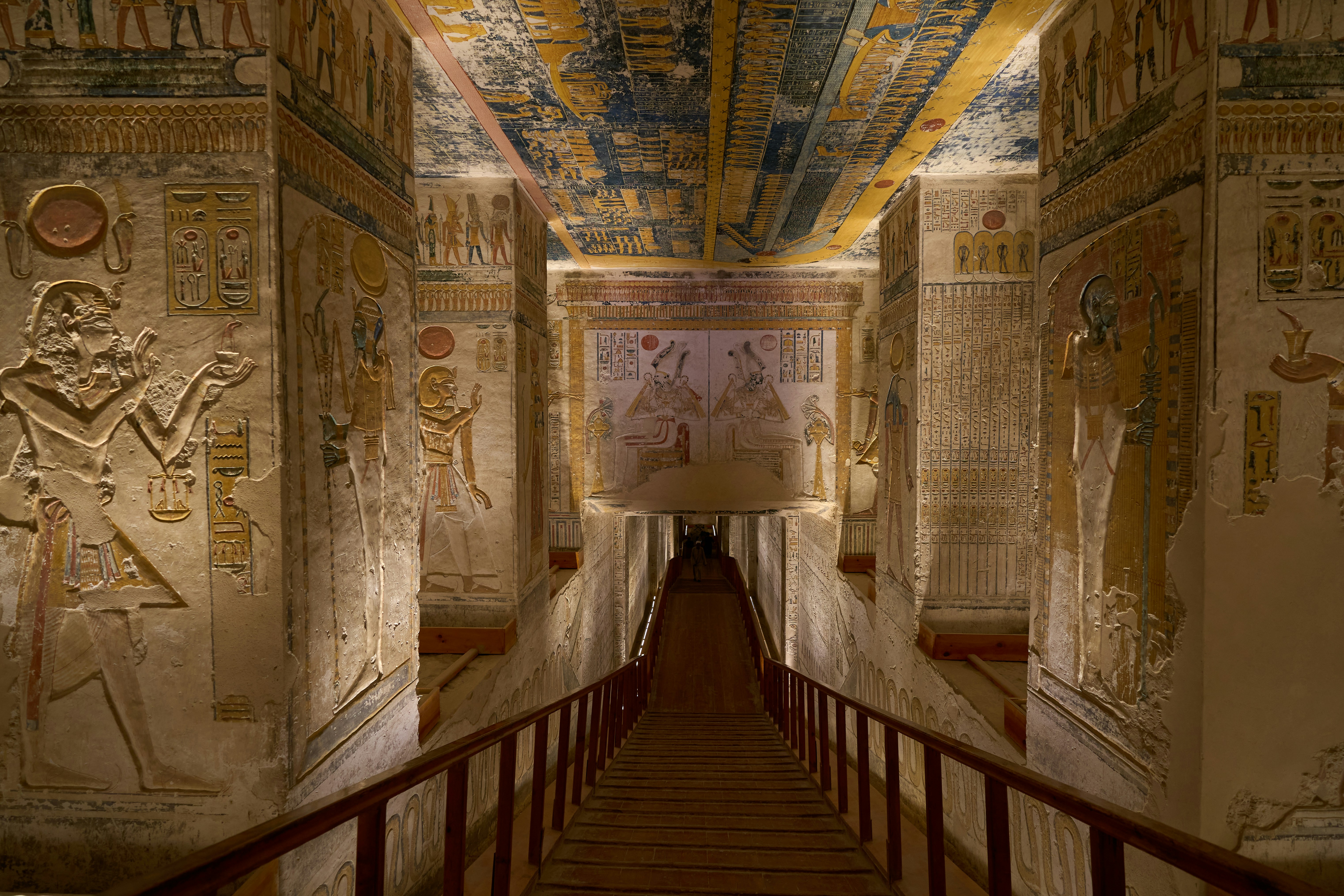
Montet was a French archaeologist with a permit, a team, and a hunch. He dug through meters of silt and debris. What he found changed Egyptology. The tomb of Psusennes I — a silver coffin nested in a pink granite sarcophagus, itself placed inside a reused red granite sarcophagus of Merenptah. The mummy wore a gold mask, pectorals, bracelets, amulets. The canopic jars were solid silver. The funerary equipment included vessels of gold, electrum, lapis lazuli, carnelian. A treasure rivaling Tutankhamun, discovered months before World War II erupted. The world barely noticed.
Beside Psusennes lay his wife Mutnodjmet, their son Ankhefenmut, the general Wendjebauendjed. In adjacent chambers: Amenemope, Osorkon II, Shoshenq III. Each tomb a time capsule of the 21st and 22nd Dynasties — a period once dismissed as chaotic decline, now revealed as sophisticated, wealthy, artistically vibrant. The silver coffin of Psusennes is unique. Silver was rarer than gold in Egypt, associated with the bones of gods, the flesh of the moon. A pharaoh choosing silver for his eternal vessel was making a theological statement: I belong to the lunar cycle, to the night sky, to the goddess Nut who swallows the sun each evening and births it each dawn.
When I guide travelers through the site, we stand above the tomb shafts. The superstructures are gone — mudbrick does not survive Delta winters. But the descent stairs remain. The sealing blocks. The graffiti left by ancient workmen: "Year 12, third month of Akhet, day 5 — the sealing of the king." You can read their handwriting. Three thousand years and the ink holds. That is the intimacy of Tanis. Not grandeur at a distance. A fingerprint in plaster.
The Temple Where Amun Listened
The Great Temple of Amun at Tanis was not a copy of Karnak — it was a theological declaration. The 21st Dynasty priests who fled Thebes brought the oracle of Amun with them. The god's statue, his sacred barque, his mystery plays. At Tanis, Amun of the North (Amun-Djanet) ruled. His festival calendar mirrored Thebes. His processions crossed the sacred lake. His oracle answered petitions from commoners and kings.
The temple complex evolved over centuries. Psusennes I built the core. Osorkon II added a forecourt with columns carved as bundled papyrus — the heraldic plant of the Delta. Shoshenq III erected a massive pylon gate inscribed with his triumphs. Nectanebo I of the 30th Dynasty, a thousand years later, still added to the sanctuary. The site was alive, continuously worshipped, continuously expanded, from the Third Intermediate Period through the Ptolemaic era. That is a millennium of unbroken cult.
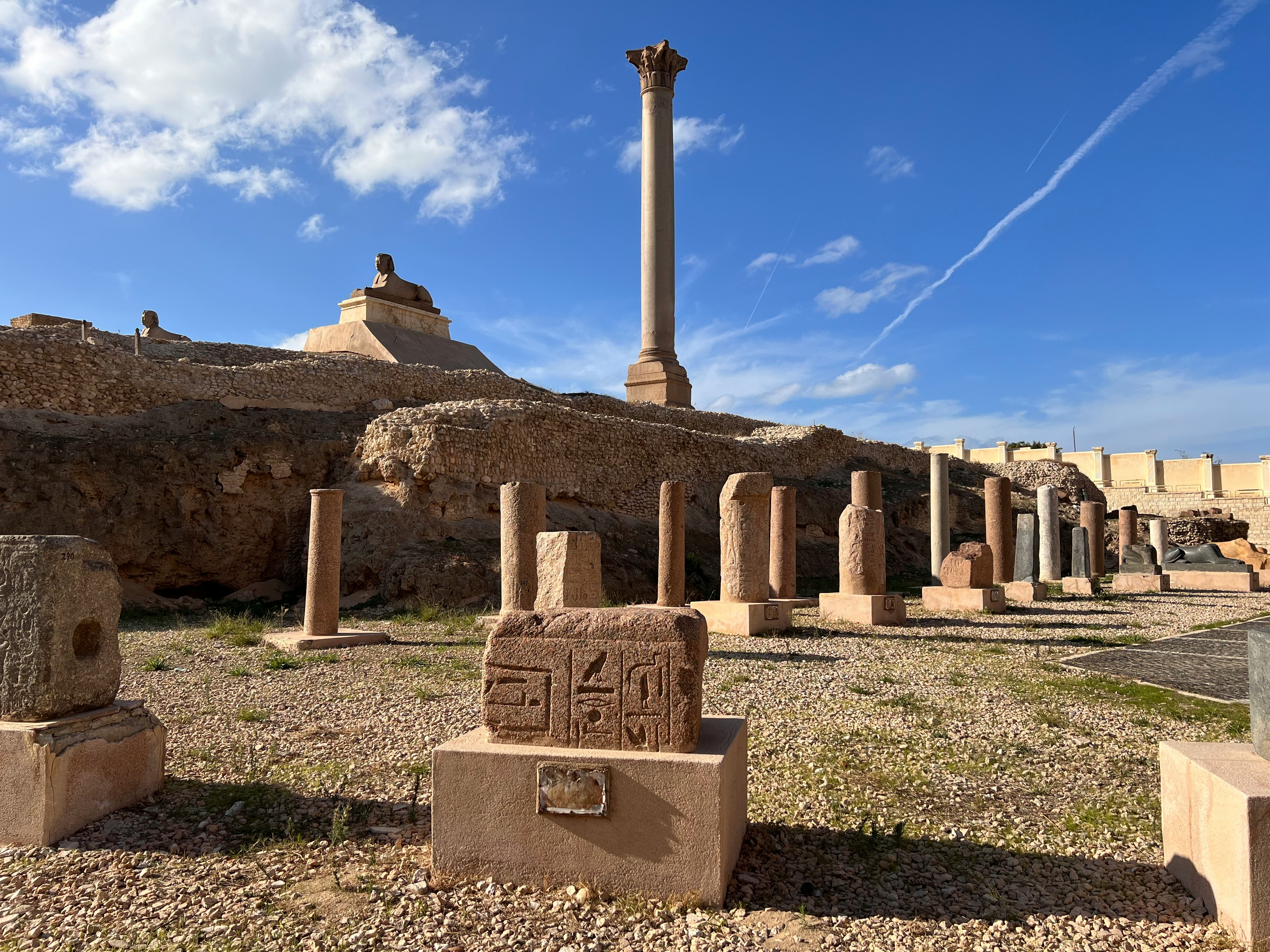
Today you walk among fallen colossi — Ramses II usurped by later kings, their names chiseled over his. A sphinx of Amenemhat III stares toward a horizon it has guarded since the Middle Kingdom. Blocks from Heliopolis bear the name of Ramesses II's daughter Bintanath. The temple is a palimpsest. Every ruler who touched it wanted legitimacy. They got it by aligning themselves with Amun of Tanis, the god who judged kings.
I have seen travelers press their palms to a column base still bearing traces of blue pigment — the color of the primordial waters, of Amun's hidden skin. They do not speak. They listen. The wind moves through the papyrus columns. Somewhere a heron calls. The temple is not dead. It is waiting.
Zoan: The City That Knew Moses
"The princes of Zoan are fools," writes Isaiah (19:11). "The wise counselors of Pharaoh give stupid counsel." The prophet condemns the city's advisors for failing to read God's hand in history. Psalm 78:12, 43 recalls: "In the sight of their fathers he performed wonders in the land of Egypt, in the fields of Zoan." The plagues. The Exodus. The memory of miracles performed in the very streets where Tanis stood.
Scholars debate the identification. Zoan = Tanis = Djanet = San el-Hagar. The equation holds linguistically, geographically, historically. The Exodus narrative places the Israelites in the land of Goshen — the eastern Delta, precisely where Tanis ruled. Pi-Ramesses, built by Ramesses II nearby, is often identified as the store-city Raamses (Exodus 1:11). When the court moved to Tanis after Pi-Ramesses silted up, the memory of Hebrew slavery, of plagues, of a pharaoh who refused to let go — that memory settled into the city's stones.
I am not a theologian. I am a man who drives the desert road and listens to stories. But I have stood in the Temple of Amun at Tanis with a Coptic priest from Cairo who whispered the Psalms in Arabic. He traced his fingers over a cartouche of Shoshenq I — the Shishak who plundered Solomon's temple (1 Kings 14:25–26). "History and faith walk the same ground here," he said. "The sand does not separate them."
The Tanis Egypt tour carries this layer — biblical, prophetic, contested. Some travelers come specifically for it. They want to stand where Moses may have confronted pharaoh. Where the Ark of the Covenant, according to legend and a certain famous film, was hidden in the Well of Souls beneath the temple. (The film was fiction. The well does not exist. But the legend persists because the city feels like a place where sacred objects would be concealed.)
The Ark Legend and the Well That Wasn't
Raiders of the Lost Ark placed the Ark in Tanis. A map room. A staff of Ra. A Nazi excavation. Pure cinema. But the legend it tapped into has older roots. Medieval Arabic geographers — Al-Maqrizi, Al-Idrisi — wrote of Tanis as a city of wonders, of hidden treasuries, of a well where the Ark rested. The 12th-century traveler Benjamin of Tudela described Jewish communities in the Delta preserving traditions of the Ark's journey. The Coptic Synaxarium mentions the Ark's presence in Egypt during the reign of Manasseh.
Is any of it true? Archaeologically, no. The Ark disappears from the biblical record after the Babylonian destruction of Jerusalem (586 BCE). Tanis was already fading by then. But legends are not about evidence. They are about meaning. The Ark represents the presence of God among his people. Tanis, as Zoan, represents the place where God confronted pharaoh. Linking them makes theological sense: the God who judged Egypt in the Exodus later dwelt, in hidden form, in the very city that witnessed the judgment.
When travelers ask me about the Ark at Tanis, I smile. "The film got the location wrong," I say. "But it got the feeling right. This is a place where things are buried. Where secrets keep. Whether the Ark was ever here — the sand knows. I do not."
That honesty matters. I do not sell mystery. I sell the experience of standing where mystery lives. The difference is everything.
The People Who Guard the Stones
San el-Hagar today is a modest town. Farmers. Fishermen. Families who have lived beside the ruins for generations. Children play among the fallen capitals. Goats graze in the sacred lake's dry bed. The site is not fenced off, not sanitized. It breathes with the present.
I know the guardian who unlocks the site at 7 AM. His grandfather worked with Montet. He remembers the silver coffin being lifted — "It shone like the moon," he says. He will show you the spot where the workmen's camp stood, where they found ostraca with prayers to Amun, complaints about rations, a love poem scratched on limestone. "The kings are famous," he tells me. "But the workmen built the eternity. Remember them too."
There is a woman who sells hibiscus tea from a tin kettle near the ticket office. Her family has been here since the 1920s. She knows which columns cast the best shadow at noon. She knows the wind patterns. She knows the days when the light hits the sanctuary axis perfectly. She is not a guide. She is a keeper. I always buy her tea. I always listen.
This is what a private Egypt tour gives you — not just access, but connection. The driver who knows the back road through the delta villages where water buffalo wallow in canals. The guide who grew up hearing the stories from his grandmother, not from a manual. The pace that lets you sit on a fallen architrave and watch the light change without checking a watch.
Seasons of the Delta
Tanis wears different faces. Winter (November–February): crisp mornings, golden light, the migratory birds — white storks, glossy ibis, marsh harriers — filling the sky. The sacred lake may hold water, reflecting the temple ruins. Spring (March–April): wildflowers push through the cracks — poppies, chrysanthemums, the yellow of desert marigold. The air smells of damp earth and fennel. Summer (May–September): fierce heat, shimmering air, the site empty but for the guardians. The stones radiate warmth long after sunset. Autumn (October): the cotton harvest in surrounding fields, the canals full, the light softening again.
I prefer winter dawn. The shadows are long. The colors deep. The silence is complete until the first call to prayer drifts from the village minaret. That is the moment the past feels closest. Not because of any mystical energy. Because the conditions match — the same light the priests watched for the solstice, the same chill the workmen felt laying the foundation blocks.
What to wear? Light layers. A hat with a brim. Sturdy shoes — the ground is uneven, scattered with pottery sherds, flint chips, the occasional bead. Modest clothing out of respect for the living community: shoulders covered, knees covered. A scarf for the wind. Water. Sunscreen. Curiosity. That is all you need.
How to Reach the Lost Capital
Tanis lies about 140 kilometers northeast of Cairo. The drive takes two to two and a half hours depending on traffic through the delta towns. The road follows the Damietta branch of the Nile, then cuts across agricultural land — rice paddies, mango orchards, clover fields. You pass villages where life moves at the rhythm of the call to prayer, the irrigation schedule, the school bell.
There is no public transport directly to the site. No train station nearby. The nearest town with facilities is Zagazig, 30 kilometers southwest. A Tanis Egypt tour from Cairo requires a private vehicle. That is not a limitation — it is a protection. The isolation kept the site intact. The isolation keeps the experience pure.
Bodda Tours runs a private day trip from Cairo — door to door, air-conditioned vehicle, professional driver, Korean-speaking guide if you need one. We leave early, arrive at opening, stay until the light turns. No rush. No shared bus. No fixed schedule except the one we make together. If you want to photograph the solstice alignment, we time it. If you want to sit with the tea woman and hear her grandfather's stories, we stay. If you want to combine Tanis with Bubastis (Tell Basta) or the Suez Canal crossing, we design it.
Nearby: Bubastis, the Cat Goddess's City
Thirty kilometers south of Tanis lies Tell Basta — ancient Per-Bastet, biblical Pi-beseth, Greek Bubastis. Capital of the 18th nome, center of the cat goddess Bastet. Herodotus called its festival the most joyous in Egypt: "Men and women come together in boats, seven hundred thousand by some counts, drinking wine, playing music, singing." The temple of Bastet here was famous for its sacred cats, mummified by the thousands.
Today the site is smaller, more fragmented, but the red granite columns of the festival hall still stand. A massive statue of Bastet as a lioness watches the entrance. The cat cemetery — thousands of mummified cats in subterranean galleries — was excavated in the late 19th century. Many went to museums. Some remain in situ.
Combining Tanis and Bubastis in one day is possible with an early start. Two delta capitals. Two goddesses — Amun the hidden king, Bastet the fierce protector. Two worlds of worship within an hour's drive. The contrast teaches you something about Egyptian religion: it was never monolithic. Every city had its theology, its calendar, its sacred animal, its way of naming the divine.
Why Tanis Changes You
I have guided hundreds of travelers. The ones who come to Tanis are different. They do not want the postcard Pyramids. They want the place where history breathes. Where you can touch a column that Ramses II touched, that Psusennes I usurped, that Nectanebo I repaired, that a Coptic monk prayed beside, that a French archaeologist wept over, that a village child now uses as a goalpost.
That continuity — that is the gift. Egypt is not a museum. It is a conversation across millennia. Tanis is one of the few places where you hear the whole conversation at once: pharaonic, biblical, Islamic, modern. The layers do not compete. They harmonize.
When the tour ends and we drive back toward Cairo, the delta flattening into darkness, travelers are quiet. Not tired. Full. They have walked where kings were buried in silver. Where a prophet denounced princes. Where a cat goddess danced. Where a tea woman remembers every hand that lifted a stone.
They ask: "When can we come back?"
I say: "The sand will wait. The stones will wait. The stories will wait. But you — you should not wait too long."
Why Choose Bodda Tours for Your Tanis Egypt Tour
You could book a generic day trip. You could join a bus with forty strangers and a microphone guide. You could check the box and move on. But you are reading this because you want more.
Bodda Tours is me — Bodda. An Egyptian born in Cairo, raised on these stories, driving these roads for years. I do not resell other companies' tours. I run the cars. I hire the drivers. I guide the groups myself or with guides I have trained — Egyptian, Korean-speaking, passionate, honest.
- 100% private — no shared buses, no cramped seats, no fixed schedules. Your car. Your pace. Your stops.
- Korean-speaking guide — zero language anxiety. Every nuance, every story, every answer in your language.
- Door-to-door from Cairo — airport, hotel, anywhere. Modern air-conditioned vehicle. Professional driver. No hassle.
- No scams, no surprises — verified tours only. Transparent service. No hidden fees. No commission markups.
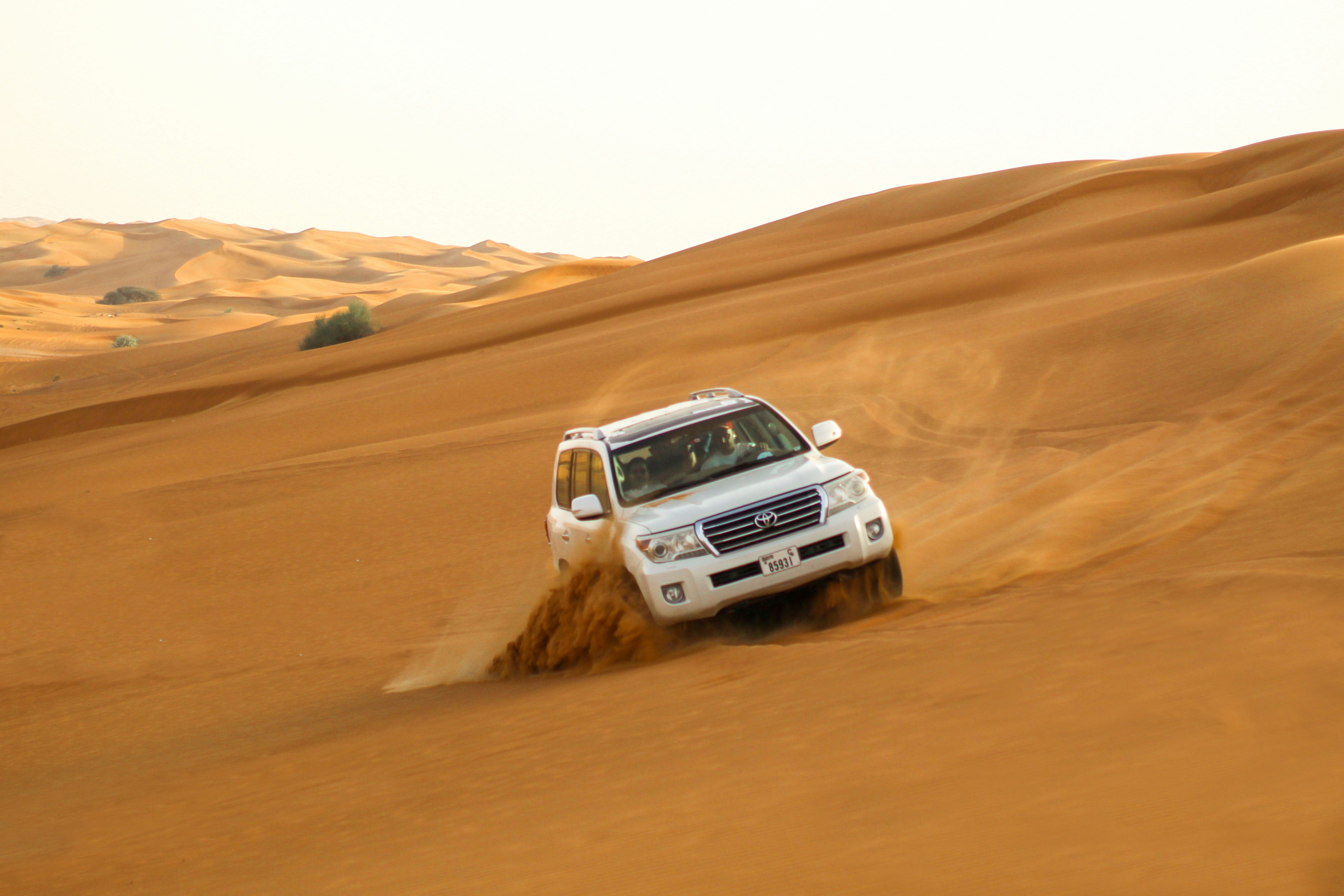
- No tuktuk fake safaris — ever. In Siwa some operators sell fake tuktuk "safaris" that are a total scam; Bodda uses real 4x4 jeeps with professional drivers. Same standard everywhere.
- Direct booking, direct service. Bodda is run by real local Egyptians, not a middleman or reseller. You book directly with the people who run the tours.
- No commission fees, no agent markups, no hidden charges. The price you see is the price you pay.
- Real traveler reviews available on request. See what recent guests say.
- Custom itineraries — photography stops, food preferences, shopping time, your pace.
- If something goes wrong, we make it right — compensation guarantee.
We also offer Siwa Oasis private tours (2-day and 3-day from Cairo with desert safari, salt lakes, stargazing, Shali Fortress, Cleopatra Spring), Fayoum Oasis day tours (Valley of the Whales UNESCO, Magic Lake, Wadi El-Rayan, Tunis village), desert safari tours (Black & White Desert, Bahariya Oasis, Bedouin camp), Cairo & Giza private tours (Pyramids, Sphinx, Grand Egyptian Museum, Khan el-Khalili, Islamic Cairo), Saqqara & Dahshur tours (Step Pyramid, Red Pyramid, Bent Pyramid, Memphis), Alexandria day tours (Bibliotheca, Qaitbay Citadel, Catacombs), Luxor & Aswan tours (Valley of the Kings, Karnak, Philae Temple, Abu Simbel), and multi-city packages combining Siwa + Cairo + Fayoum + Luxor.
Ready to Walk Where Pharaohs Slept?
Tanis is not a destination you check off. It is a place you carry home in your fingers — the dust, the light, the silence. If that sounds like the journey you want, I am here.
Reach out anytime between 07:00–22:00 daily. No pressure. Just a conversation.
- WhatsApp: https://wa.me/201040541153
- KakaoTalk: https://open.kakao.com/o/smU92Hfi
- Email: info@boddatours.me
- Website: boddatours.me
Sources & References
- Egyptian Ministry of Tourism and Antiquities — Official Site Documentation for Tanis (San el-Hagar)
- UNESCO World Heritage Centre — Tentative List Entry for Tanis Archaeological Site
- Montet, Pierre. Tanis: Douze Années de Fouilles dans une Capitale Oubliée du Delta Égyptien. Paris: Klincksieck, 1947.
- Wikipedia — "Tanis (Egypt)" and "Third Intermediate Period of Egypt" entries
- Kitchen, Kenneth A. The Third Intermediate Period in Egypt (1100–650 BC). Warminster: Aris & Phillips, 1996.
- Redford, Donald B. Egypt, Canaan, and Israel in Ancient Times. Princeton: Princeton University Press, 1992.
![[2026 Egypt Tours] Siwa Oasis Honest Review (Desert Safari & History)](https://boddatours.me/images/hq/siwa-salt-lake-hq.jpg)