![[2026 Egypt History Tours] Narmer Palette & Early Dynastic Secrets](https://boddatours.me/images/fallback-post.png)
The Narmer Palette: Echoes of Egypt's First Great Unification
Can you feel it? That ancient hum beneath the desert sand, the whispers of a kingdom forged from two lands. It's the story of Egypt, starting with a single, powerful artifact: the Narmer Palette. This isn't just an old stone slab; it's the Rosetta Stone of Egyptian identity, marking the moment Upper and Lower Egypt became one. And understanding this is key to truly appreciating the wonders you'll see on any Egypt history tour.
I've spent my life here in Cairo, breathing in the history. And every time I stand before the Narmer Palette, I get goosebumps. It’s like looking at the birth certificate of a civilization that would go on to shape the world. If you're planning an Egypt tour, especially one focused on deep history, this is where it all begins.
────────────────Unraveling the Mystery of the Narmer Palette
Imagine holding the key to understanding how a nation was born. That's what the Narmer Palette offers. Found by archaeologists in Hierakonpolis, this ceremonial shield-shaped palette, carved from a single piece of dark siltstone, dates back to around 3100 BC. It's not just art; it's propaganda, a declaration, a historical record all rolled into one.
On one side, you see a powerful figure, King Narmer, wearing the White Crown of Upper Egypt, smiting an enemy. On the other, he wears the Red Crown of Lower Egypt, surveying decapitated foes. These aren't just images; they represent the unification of the Nile Valley, a monumental achievement that laid the groundwork for over 3,000 years of Pharaonic rule. For anyone seeking an authentic private Egypt tour, understanding these foundational moments is crucial.
I remember showing this to a group of history buffs once. They were amazed at how much narrative was packed into such a small object. It sparked so many questions about daily life, warfare, and the very concept of kingship in ancient Egypt. That's the magic of the Narmer Palette – it opens up a universe of understanding.
The Symbolism of Narmer's Crowns
The dual crowns depicted on the palette are incredibly significant. The White Crown (Hedjet) symbolized Upper Egypt, while the Red Crown (Deshret) represented Lower Egypt. Narmer's ability to wear both, often shown as a combined Double Crown (Pschent), solidified his authority over the unified land. This symbolism continued throughout Pharaonic history, a constant reminder of the kingdom's origins.
When you visit the Grand Egyptian Museum (GEM) or the Egyptian Museum in Tahrir Square, you'll see this symbolism repeated in countless artifacts. It's a thread that connects ancient Egypt across millennia. My tours often involve pointing out these recurring motifs, showing how a single event, like the unification, rippled through time.
────────────────Beyond the Palette: The Dawn of the Early Dynastic Period
The Narmer Palette isn't an isolated event; it's the gateway to the Early Dynastic Period of Egypt, spanning the First and Second Dynasties. This era was a time of immense innovation and consolidation. Hieroglyphic writing was developing rapidly, complex administration systems were established, and monumental architecture began to take shape.
Think about what it takes to unify a land. It wasn't just military might. It involved diplomacy, establishing shared laws, and fostering a common cultural identity. The rulers of this period, beginning with Narmer, were laying the foundations for the centralized state that would eventually build the pyramids. If you're looking for in-depth Egypt history tours, this period is a must-explore.
The Rise of Centralized Power
Before unification, Egypt was likely a collection of independent city-states. The emergence of a single ruler with authority over both North and South created a powerful, centralized government. This allowed for large-scale projects like irrigation systems, agricultural development, and, of course, the construction of royal tombs. The development of bureaucracy and taxation systems also began during this time, essential for managing a unified kingdom.
I often explain to my guests that the stability achieved during the Early Dynastic Period was the bedrock upon which all subsequent Egyptian achievements were built. Without this unification, the pyramids might never have been erected, and the rich tapestry of ancient Egyptian culture might not have unfolded as it did.
Early Writing and Administration
The development of hieroglyphic writing was crucial for this burgeoning state. It allowed for record-keeping, religious texts, and the communication of royal decrees across vast distances. Early administrative centers, like Memphis (often considered founded by Narmer), became hubs of power and culture. The sophisticated administration that emerged in this period set a precedent for future governments.
On my Cairo & Giza private tours, we often discuss how early administrative centers evolved. Understanding the bureaucratic machinery that supported the pharaohs provides a deeper appreciation for the complexity of ancient Egyptian society.
────────────────Visiting Hierakonpolis and Abydos: Walking in Narmer's Footsteps
While the Narmer Palette itself is housed in museums, you can visit the very places where its story unfolded. Hierakonpolis (modern-day Kom el-Ahmar) is where the palette was discovered. It was one of the most important early capitals of Egypt, and walking its ancient grounds is an experience that connects you directly to the dawn of Egyptian civilization.
Further north is Abydos, a sacred city that served as a royal necropolis for the early dynasties. The tombs of the First Dynasty kings are located here, offering a glimpse into the early development of royal burial practices. For serious history enthusiasts, a dedicated Egypt history tour that includes these sites is incredibly rewarding. I can arrange trips that take you to these significant, yet often overlooked, locations.
It's humbling to stand where kings were buried thousands of years ago, to see the foundations of their eternal homes. The sheer scale of the effort involved even then is astounding. This is the kind of experience that makes you feel like you're truly touching history, not just reading about it.
Significance of Hierakonpolis
Hierakonpolis was a major ceremonial and political center from the Predynastic period right through to the Early Dynastic. The discoveries there, including the Narmer Palette and the ceremonial macehead of King Scorpion, have been instrumental in understanding the process of state formation in Egypt. The site offers a unique window into the transition from small chiefdoms to a unified kingdom.
The Royal Necropolis of Abydos
Abydos was considered a sacred site for the god Osiris, the god of the afterlife. The royal tombs at Abydos, known as the 'U-shaped' tombs, are among the earliest examples of royal burial structures in Egypt. They reveal the evolving beliefs about the afterlife and the pharaoh's divine status. Visiting Abydos provides a tangible link to the spiritual and political power of the early rulers.
────────────────The Narmer Palette and the Genesis of Egyptian Art
The artistic style and iconography of the Narmer Palette were incredibly influential. It established conventions for Egyptian art that would endure for millennia. The use of registers (horizontal bands to organize scenes), the depiction of figures in profile with frontal eyes, and the hierarchical scale (making the most important figure larger) all became hallmarks of Egyptian art.
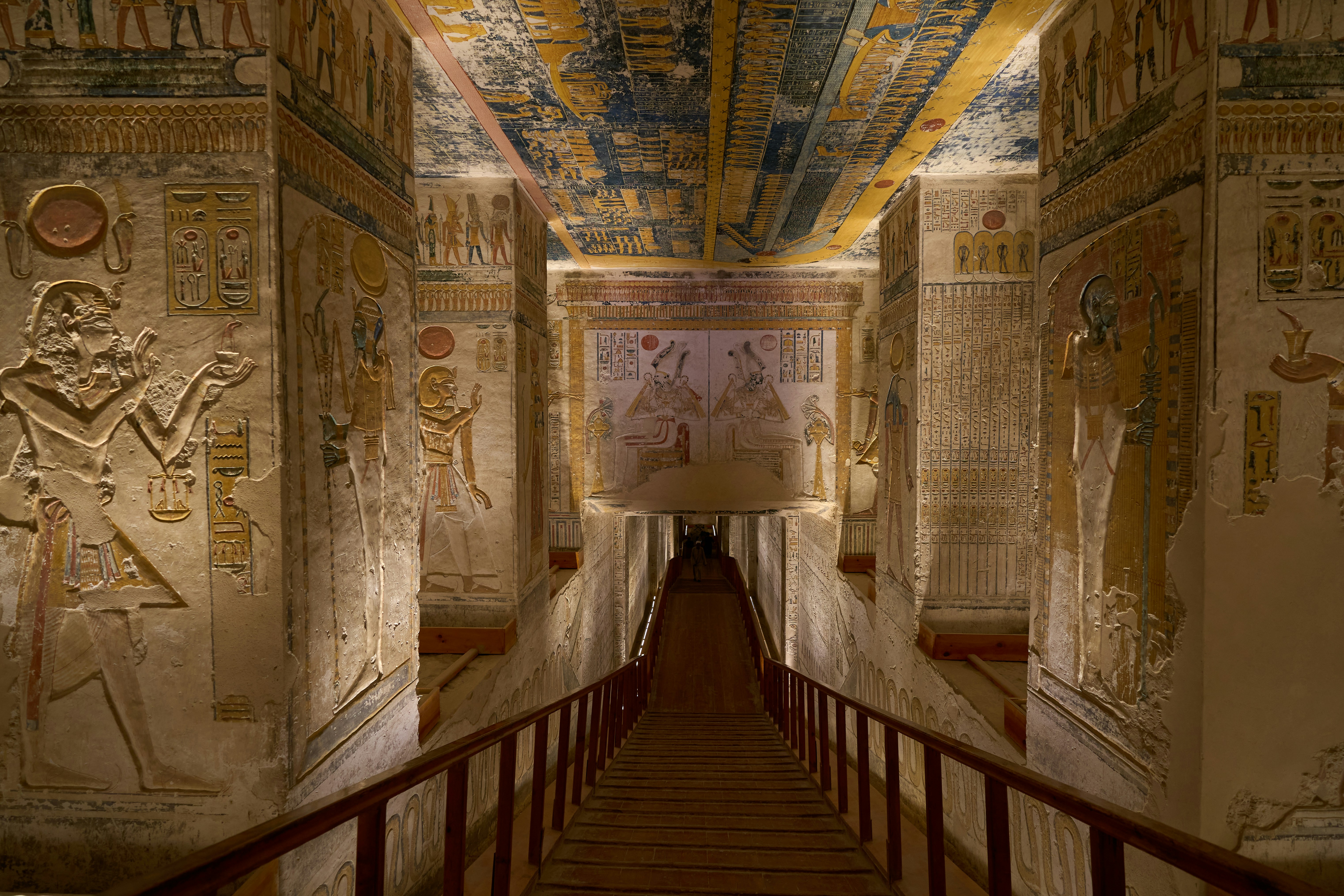
This palette wasn't just a historical document; it was a masterpiece of early art that set the standard for all that followed. When you see the later reliefs at Karnak Temple or the detailed tomb paintings in Luxor, you can trace their origins back to the innovations seen on this single artifact. For photographers on a private Egypt tour, understanding these artistic foundations can lead to a much richer appreciation of the visual storytelling throughout Egypt.
Artistic Conventions Established
The palette's composition, with its clear organization and symbolic imagery, provided a blueprint for Egyptian artists. The 'composite view' (profile body, frontal eye) was a practical solution to represent the human form comprehensively. The emphasis on clarity and order, rather than naturalism, reflects the ancient Egyptian worldview and their desire for permanence and divine order.
Influence on Later Dynastic Art
The narrative style, the use of symbolism, and the formal presentation of royalty seen on the Narmer Palette can be seen echoed in tomb paintings, temple reliefs, and sarcophagi throughout the Pharaonic periods. It's a testament to its groundbreaking design that these conventions remained so potent for so long. It’s why my Egypt history tours always try to show these connections.
────────────────Why Choose Bodda Tours for Your Egypt History Adventure?
When you're diving deep into the history of a place as profound as Egypt, you want someone who truly knows and loves this land. That's where I come in.
- 100% Private Tours: Forget crowded buses and fixed schedules. With Bodda Tours, it's just you, your companions, and the ancient wonders. We travel in clean, modern cars with A/C, door-to-door. It’s about comfort and personalization.
- Local Egyptian Guides: I'm Egyptian, born and raised in Cairo. I don't just know the facts; I know the stories, the feelings, the local nuances. We offer Korean-speaking guides too, so language is never a barrier.
- No Scams, No Tricks: This is super important to me. We only use verified tours and guides. You won't find any hidden fees or unexpected charges with us. Transparency is key.
- Real 4x4 Desert Safaris (No Tuktuks!): If you're venturing into places like Siwa Oasis, be aware that some operators offer 'tuktuk safaris' which are often a scam and not real desert experiences. Bodda Tours uses professional drivers with real 4x4 jeeps for authentic adventures.
- Direct Service, Not Middlemen: Bodda Tours is me and my team. You're booking directly with people who live and breathe Egypt, not a reseller. This means better service and a genuine connection.
- Custom Itineraries: Are you a photographer? A foodie? Do you want to spend more time in museums or exploring local markets? We craft your trip around *your* interests and pace.
- We Make It Right: If anything unexpected happens or a delay occurs, we are committed to making it right for you, often providing compensation. Your peace of mind is our priority.
I believe that experiencing Egypt should feel like visiting an old friend who knows all the best spots. That's the Bodda Tours promise.
────────────────Planning Your Visit: Best Time and What to Expect
If you're planning an Egypt history tour focused on ancient sites and artifacts like the Narmer Palette, timing is everything. The best time to visit Egypt is generally between **October and April**. During these months, the weather is cooler and much more pleasant for exploring archaeological sites and museums, especially in Cairo and Upper Egypt.
Summer months (June to August) can be extremely hot, particularly in Upper Egypt (Luxor, Aswan). While the Narmer Palette is housed in Cairo, the journey to understand its context might lead you to other historical sites. If you are traveling during the summer, I highly recommend focusing on indoor activities like museums and shorter, early morning or late afternoon excursions to outdoor sites.
Getting to Cairo and the Museums
Cairo International Airport (CAI) is the main gateway for international travelers. From there, getting to your hotel is straightforward. For visiting museums like the Grand Egyptian Museum (GEM) or the Egyptian Museum in Tahrir Square where you can see artifacts from the Early Dynastic Period, I arrange door-to-door private transportation. This ensures you travel in comfort and safety, especially when navigating a bustling city like Cairo.
My tours are designed to make your journey seamless. From airport pickup to hotel drop-off, and then to the historical sites, we handle the logistics so you can focus on soaking in the history. This is a core part of my private Egypt tours offering.
What to Wear and Pack
For visiting museums and historical sites, comfortable walking shoes are a must. Egypt can get warm even in the cooler months, so light, breathable clothing is recommended. For sites of religious significance or when visiting local communities, it’s respectful to dress modestly, covering your shoulders and knees. Packing a hat, sunglasses, and sunscreen is always a good idea, even when indoors, as the sun can be intense.
When exploring places like Siwa Oasis or Fayoum Oasis on a Fayoum tour or Siwa Oasis tour, you'll want similar attire, plus something a bit warmer for desert evenings, which can get surprisingly cool. And of course, don't forget your camera – you'll want to capture everything!
Is It Worth Visiting These Historical Sites?
Absolutely, yes! Understanding the Narmer Palette and the Early Dynastic Period is like reading the first chapter of an epic novel. It provides the essential context for everything else you’ll see in Egypt. Without this foundation, the grandeur of the pyramids or the complexity of later temples can feel disconnected. For anyone who appreciates history, archaeology, or the very foundations of civilization, exploring this era is not just worthwhile, it’s essential.
My goal is to bring these ancient stories to life, to make history feel personal and relevant. It's a journey of discovery, and I'd be honored to guide you through it.
────────────────Sources & References
- Egyptian Ministry of Tourism and Antiquities. (Official statements and information regarding heritage sites).
- UNESCO World Heritage Centre. (Information on Egyptian World Heritage sites, where applicable).
- Wikipedia. (For general historical context and specific details on the Narmer Palette and Early Dynastic Period).
Ready to Explore Egypt's Ancient Past? Contact Bodda Tours Today
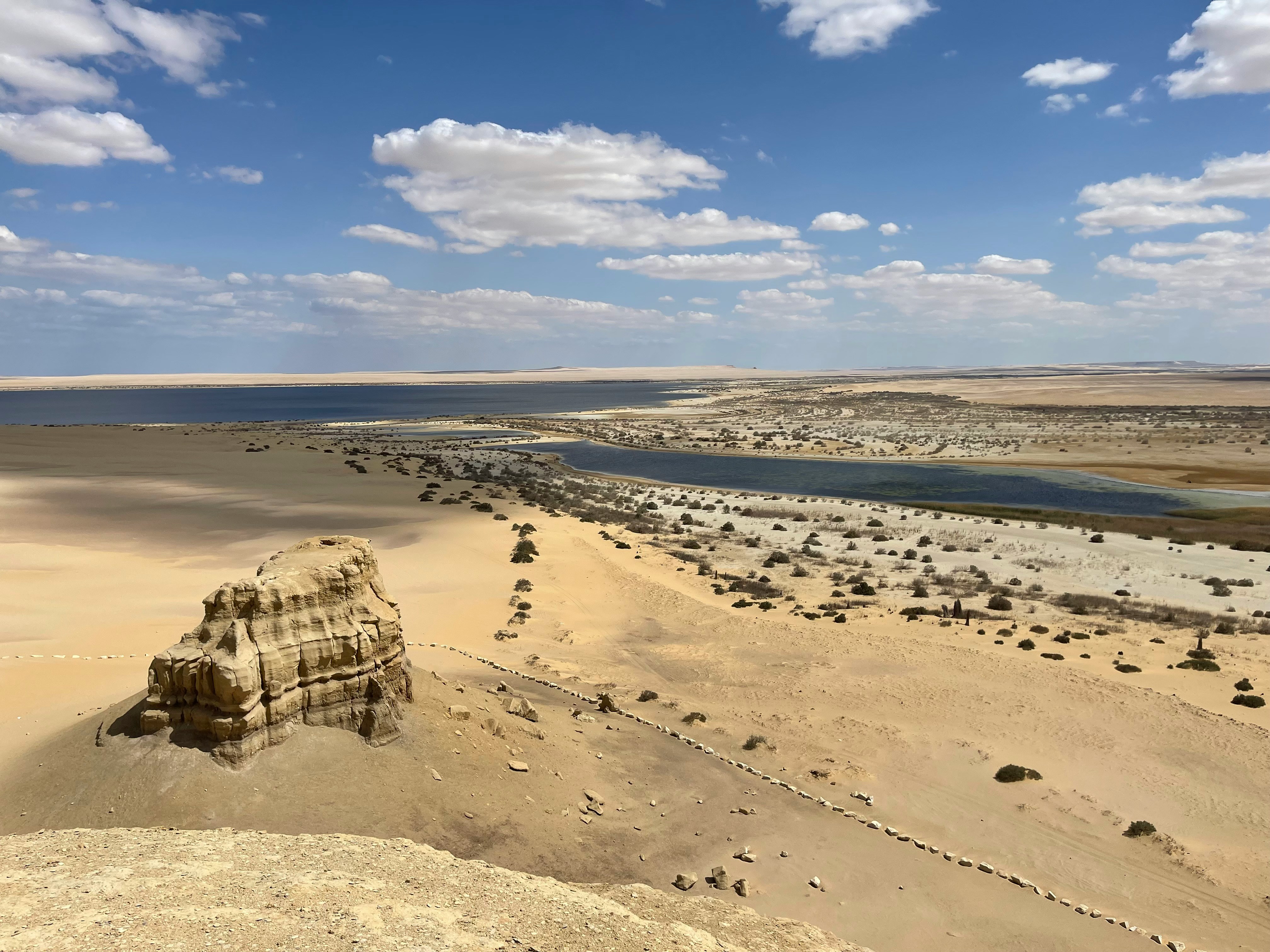
Whether you dream of standing before the Narmer Palette, exploring the Valley of the Whales in Fayoum, or experiencing the magic of Siwa Oasis, Bodda Tours is here to make it happen with a truly local, private experience. Reach out anytime between 07:00-22:00 daily. I'm here to help you craft your unforgettable Egyptian adventure.
- WhatsApp: wa.me/201040541153
- KakaoTalk: open.kakao.com/o/smU92Hfi
- Email: info@boddatours.me
- Website: boddatours.me
Looking forward to hearing from you and helping you discover the real Egypt!
![[2026 Egypt Tours] Siwa Oasis Honest Review (Desert Safari & History)](https://boddatours.me/images/hq/siwa-salt-lake-hq.jpg)
![[2026 Egypt Tours] Cairo Cafes & Mint Tea (Local Experience)](https://boddatours.me/images/hq/moez-st-hq.jpg)