![[2026 Egypt History Tours] Akhenaten's Revolution: Amarna & Ancient Egypt](https://boddatours.me/images/fallback-post.png)
Akhenaten's Amarna Revolution: A Turning Point in Ancient Egypt
Imagine a time when the very gods of Egypt were rewritten. A time of radical change, artistic upheaval, and a pharaoh who dared to challenge millennia of tradition. This was the era of Akhenaten, and understanding his reign is like holding a key to a deeper, more complex understanding of ancient Egypt. If you've ever been captivated by the sheer mystery and grandeur of this civilization, Akhenaten's Amarna revolution offers a profound and utterly unique perspective.
I've always been drawn to the stories that lie beneath the surface, the chapters of history that aren't always on the typical tourist trail. Akhenaten's reign, though relatively short, sent seismic waves through Egyptian society, art, and religion. It’s a period that continues to spark debate and fascinate historians and travelers alike. For those seeking a truly immersive and insightful Egypt history tour, exploring the Amarna period is an absolute must.
Many people come to Egypt dreaming of the pyramids and the Valley of the Kings, and those are incredible, don't get me wrong. But there's a whole other layer of understanding that opens up when you delve into the more nuanced, transformative periods, and Akhenaten's revolution is arguably one of the most significant. It’s a story of a pharaoh who wasn't just a builder or a conqueror, but a visionary, albeit a controversial one.
This period really challenged the established order. Before Akhenaten, the pantheon of Egyptian gods was vast and complex, with Amun-Ra holding a supreme position. Akhenaten, however, promoted the worship of a single deity, the Aten, the sun disc. This wasn't just a minor theological shift; it was a complete reorientation of Egyptian spiritual and political life. It's mind-boggling to think about the societal impact of such a drastic change, enforced by a pharaoh.
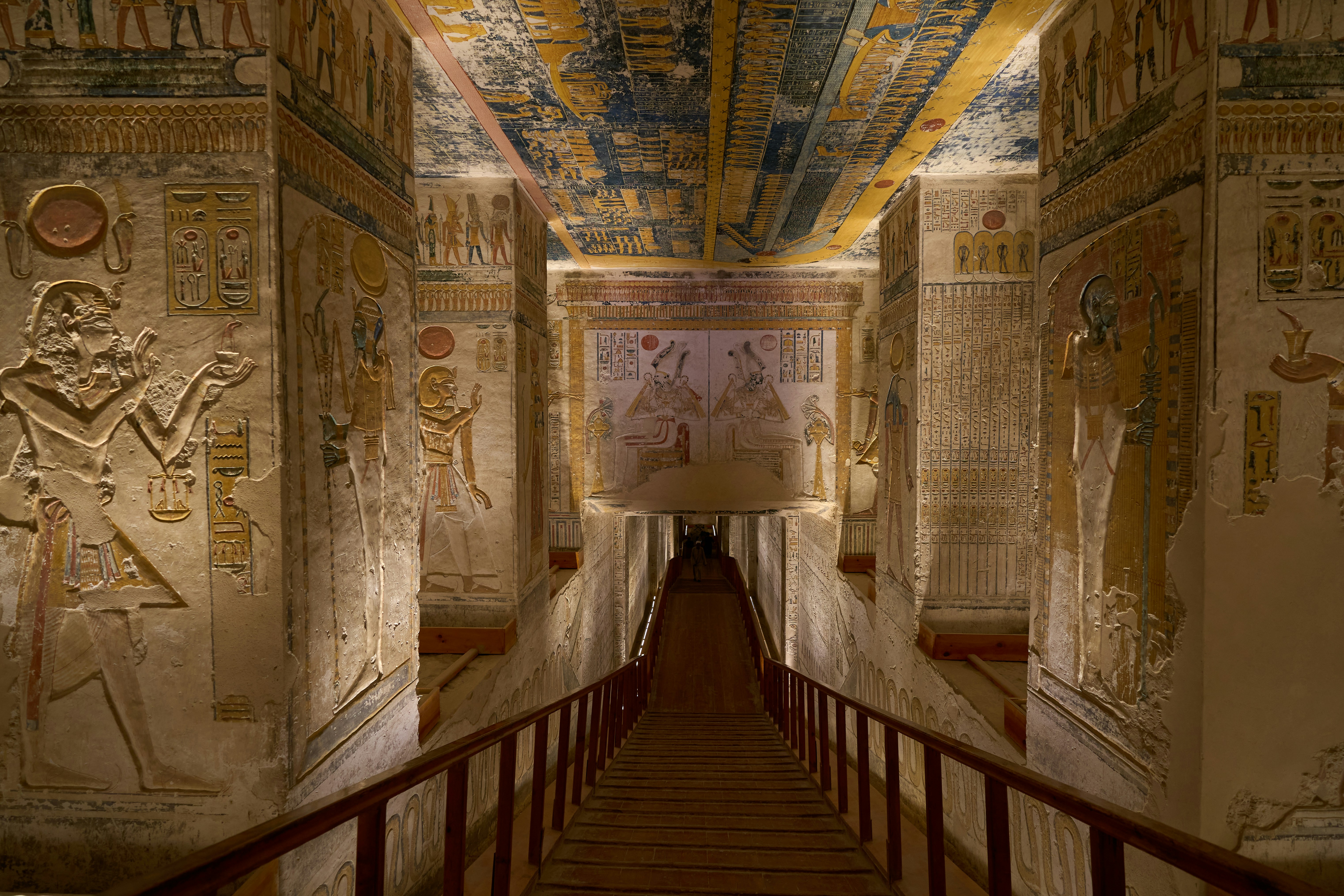
The art from this period is also incredibly distinct. Forget the stiff, idealized figures you see in much of ancient Egyptian art. The Amarna period gave us art that is remarkably naturalistic, even expressive. You see depictions of the royal family in intimate, tender moments – Akhenaten and his famous wife Nefertiti with their children. It’s a refreshing, humanizing glimpse into the lives of rulers who were otherwise considered divine intermediaries.
When people ask me about a truly special Egypt history tour, I often steer them towards understanding these pivotal moments. It’s not just about seeing old stones; it’s about piecing together narratives, understanding the motivations of powerful figures, and appreciating the sheer ingenuity and adaptability of ancient Egyptian civilization. Akhenaten’s Amarna revolution is a prime example of this. It showcases a willingness to break from the past and forge a new future, even if that future proved to be temporary.
Understanding this period enriches every other historical site you visit. Suddenly, the later reunification of Egypt under Tutankhamun (Akhenaten’s son) makes so much more sense. You see the echoes of the Amarna revolution in the art and religious practices that followed. It’s a ripple effect that shaped the course of Egyptian history for centuries.
For travelers looking for more than just a typical sightseeing trip, an exploration of Akhenaten and the Amarna period offers a deep dive into the intellectual and spiritual currents of ancient Egypt. It’s a chance to connect with the past on a much more profound level, to question, to wonder, and to be utterly amazed by the complexity of this incredible civilization.
Let's dive into the details. Akhenaten's reign, from roughly 1353 to 1336 BCE, marked a dramatic departure from established norms. He moved the capital from Thebes to a new city he founded, Akhetaten (modern-day Amarna), dedicated solely to the worship of the Aten. This was a bold statement, severing ties with the powerful priesthood of Amun in Thebes and asserting his own divine authority. It’s a story of absolute power and radical belief.
The Rise of the Aten and the Shift in Religion
The shift to monotheism, or perhaps more accurately, henotheism (the worship of one god without denying the existence of others), centered around the Aten. This sun disc, with rays ending in hands bestowing life, became the sole focus of worship. Akhenaten presented himself as the sole intermediary between the Aten and humanity. This meant the traditional priestly class, who held immense wealth and influence, saw their power drastically curtailed.
Imagine the disruption. The temples dedicated to a multitude of gods were neglected or repurposed. The rich iconography and mythology associated with deities like Osiris, Isis, and Horus were suppressed. It was a complete upheaval of the spiritual landscape that had defined Egypt for over two millennia. This religious revolution is one of the most striking aspects of Akhenaten's reign and what makes it such a compelling topic for an Egypt history tour.
The impact on society was immense. The economy, which was deeply intertwined with the temple system, had to adapt. The very concept of kingship, which had always been divine, was redefined. Akhenaten wasn't just a divine ruler; he was the living embodiment of the Aten's will on Earth. This level of personal religious devotion and its imposition on an entire nation is unparalleled in Egyptian history.
While often labeled a monotheist, it's important to note that Akhenaten's Aten worship wasn't quite the same as Abrahamic monotheism. The Aten was a physical entity, the sun disc itself, and its worship was tied to the solar cycle and the life-giving power of the sun. It was a potent symbol, and Akhenaten's devotion to it was absolute. The sheer scale of this undertaking, building a new capital city from scratch to honor this new deity, speaks volumes about his conviction.
The move to Amarna was a strategic and symbolic act. Akhetaten, meaning 'Horizon of the Aten', was built on virgin land, free from the influence of the old gods and their priests. This new city was designed to be a celestial stage, where the pharaoh could commune directly with the Aten. The architecture and layout of Amarna were also different, with open-air temples allowing the sun's rays to directly illuminate worshippers, a stark contrast to the dark, enclosed sanctuaries of traditional temples.
The Great Hymn to the Aten, attributed to Akhenaten himself, is a beautiful and powerful testament to this new religious fervor. It extols the Aten's life-giving power and its universality, shining on all lands. It’s a deeply personal and poetic expression of faith that offers a rare window into the pharaoh’s own spiritual life.
The Art of Amarna: A Revolution in Style
Perhaps the most visually striking legacy of Akhenaten's reign is the art. The Amarna period saw a radical departure from the rigid, formal, and often idealized artistic conventions of previous dynasties. The new style, sometimes called 'Amarna art', is characterized by its naturalism, dynamism, and even realism. It's a style that feels surprisingly modern and human.
Figures are often depicted with slender bodies, elongated faces, pronounced chins, and curved bellies. The poses are more relaxed and natural, with subjects shown in everyday activities. We see Akhenaten and Nefertiti with their daughters, engaging in intimate family scenes, their royal status still evident but softened by a newfound humanity. This artistic revolution is a key reason why an exploration of Amarna is so vital for any serious Egypt history tour.
This shift in artistic representation reflects the ideological changes of the time. The focus on the Aten, the life-giving sun, may have encouraged a more naturalistic depiction of life. The intimate family scenes highlighted the pharaoh's role not just as a divine ruler, but as a husband and father, further cementing his connection to the Aten through his own lineage.
The relief carvings and sculptures from Amarna possess a fluidity and expressiveness rarely seen before. The famous bust of Nefertiti, discovered in Amarna, is a prime example of this refined, almost ethereal beauty that characterizes the period's finest art. The sculptor’s skill in capturing the queen’s likeness with such grace and power is astounding.
However, this artistic freedom was not without its critics. Some scholars believe this radical departure from tradition was seen as heretical by many, contributing to the eventual backlash against Akhenaten and his reforms. After his death, there was a concerted effort to erase his legacy, and much of the art and architecture from the Amarna period was destroyed or defaced.
Despite the subsequent efforts to expunge his memory, the Amarna art has survived, offering us an unparalleled glimpse into a period of immense creativity and ideological change. It’s a testament to the power of artistic expression and its ability to convey even the most radical of ideas. For anyone interested in the evolution of art and its connection to power and belief, the Amarna period is a fascinating case study.
The quality of the craftsmanship during this period is undeniable. Even with the radical stylistic changes, the skill of the artisans and sculptors remained exceptionally high. The attention to detail in the reliefs, the delicate carving of stone, and the masterful rendering of form all speak to a high level of artistic achievement. It’s a testament to the enduring artistic legacy of ancient Egypt, even during its most unconventional phases.
The Legacy of Akhenaten and the Return to Tradition
Akhenaten's revolution was not to last. After his death, his reforms were gradually dismantled. His successors, including his son Tutankhamun, played a crucial role in restoring the old order. Tutankhamun, famously, changed his name from Tutankhaten ('Living Image of the Aten') to Tutankhamun ('Living Image of Amun'), signifying the return of the old gods and the abandonment of Amarna.
The city of Amarna itself was eventually abandoned, and Akhenaten's name was largely purged from official records. This 'damnatio memoriae' – the condemnation of memory – was an attempt to erase him from history, to pretend his radical reign never happened. It speaks to the immense power of the traditional religious and political establishments that Akhenaten had so drastically challenged.
However, the Amarna period left an indelible mark. The artistic innovations, though suppressed, influenced later periods. The memory of Akhenaten, the heretic pharaoh, lingered, becoming a subject of fascination and speculation for centuries. It’s this enduring mystery and the profound impact of his reign that make studying this period so rewarding for anyone interested in Egypt history tours.
The rediscovery of Amarna in the 19th and 20th centuries brought this lost chapter of Egyptian history back to light. Excavations at the site have revealed the scale of Akhetaten, the remnants of its temples and palaces, and a wealth of artistic and textual evidence that helps us piece together this complex story. It’s a reminder that history is not always a straight line, but often a story of revolution, reaction, and resilience.
The story of Akhenaten is a powerful reminder of how individuals can, for a time, reshape the course of history. His attempt to fundamentally alter the religious and cultural fabric of Egypt was a bold experiment, and its ultimate failure to become permanent doesn't diminish its significance. It highlights the deep-seated nature of Egyptian traditions and the challenges of imposing radical change.
For travelers, the Amarna period offers a chance to engage with a more nuanced understanding of ancient Egypt. It’s about moving beyond the iconic imagery of pyramids and mummies to explore the intellectual, spiritual, and artistic revolutions that shaped this enduring civilization. It’s a period that invites questions and sparks curiosity, making any private Egypt tour focused on this era incredibly rewarding.
The very fact that we can still discuss and debate Akhenaten’s motives and the impact of his reign speaks to the enduring power of his story. Was he a religious visionary? A tyrannical heretic? Or simply a pharaoh who pushed the boundaries of his time? The Amarna period doesn't offer easy answers, and that's precisely what makes it so captivating.
Planning Your Amarna-Inspired Egypt History Tour
While Akhetaten (Amarna) itself is an archaeological site that requires dedicated exploration, the influence and artifacts from this period are scattered throughout Egypt. To truly appreciate the Amarna revolution, a well-guided Egypt history tour is essential. Understanding the context, the religious shifts, and the artistic innovations is crucial to grasping the significance of this era.
Many museums, like the Grand Egyptian Museum (GEM) in Giza, house significant artifacts from the Amarna period. Seeing the Amarna-style sculptures and reliefs in person, with expert commentary, brings the story to life. It allows you to witness firsthand the radical departure from traditional Egyptian art and the emergence of a more naturalistic style.
For those who want to go deeper, visiting the actual site of Amarna is an incredible experience. It allows you to walk the grounds where Akhenaten built his city, to see the remnants of his temples and royal palace. Standing amidst the ruins, you can almost feel the echoes of this revolutionary period, a time of intense religious devotion and artistic flourishing.
When I help plan tours, I always try to incorporate elements that showcase these transformative periods. It's not just about ticking boxes on a list of famous sites, but about weaving a narrative that connects the dots of Egyptian history. The Amarna period is a vital thread in that narrative, revealing a different side of this ancient civilization – one of radical change and profound artistic expression.
A private Egypt tour focusing on this era can be tailored to your specific interests. Perhaps you're fascinated by the religious reforms, the artistic innovations, or the political machinations of the time. With a private guide, you can spend more time at key locations, ask all your questions, and gain a deeper understanding of Akhenaten's impact.
It’s also worth noting that the subsequent efforts to erase Akhenaten’s memory have, ironically, made his story even more compelling. The very act of suppression highlights how significant and disruptive his reign was. It’s a testament to the power of ideas and the enduring human fascination with figures who dared to challenge the status quo.
For travelers interested in the more unique aspects of Egypt's past, the Amarna period offers a captivating journey. It’s a chance to explore a time of intense change, of artistic rebellion, and of a pharaoh who dared to worship a single god. It’s a story that continues to resonate, reminding us that even in ancient times, there were individuals who sought to redefine the world around them.
The impact of Akhenaten’s religious revolution can be seen in the reforms that followed, and even in the eventual rise of monotheistic religions in later centuries. While his direct legacy was short-lived, the ideas he championed and the artistic expressions he inspired left an undeniable mark on the tapestry of human history. Exploring this period is not just about learning about ancient Egypt; it’s about understanding the dynamics of change, belief, and artistic evolution across millennia.
Why Choose Bodda Tours for Your Amarna Exploration?
Understanding a period as complex and revolutionary as Akhenaten's Amarna reign requires more than just a standard tour. It demands an approach that prioritizes depth, context, and a truly personal connection to the history. This is where Bodda Tours comes in. I founded Bodda Tours because I believe in sharing the real Egypt, the Egypt that I grew up with, with all its layers of history and culture.
When you travel with Bodda Tours, you're not just getting a guide; you're getting a local friend who knows the stories behind the stones. I understand the nuances of Egyptian history, and I'm passionate about sharing them in a way that makes sense and ignites your curiosity. Our private Egypt tours are designed for travelers who want to go beyond the surface and truly immerse themselves in the wonders of this land.
Here's why choosing Bodda Tours for your exploration of the Amarna period and other historical treasures is the right decision:
- 100% Private Tours, Unmatched Comfort: Forget crowded buses and fixed schedules. With Bodda Tours, every journey is a private affair. We use modern, air-conditioned vehicles for door-to-door service, ensuring your comfort and flexibility as we explore. No shared seats, no compromises.
- Korean-Speaking Local Guides: For many of my friends who travel from Korea, language can be a concern. That's why I've invested in ensuring we have excellent Korean-speaking local guides. This means clear communication, a deeper understanding of your cultural perspective, and a worry-free experience as we delve into Egypt's rich past.
- No Scams, No Surprises – Verified Tours Only: I've seen too many travelers disappointed by misleading tours. Bodda Tours guarantees verified tours with transparent service. You'll never encounter hidden fees or unexpected charges. My reputation is built on trust and honesty.
- No Tuktuk Fake Safaris in Siwa: This is crucial if you plan to visit Siwa Oasis with us. Some operators try to pass off unsafe and uncomfortable tuktuk rides as 'safaris.' Bodda Tours only uses real 4x4 jeeps with professional drivers for desert excursions, ensuring your safety and a genuine adventure.
- Direct Booking, Direct Service – Real Egyptians Who Care: Bodda Tours isn't a faceless corporation or a reseller. I, Bodda, am a local Egyptian who runs this company with a team of passionate locals. You book directly with us, receiving personalized service from people who genuinely care about your experience.
- No Commission Fees, No Agent Markups: You get fair pricing directly from the source. We don't have hidden agent markups or commission fees that inflate your costs. What you see is what you get – honest service at a fair value.
- Custom Itineraries Tailored to You: Whether you're a photography enthusiast capturing the light on ancient ruins, a foodie eager to taste local flavors, or someone who simply wants to set their own pace, we create custom itineraries. Your interests are our priority.
- Real Traveler Reviews Available: Don't just take my word for it. I'm happy to share recent guest reviews so you can see the experiences of others who have explored Egypt with Bodda Tours.
- Compensation Guarantee: If anything goes wrong or a tour is significantly delayed due to unforeseen circumstances, we make it right or provide compensation. Your peace of mind is paramount.
Exploring the Amarna revolution with Bodda Tours means engaging with Egypt's history in a profound and meaningful way. It's about understanding the Pharaohs, their beliefs, and the art they created, all through the eyes of someone who calls this incredible land home.
Ready to Explore Egypt's Revolutionary Past? Contact Bodda Tours Today
Whether you dream of understanding Akhenaten's radical reign, exploring the mysteries of the Valley of the Kings, or experiencing the magic of Siwa Oasis, Bodda Tours is here to craft your perfect private journey. Reach out anytime between 07:00-22:00 daily, and let's start planning your unforgettable Egyptian adventure.
- WhatsApp: wa.me/201040541153
- KakaoTalk: open.kakao.com/o/smU92Hfi
- Email: info@boddatours.me
- Website: boddatours.me
Sources & References
- UNESCO World Heritage Centre. (n.d.). Ancient Thebes with its Necropolis. Retrieved from [UNESCO World Heritage Centre website URL - e.g., whc.unesco.org/en/list/87]
- Egyptian Ministry of Tourism and Antiquities. (n.d.). Amarna: The Capital of Akhenaten. Retrieved from [Official Ministry of Tourism website URL - e.g., www.egypt.travel/en/attractions/archaeological/amarna]
- Wikipedia. (n.d.). Akhenaten. Retrieved from [Wikipedia URL for Akhenaten - e.g., en.wikipedia.org/wiki/Akhenaten]
- Wikipedia. (n.d.). Amarna Period. Retrieved from [Wikipedia URL for Amarna Period - e.g., en.wikipedia.org/wiki/Amarna_Period]

![[2026 Egypt Tours] Siwa Oasis Honest Review (Desert Safari & History)](https://boddatours.me/images/hq/siwa-salt-lake-hq.jpg)