![[2026 Egypt History Tours] Abydos Egypt Tour: Where Osiris Still Waits Beneath the Desert Sand (Sacred Archaeology & Living Legends)](https://boddatours.me/images/fallback-post.png)
The Desert Remembers What We Forget
You stand on limestone that has felt the weight of pharaohs' sandals. Three thousand years ago, a father lifted his son onto his shoulders so the boy could see the procession carrying Osiris's barque through these same gates. The dust you kick up now? It holds their footprints. I've watched travelers arrive at Abydos expecting another temple checklist. They leave changed. Something about this place — the way morning light slices through the hypostyle hall columns, the silence that sits heavier here than anywhere else in Egypt — it rewires how you understand what ancient faith actually felt like.
Abydos Egypt tour experiences stay with you because this wasn't built for tourists. It was built for eternity. Every relief, every cartouche, every astronomical ceiling panel was a prayer carved in stone. When you run your fingers along the Abydos King List — seventy-six royal names marching toward Seti I — you're touching the ancient Egyptians' own attempt to remember themselves. They knew memory fades. They built against forgetting.
────────────────Why Abydos Egypt Tour Feels Different From Luxor or Karnak
Luxor dazzles. Karnak overwhelms. But Abydos? Abydos speaks. The difference hits you before you even reach the temple proper. The approach road cuts through fields where farmers still work the same black Nile silt their ancestors turned. Donkeys bray. Children wave. Life continues exactly as it did when Seti I's architects laid the foundation stones around 1290 BCE. You're not entering a museum. You're entering a living landscape where the sacred never fully left.
Most Egypt history tours rush through Abydos in two hours — tick the King List, photograph the Osireion, back in the van. That's not how you meet this place. The Osireion alone deserves a morning. Those massive red granite blocks, some weighing sixty tons, quarried at Aswan and floated four hundred miles north — they weren't moved by slaves whipping backs. They were moved by belief. Generations of priests maintained the cult of Osiris here for over three millennia. The Greco-Roman period didn't end it; the temple of Nectanebo II in the fourth century BCE proves the devotion outlasted dynasties.
────────────────The Myth That Built a City: Osiris and the First Pilgrimage
Ask any Egyptian child where Osiris lies, and they'll point toward Abydos. The myth goes: Set dismembered his brother Osiris, scattered the pieces across Egypt. Isis gathered them all — except the phallus, eaten by a Nile fish. She reassembled her husband, breathed life back into him long enough to conceive Horus. Osiris became lord of the underworld. His head — or his spine, depending on which nome's priesthood you asked — rested at Abydos.
That story wasn't metaphor. It was geography. By the Early Dynastic Period (c. 3100 BCE), Abydos was already the burial ground for Egypt's first kings. The Umm el-Qa'ab necropolis, a kilometer into the desert behind Seti's temple, holds the tombs of Narmer, Aha, Den, Qa'a — the architects of unified Egypt. German archaeologist Günter Dreyer's excavations in the 1980s and 90s revealed tomb U-j, dated to circa 3200 BCE, with the earliest known hieroglyphic writing on ivory labels. This place wrote the first chapters of Egyptian history.
Pilgrims came from every nome. The Middle Kingdom saw the "Great Procession" — a yearly festival where Osiris's barque traveled from his temple to his tomb at Umm el-Qa'ab and back. Thousands walked the wadi road, leaving stelae, offerings, prayers. The desert floor still yields their voices. Flinders Petrie, William Matthew Flinders Petrie, excavated here in 1899-1900 and found the Osireion. Dorothy Eady — Omm Sety — spent her last thirty years guarding these stones, claiming she'd been a priestess here in a past life. Whether you believe her or not, her devotion mirrors the ancients'.
────────────────Seti I's Masterpiece: Architecture as Theology
Seti I didn't just build a temple. He built a theological statement. The Great Temple of Seti I at Abydos, constructed during his reign (1290–1279 BCE) and completed by his son Ramesses II, follows a unique L-shaped plan — seven sanctuaries side by side, each dedicated to a different deity: Osiris, Isis, Horus, Amun-Ra, Ra-Horakhty, Ptah, and Seti himself as a deified king. No other Egyptian temple arranges its sanctuaries this way. It's a map of the cosmos.
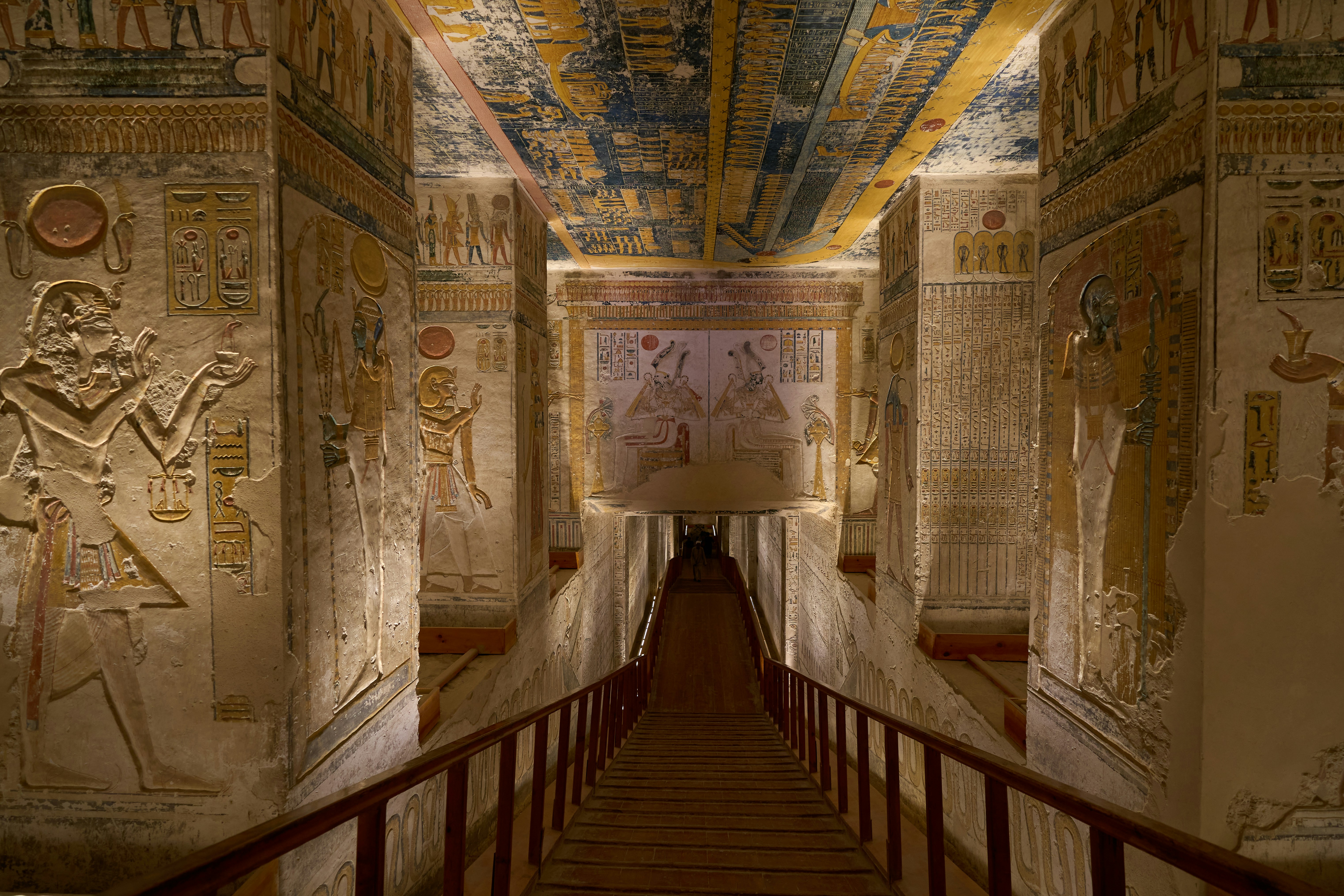
The relief work here represents the absolute peak of New Kingdom artistry. In the Second Hypostyle Hall, Seti offers incense to the Ennead — the nine gods of Heliopolis. The figures possess a grace, a plasticity, that later Ramesside art sometimes loses in grandiosity. Look at the king's fingers. They're not stiff. They hold the incense pellet with the delicacy of a surgeon. The colors — still vivid in protected areas — were mixed from mineral pigments: red ochre, yellow ochre, malachite green, azurite blue, carbon black, calcium white. They've survived thirty centuries of desert wind.
But the corridor that stops every visitor cold is the Gallery of the Kings — the Abydos King List. Seventy-six cartouches in three rows, each containing a royal name from Menes to Seti I. Hatshepsut is missing. Akhenaten, Smenkhkare, Tutankhamun, Ay — erased. The Amarna period never happened here. Seti curated the official memory. He chose which ancestors deserved offerings. Standing before that list, you understand: history is always written by the survivors.
────────────────The Osireion: Stone That Defies Explanation
Behind the main temple, down a descending corridor, lies the Osireion. Discovered by Petrie and Margaret Murray in 1902-1903, fully cleared by Henri Frankfort in the 1920s. It's not a tomb. It's not a temple in the conventional sense. It's a symbolic tomb of Osiris — a cenotaph built to resemble the primeval mound rising from the waters of Nun.
The central hall sits below groundwater level. A canal surrounds a rectangular island. Ten massive red granite pillars — each a single block — once supported a roof of equally massive lintels. The water table now fills the canal permanently, reflecting the pillars like a mirror. When I bring travelers here at midday, the light shafts through gaps in the roof blocks, turning the water turquoise. You feel the intentionality. Every dimension encodes cosmology.
The construction technique baffles engineers. The granite blocks fit with hairline joints. No mortar. Some blocks show evidence of being machined — perfectly flat surfaces, precise right angles — on a scale that suggests lost technology or techniques we still don't fully understand. The Flower of Life pattern, etched into several pillars in faint red ochre, appears nowhere else in pharaonic architecture. Was it a mason's mark? A geometric teaching? A later addition? Scholars debate. The Osireion keeps its secrets.
────────────────Ramesses II's Addition: A Son's Tribute
Ramesses II completed his father's temple and added his own touches — the first courtyard, the portico, his own reliefs depicting the Battle of Kadesh. But his work lacks Seti's refinement. The figures are deeper, broader, more muscular — propaganda carved in stone. In the first hypostyle hall, Ramesses offers to the gods, but the composition feels crowded. He needed to stamp his name on eternity. His son Merenptah added a small palace complex nearby. The dynasty's presence at Abydos spans three generations.
Yet even Ramesses couldn't resist the site's gravity. His own tomb in the Valley of the Kings (KV7) was modeled on Seti's (KV17), and both kings chose Abydos for their most profound theological statements. The father built the theology. The son amplified it. Together they created a monument that functioned as a royal ancestor cult center for centuries.
────────────────Umm el-Qa'ab: Where Kings Became Gods
A kilometer west, the desert opens into Umm el-Qa'ab — "Mother of Pots" — named for the millions of offering vessels pilgrims smashed here over millennia. The German Archaeological Institute under Dreyer and later Hartung has worked here since the 1970s. What they've uncovered rewrites the birth of the Egyptian state.
Tomb U-j (circa 3200 BCE) contained over 400 wine jars from the Levant, ivory labels with early hieroglyphs, and a scepter — the earliest royal insignia. Tomb B17/B18, likely Narmer's, shows the first use of mudbrick on a monumental scale. Den's tomb (Tomb T) introduced the staircase entrance and a granite pavement — innovations that define royal architecture for three thousand years. Qa'a's tomb held the first known royal funerary boat.
By the Middle Kingdom, these early kings were venerated as gods. Senusret III built a massive cenotaph here — a subterranean complex 180 meters long, cut into the bedrock, with a chapel above. It was never used for burial. It was a stage for the Osiris mysteries. The annual Khoiak festival reenacted Osiris's death and resurrection using grain effigies. The "Osiris beds" — mudbrick molds shaped like the god, filled with Nile silt and barley — sprouted green in the dark. Life from death. The ritual sustained the cosmos.
────────────────The Living Landscape: Villages That Remember
Modern Abydos village — Arabah el-Madfunah — sits atop the ancient settlement. Families live in mudbrick houses not unlike those their ancestors built. The call to prayer echoes from the mosque minaret at dawn, mixing with roosters and the distant hum of irrigation pumps. Children play among Roman-era column drums reused as garden seats. A grandmother bakes feteer meshaltet in a clay oven, the flaky layers steaming as she pulls them out.
I've shared tea with the Abdel-Gawad family. Their grandfather worked with Petrie. Their father guarded the site for the Antiquities Organization. Now the son studies archaeology at Sohag University. Three generations tending the same stones. They'll tell you the Osireion's water level rises and falls with the Nile — even though the river is kilometers away. They'll show you where the "golden cobra" appears in dreams before a discovery. Oral history here isn't folklore. It's institutional memory.
The weekly market (Thursday) draws villagers from surrounding hamlets. Women in black melayas bargain for vegetables, spices, textiles. Men in galabeyas discuss the cotton harvest. A rababa player sings verses from the Sirat Bani Hilal — the epic of the Hilali tribe's migration from Arabia. The poetry predates Islam but lives in Muslim mouths. This continuity — pharaonic, Christian, Islamic — layered like the strata you see in the excavation trenches. Abydos doesn't do clean breaks.
────────────────Christian Abydos: The White Monastery and Beyond
Five kilometers north, the White Monastery (Deir el-Abyad) rises like a fortress from the desert edge. Built by Shenoute of Atripe in the fifth century CE, its walls incorporate pharaonic blocks — you can still read cartouches of Nectanebo II in the masonry. Shenoute, the "archimandrite" of the White Monastery federation, ruled a monastic empire of thousands. His Coptic sermons survive, thunderous against paganism, heresy, and laxity.
The Red Monastery (Deir el-Ahmar), two kilometers further, preserves the most spectacular late antique paintings in Egypt — a tri-conch sanctuary blazing with saints, angels, and Nicene theology in tempera. Conservation by the American Research Center in Egypt (ARCE) since 2003 has revealed colors unseen for centuries. These monasteries weren't isolated. They sat on the pilgrimage route to Abydos, absorbing the site's sanctity into a new faith. Coptic pilgrims still visit. On feast days, the desert fills with buses from Cairo, Alexandria, Asyut.
────────────────Best Time to Visit Abydos: When the Light Writes History
October through April. That's the honest answer. Summer temperatures hit 45°C (113°F) in the shade — and there's little shade at Umm el-Qa'ab. Winter mornings can be crisp, 10°C (50°F), warming to 25°C (77°F) by noon. The light in January and February is photographic gold — low, golden, raking across reliefs to reveal details invisible at midday.
Ramadan shifts rhythms. The site opens 8 AM to 4 PM year-round, but during the holy month, staff may leave early for iftar. Coptic Christmas (January 7) and Easter bring local pilgrims. The moulid (saint's festival) of Sidi Abdu el-Rahman, a local Sufi sheikh buried near the temple, draws thousands in late spring. If you want solitude, aim for a weekday in November or March. If you want to witness living devotion, come during a moulid.
────────────────How to Reach Abydos from Cairo: The Journey Is Part of the Story
Abydos sits 160 kilometers north of Luxor, 520 kilometers south of Cairo. By road from Cairo, it's a seven-to-eight-hour drive through the Nile Valley — Minya, Asyut, Sohag, then west at Al-Balyana. The agricultural landscape unfolds like a scroll: cane fields, banana groves, mango orchards, water buffalo wallowing in canals. You cross the Nile at Nag Hammadi on a bridge where fishermen cast nets at dawn.
From Luxor, it's two and a half hours north. Many travelers combine Abydos with Dendera (Hathor's temple) in a single day from Luxor — three hours total driving, four to five hours at sites. From Aswan, it's a long day: four hours each way. The train from Cairo to Al-Balyana takes nine hours overnight. Flying to Luxor or Sohag then driving saves time but adds airport friction.
Private vehicle with a knowledgeable driver changes everything. You stop at a roadside foul stand for breakfast. You detour to a Coptic monastery the guide knows. You're not watching the clock. The desert doesn't rush. Neither should you.
────────────────What to Wear: Respect Written in Cloth
Shoulders covered. Knees covered. Loose, breathable fabrics — linen, cotton. A wide-brim hat. Sunglasses. Closed shoes with grip for the Osireion's wet stones and Umm el-Qa'ab's loose sand. A light scarf serves multiple purposes: head covering if entering active mosques or monasteries, dust mask when the khamsin wind blows, sweat towel.
Women travelers sometimes ask about headscarves. Not required at the pharaonic sites, but appreciated at the White and Red Monasteries. The nuns at Deir el-Abyad offer spare scarves at the entrance. It's not about rules. It's about reading the room. The villagers notice. They remember who moved through their world with care.
────────────────Is Abydos Worth Visiting? The Short Answer
Yes. Unequivocally. If you care about where Egyptian civilization began, where its deepest myths took root, where art reached its most spiritual expression — Abydos is non-negotiable. The King List alone justifies the journey. The Osireion rewrites what you thought possible for ancient engineering. The layering of pharaonic, Christian, and Islamic sacred geography in one landscape exists nowhere else so densely.
But — and this matters — Abydos rewards patience. It punishes the checklist mentality. Give it a full day minimum. Two if you can. Sit in the Osireion's central hall at noon. Walk the Umm el-Qa'ab ridge at sunset. Drink tea with the guard whose grandfather knew Petrie. Let the place teach you its rhythm.
────────────────Nearby Sites That Deepen the Journey
Dendera Temple — Hathor's house, seventy kilometers north. The astronomical ceiling, the zodiac, the crypts where priests hid during persecution. The roof chapel where the New Year festival greeted the rising sun. Dendera and Abydos formed a theological axis: Osiris at Abydos, Hathor at Dendera — death and rebirth, male and female, west and north.
Akhmim (ancient Ipu/Khent-min), forty kilometers south. The colossal statue of Meryetamun, Ramesses II's daughter, lies in an open-air museum. The necropolis of El-Hawawish holds rock-cut tombs with vivid Old Kingdom scenes. The town's weaving tradition — khayamiya appliqué — continues patterns from pharaonic tomb paintings.
Sohag, the regional capital, offers the Sohag National Museum (opened 2018) with artifacts from Abydos, Akhmim, and the White Monastery. The Coptic White and Red Monasteries. The mosque of Sidi Arif, built atop a Roman temple. A felucca ride on the Nile at sunset, watching the desert hills turn rose-gold.
────────────────Why Choose Bodda Tours for Your Abydos Egypt Tour
I've guided travelers to Abydos for years. I know which guard at Umm el-Qa'ab will let you into the restricted tomb chambers if you ask in Arabic with the right respect. I know the exact hour when the Osireion's water turns mirror-still. I know the family in Arabah el-Madfunah who makes the best feteer — and they save a tray for my guests.
Bodda Tours offers private Abydos Egypt tours from Cairo, Luxor, or Aswan — no shared buses, no cramped seats, no fixed schedules that rush you past the moments that matter. Our Korean-speaking guides mean zero language barrier — you'll understand every relief, every myth, every nuance without translation lag. We use modern air-conditioned vehicles with professional drivers who know every checkpoint, every shortcut, every clean restroom along the route.
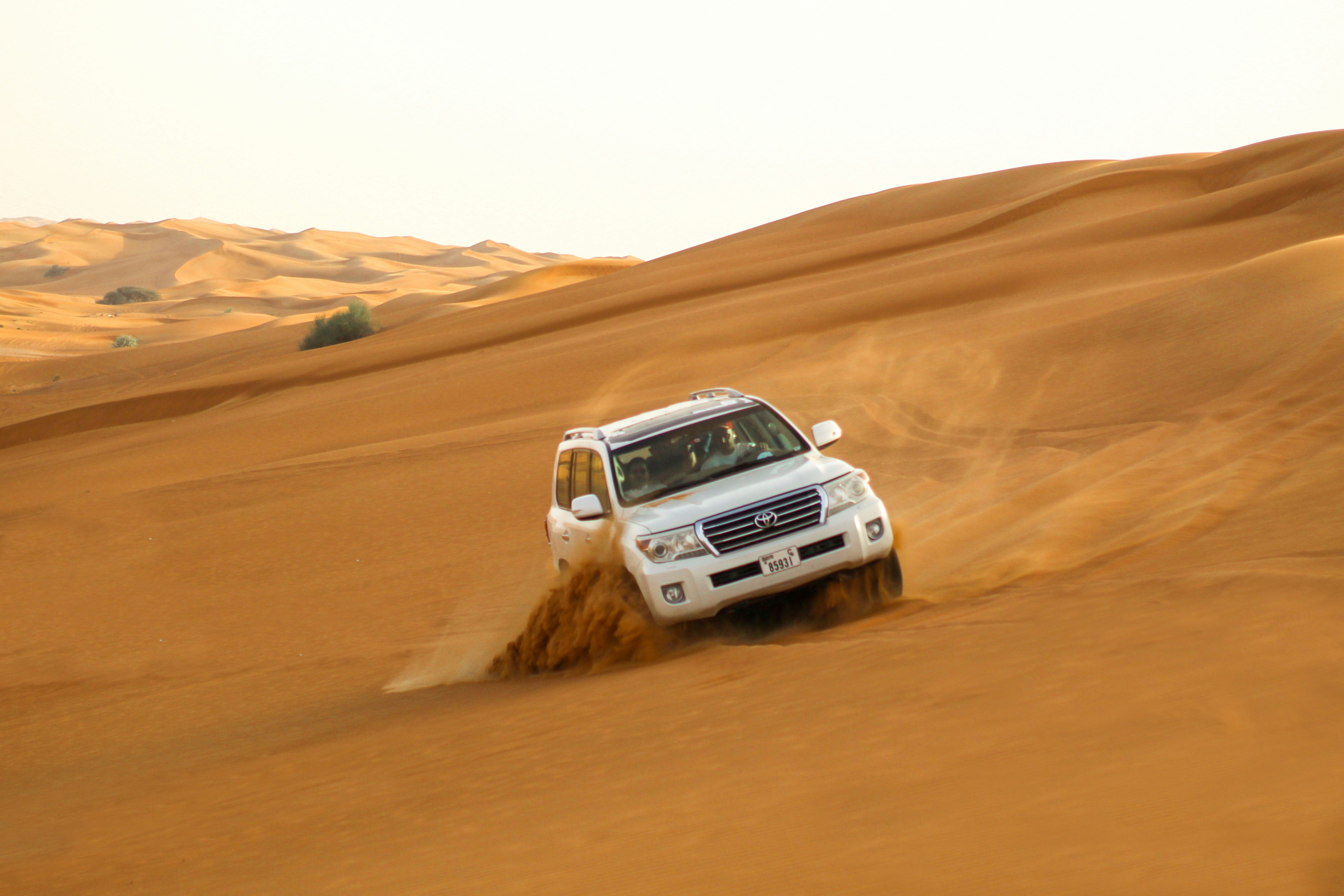
No scams, no surprises — verified tours with transparent service. **No tuktuk fake safaris** — some operators sell fake tuktuk "safaris" that are a total scam; Bodda uses real 4x4 jeeps with professional drivers for any desert travel. **Direct booking, direct service** — Bodda is run by real local Egyptians, not a middleman or reseller. You book directly with the people who run the tours. No commission fees, no agent markups, no hidden charges — the price you see is the price you pay.
Real traveler reviews available on request — see what recent guests say about their Abydos experience. Custom itineraries: photography stops at the perfect light, extra time at the Osireion, a visit to a local potter whose family has made offering vessels for generations, your pace. If something goes wrong — a flat tire, a sudden site closure, a sandstorm — we make it right or provide compensation. That's not a policy. That's personal.
────────────────Ready to Walk Where Pharaohs Prayed?
Abydos doesn't shout. It whispers. And the whispers carry five thousand years. Whether you're drawn by the King List's silent parade, the Osireion's impossible stones, or the simple wish to stand where ancient feet once trod — I'd be honored to take you there.
Reach out anytime between 07:00-22:00 daily. Let's talk about what Abydos means to you.
- WhatsApp: wa.me/201040541153
- KakaoTalk: open.kakao.com/o/smU92Hfi
- Email: info@boddatours.me
- Website: boddatours.me
Sources & References
- Egyptian Ministry of Tourism and Antiquities — Official Site Data for Abydos Temple Complex
- UNESCO World Heritage Centre — Tentative List: Abydos, Pilgrimage Center of Ancient Egypt
- Dreyer, Günter. "Umm el-Qa'ab: The Predynastic and Early Dynastic Cemetery at Abydos." German Archaeological Institute Cairo, 1998.
- Frankfort, Henri. "The Cenotaph of Seti I at Abydos." Egypt Exploration Society, 1933.
- O'Connor, David. "Abydos: Egypt's First Pharaohs and the Cult of Osiris." Thames & Hudson, 2009.
- ARCE (American Research Center in Egypt) — Conservation Reports for the Red Monastery and White Monastery, 2003-2023.
![[2026 Egypt Tours] Siwa Oasis Honest Review (Desert Safari & History)](https://boddatours.me/images/hq/siwa-salt-lake-hq.jpg)

![[2026 Egypt Tours] Siwa Oasis Private Tour (Desert Safari & History)](https://boddatours.me/images/hq/milky-way-hq.jpg)