![[2026 Egypt History Tours] Philae Temple Aswan: Where Isis Still Whispers on the Nile (Sacred Island Legends)](https://boddatours.me/images/hq/aswan-hq.jpg)
The Island That Refused to Drown
You step onto the boat before dawn. The Nile is glass. No wind. No voices. Just the slow dip of oars and the silhouette of an island rising from black water — pylons, columns, a kiosk floating like a mirage. This is Philae. Not a ruin. A survivor.
I've brought hundreds of travelers here. Koreans, Europeans, Egyptians returning home. Every single one goes quiet when the boat touches the dock. Something about this place. The air feels thicker. Older. Like the stones remember every prayer ever whispered against them.
Philae Temple Aswan isn't just another stop on a Nile cruise Luxor Aswan itinerary. It's the last place where the old gods were worshipped openly. The last hieroglyphs ever carved. The island that UNESCO moved, stone by numbered stone, because the world refused to let it vanish.
If you're searching for an Egypt history tour that goes deeper than dates and dynasties, this is where the soul of ancient Egypt still breathes.
When the Waters Rose: The Greatest Rescue in Archaeology
Let me tell you the story that still gives me chills. The Old Aswan Dam, built in 1902, flooded Philae for half the year. The temples stood in water. Salt crystallized on reliefs. Colors bled. Then came the High Dam in the 1960s. The island would disappear forever beneath Lake Nasser.
The world said no.
UNESCO launched a campaign. Fifty countries. Twenty years. Forty thousand blocks dismantled, numbered, moved, and reassembled on Agilkia Island — higher, safer, reshaped to mimic the original Philae's contours. The UNESCO World Heritage Centre calls it one of the most ambitious heritage rescues ever attempted (UNESCO World Heritage Centre).
I've walked the seams. You can still see the numbers chalked on blocks if you know where to look. Each stone carries two histories now — the ancient one, and the modern one of engineers and laborers who loved this place enough to save it.
When travelers ask me "Is Philae Temple worth visiting?" I take them to the western colonnade at sunset. The light hits the relocated stones. The water laps the new shore. And you realize: this isn't a museum. It's a living temple that refused to die.
Isis, Osiris, and the First Heartbreak
Before the Ptolemies built these columns, before Romans added their gates, Philae was already sacred. The ancient Egyptians called it Pilak — "the remote place" or "the island of the time of Re." They believed Osiris was buried here. One of fourteen pieces scattered by Set. His head, some say. His heart, others whisper.
Isis found him here. She gathered the pieces. She breathed life back into him long enough to conceive Horus. The first resurrection. The template for every afterlife promise that followed.
Stand in the Birth House (Mammisi) where the walls show Isis nursing Horus in the marshes. The reliefs are tender. Human. A mother hiding her child from a murderous uncle. Papyrus thickets. Crocodiles. The fear in her eyes carved in stone three thousand years ago.
This isn't mythology to me. It's family history. My grandmother told me these stories before I could read. She'd point to the Nile and say "Isis walked those banks. Her tears made the flood." When the inundation came each year, we'd say the goddess was weeping for her husband again.
The Philae Temple history lives in every Nubian family near Aswan. We carry it differently than guidebooks do.
Ptolemaic Philae: When Greeks Became Pharaohs
The temples you see today — the Great Temple of Isis, the Kiosk of Trajan, the Gate of Hadrian — most are Ptolemaic and Roman. But they weren't built by conquerors. They were built by Greek kings who became more Egyptian than the Egyptians.
Ptolemy II Philadelphus started the Great Temple around 280 BCE. His descendants finished it. They wore the double crown. They spoke Egyptian. They slept in the temple crypts during festivals, dreaming for oracles. The Egyptian Ministry of Tourism and Antiquities notes that Philae remained a major pilgrimage center well into the Roman era (Egyptian Ministry of Tourism).
Walk the hypostyle hall. Ten columns. Hathor capitals smiling down. The ceiling still holds fragments of astronomical scenes — Nut swallowing the sun, giving birth to it. The Ptolemies didn't just copy Egyptian theology. They lived it.
Look at the relief of Ptolemy XII Neos Dionysos — Cleopatra's father — offering to Isis and Horus. He's carved in pure Egyptian style. Kneeling. Humble. A Macedonian king begging a Nubian goddess for legitimacy.
That's the magic of Philae Temple Aswan. Every ruler who came here — Nubian, Greek, Roman — knelt to the same goddess. The island made equals of them all.
The Kiosk of Trajan: Unfinished Perfection
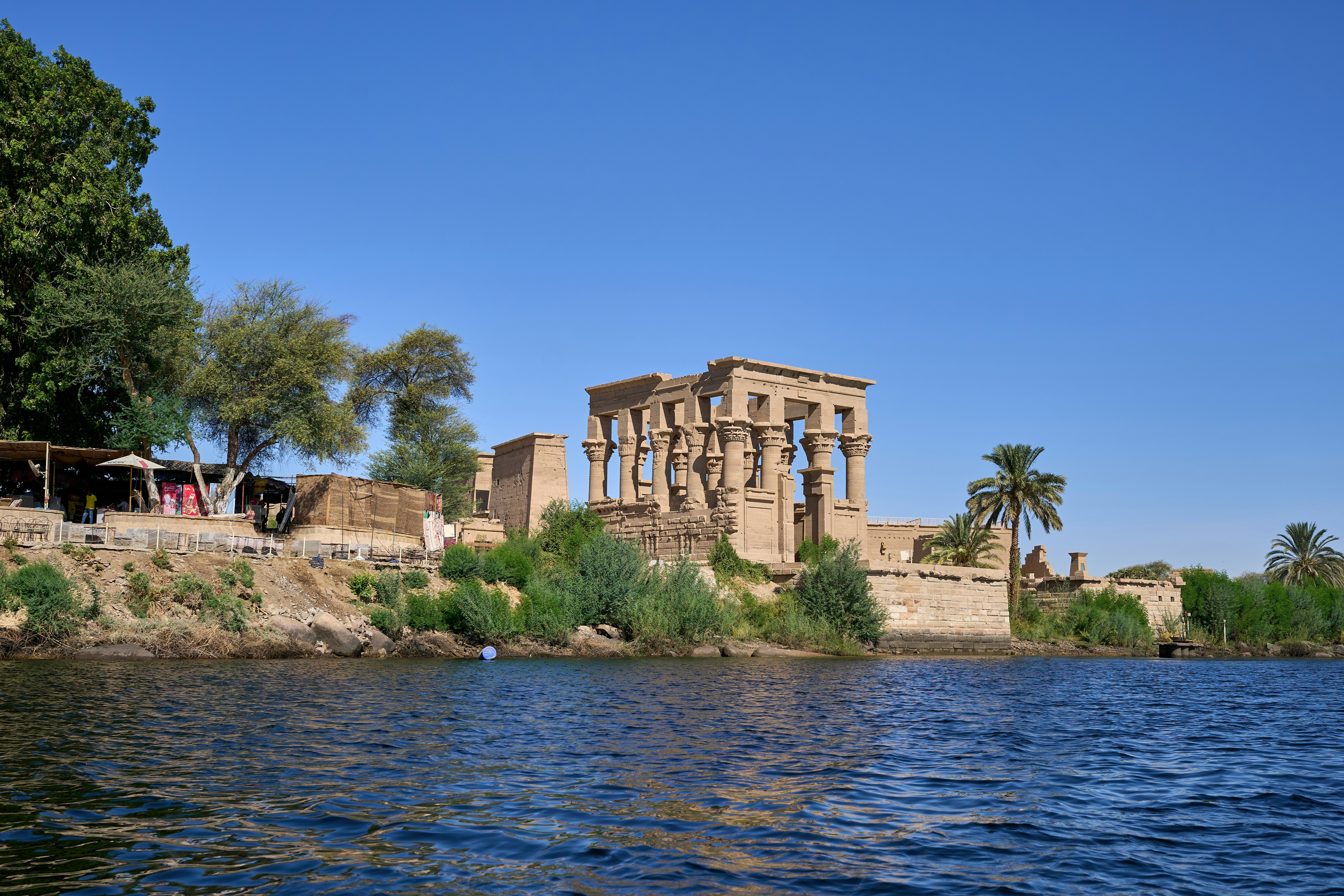
Fourteen columns. No roof. Open to the sky. The "Pharaoh's Bed" locals call it. Trajan started it around 100 CE. Never finished it. And somehow that's perfect.
I sit here with travelers sometimes. Just wait. The light moves across the capitals — lotus, papyrus, palm. The Nile reflects in the spaces between columns. Herons fish in the shallows. A felucca drifts by, lateen sail catching breeze.
This is what Aswan tours should feel like. Not rushed. Not checked off a list. The Kiosk teaches you to see Egypt slowly.
Roman emperors added gates — Hadrian, Marcus Aurelius, Diocletian. Each one smaller than the last. The empire was shrinking. But here, on this island, they still built. Still honored Isis. The last pagan stronghold in a Christianizing world.
The Last Hieroglyph and the Last Priest
August 24, 394 CE. A priest named Nesmeterakhem carved a demotic inscription on the Gate of Hadrian. "I, Nesmeterakhem, son of Nesmeter, performed the rites." The last datable hieroglyphic text in history.
Two years later, Theodosius closed all pagan temples. But Philae held on. Nubian priests kept the rites alive. The Blemmyes and Nobadae — desert tribes — protected the island. They brought offerings. They sang the old hymns. For another century and a half, Isis was worshipped here while churches rose across Egypt.
Justin I finally sent troops in 535 CE. The priests were arrested. The statues smashed. The sanctuary converted to a church. You can still see crosses carved over hieroglyphs. Coptic altars blocking ancient doorways.
But the Nubians didn't forget. When the island flooded in the 20th century, elders watched the water rise over their grandmother's shrine. They mourned it like a death in the family.
That's why the rescue mattered. It wasn't archaeology. It was restitution.
Nature's Cathedral: The Nile, the Birds, the Light
Philae isn't just stone. It's the water lapping the quay at dawn. The pied kingfisher hovering, then dropping like a stone. The purple heron stalking the reeds. The Nile softshell turtle surfacing near the ancient nilometer.
I've seen Egyptian geese lead goslings between the columns of the Temple of Hathor. Hoopoes nesting in cracks where Ptolemaic masons left mortar. The island is a sanctuary now — not just for gods, for life.
The light here is different. Something about the latitude. The water. The desert dust. At winter solstice, the sun rises perfectly aligned with the main axis of the Great Temple. Isis's sanctuary catches the first ray. The priests knew. They built for it.
Photographers on my private Egypt tours wait hours for that light. They don't mind. The waiting is part of the pilgrimage.
Best Time to Visit Philae Temple
October through April. Days are warm, nights cool. The light is golden, not bleached. Winter mornings bring mist on the Nile — the island emerges like a dream.
May through September is brutal. Forty degrees plus. The stone radiates heat. But if summer is your only window, come at first light. The temple opens at 7 AM. Be on the first boat. You'll have the hypostyle hall to yourself for twenty minutes before the cruise groups arrive.
Ramadan shifts hours. The site may close earlier. Check with your guide — this is where a Korean-speaking guide Egypt makes all the difference. We know the real-time schedule, not the printed one.
How to Get to Philae Temple from Aswan
You don't walk to Philae. You boat. The marina at Shellal is ten minutes south of Aswan by car. From there, motorboats ferry visitors to Agilkia Island. Ten minutes across water that held the original island for millennia.
Bodda Tours includes door-to-door service. Your driver meets you at your hotel or cruise ship. Clean A/C vehicle. No haggling with boatmen. No waiting in sun. We time it for the light you want — dawn for photographers, late afternoon for golden hour on the Kiosk.
If you're on a Nile cruise Luxor Aswan journey, Philae is usually the final major site before Abu Simbel. We coordinate with your cruise schedule so you never miss the boat — literally or figuratively.
What to Wear at Philae Temple
Respect the sacred space. Shoulders covered. Knees covered. Loose cotton or linen — the stone holds heat. Comfortable shoes with grip; the relocated blocks can be uneven, slippery when damp.
Hat. Sunglasses. Water. The island has minimal shade. In summer, a damp scarf around your neck helps more than you'd expect.
Women sometimes ask about headscarves. Not required for tourists, but carrying a light shawl shows respect — and comes in handy for the boat ride when wind picks up.
Is Philae Temple Worth Visiting?
Short answer: yes. Long answer: it's the only place in Egypt where you can trace an unbroken line from Pharaonic myth through Ptolemaic theology, Roman imperial cult, Coptic Christianity, and Islamic-era Nubian memory — all on one island that refused to drown.
Karnak overwhelms with scale. Abu Simbel stuns with power. But Philae? Philae intimates. It whispers. You leave feeling like you were let in on a secret.
Every traveler I've brought here says the same thing: "I didn't expect to feel this."
That's the measure of a place. Not what you see. What you feel.
Nearby Wonders: What Else Lives Near Philae
Philae anchors the Aswan region. But the magic radiates outward.
Abu Simbel: The Twin Temples That Moved Mountains
Three hours south by road. Ramses II carved two temples into a cliff face — one for himself, one for Nefertari. The sun penetrates the inner sanctuary twice a year, illuminating the gods but leaving Ptah (god of darkness) in shadow. The entire complex was also relocated by UNESCO, cut into blocks, raised 65 meters.
Bodda Tours runs Abu Simbel tour extensions from Aswan. Private 4x4. Dawn departure. You arrive before the crowds. Stand in the hypostyle hall as light crawls toward the sanctuary. That's the moment.
Nubian Villages: Where the Old Ways Breathe
Elephantine Island. Gharb Soheil. Heisa. Colorful houses. Domed guest rooms. Women in traditional dress baking shamsi bread in clay ovens. Men playing kisir lyre, singing songs older than Arabic.
We arrange visits with families I've known since childhood. Not performances. Conversations. Tea. Stories about the old island before the dam. The Nubian language — Nobiin — still spoken in these homes. It's the closest living relative to ancient Meroitic.
Unfinished Obelisk: The Ghost in the Quarry
Still attached to bedrock. Forty-two meters long. Would have been the largest obelisk ever. A flaw cracked it. The masons abandoned it. You can still see their dolerite pound marks. Feel the rhythm of three thousand years of strikes.
Aswan High Dam: The Modern Monument
Controversial. Transformative. The dam that threatened Philae also electrified Egypt. Ended the annual flood that fed the soil for five millennia. Created Lake Nasser — one of the world's largest artificial lakes. The viewpoint offers perspective: the ancient and modern Nile in one gaze.
Why Choose Bodda Tours for Your Philae Temple Aswan Journey
I'm not a booking platform. I'm not a reseller. I'm Bodda — born in Cairo, guiding travelers through my homeland since my early twenties. Every tour we run, I've designed. Every driver, I've vetted. Every guide, I've trained.
Here's what makes us different:
- No shared buses, no cramped seats — 100% private, comfortable vehicles. Your car. Your schedule. Your pace. Want to stay at the Kiosk until the last light? Done. Want to skip the High Dam and spend three hours with a Nubian family? Your call.
- Korean-speaking guide means zero language barrier. My guides speak fluent Korean. Not phrasebook Korean. Real conversation. They understand Korean travel culture — the photography pace, the food preferences, the respect for elders. You'll never feel lost in translation.
- No scams, no surprises — verified tours with transparent service. What we agree on is what you get. No hidden fees. No commission markups. No "optional" stops at perfume factories or papyrus shops unless you ask.
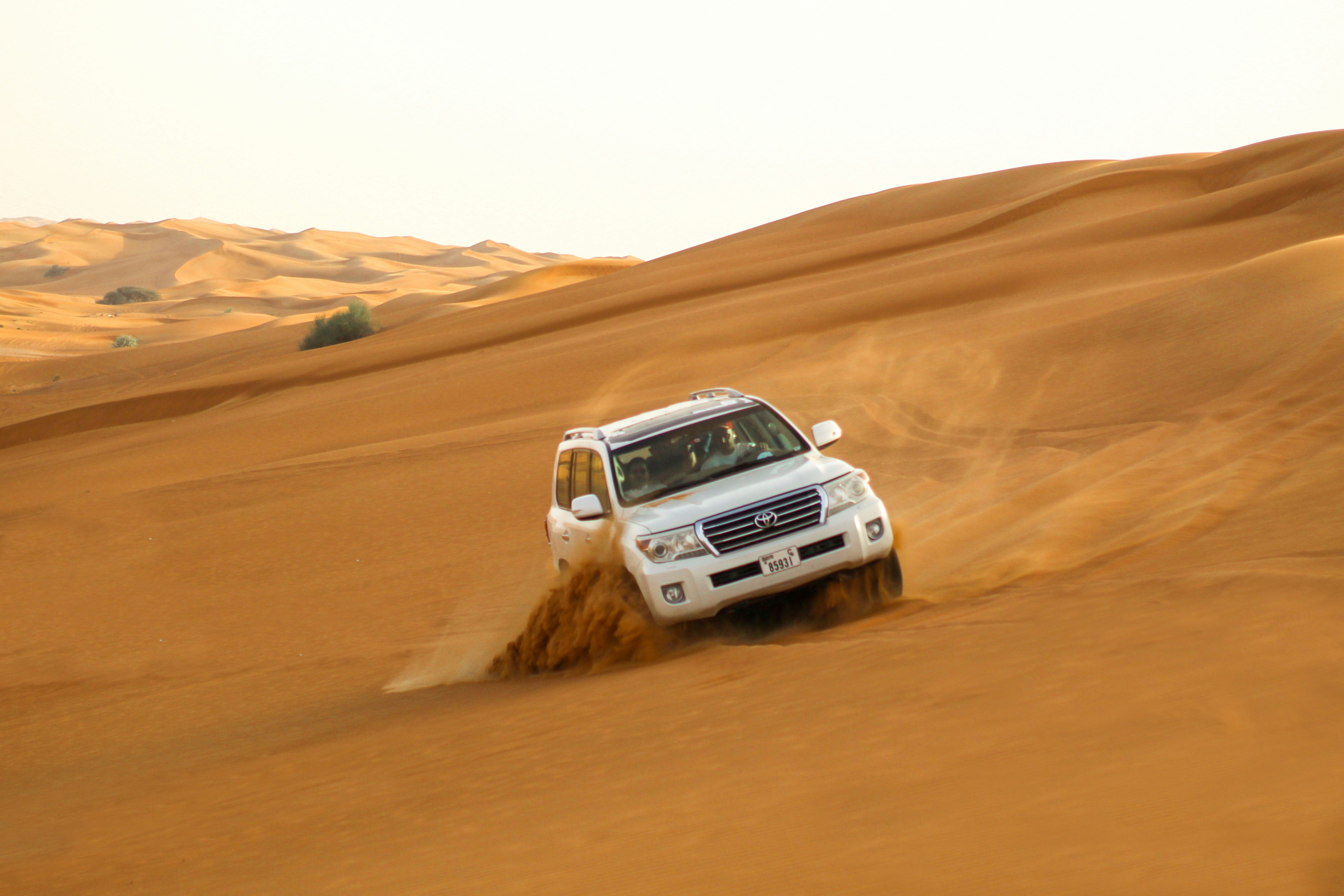
- No tuktuk fake safaris in Siwa — some operators sell fake tuktuk 'safaris' that are a total scam; Bodda uses real 4x4 jeeps with professional drivers. Same principle everywhere. Real vehicles. Real drivers. Real desert.
- Direct booking, direct service — Bodda is run by real local Egyptians, not a middleman or reseller. You book directly with the people who run the tours. Your money stays in Egypt. Your guide's cousin drives the boat. The Nubian family hosting you is my friend's family.
- No commission fees, no agent markups, no hidden charges — the price you see is the price you pay.
- Real traveler reviews available on request — see what recent guests say. Ask us. We'll send unfiltered feedback from Korean travelers who've journeyed with us.
- Custom itineraries: photography stops, food preferences, shopping time, your pace. You love birds? We'll add a felucca birding dawn. You want to learn Nubian cooking? We'll arrange it. You need prayer times respected? Built in.
- If something goes wrong, they make it right — compensation guarantee. Flight delayed? Cruise rescheduled? Sandstorm? We pivot. We cover extra nights. We rebook Abu Simbel. We don't disappear.
We offer private Siwa Oasis tour from Cairo (2-day and 3-day), Fayoum day trip from Cairo (Valley of the Whales, Magic Lake, Tunis Village), Egypt desert safari tour (Black Desert, White Desert, Bahariya), Cairo & Giza private tours (Pyramids, Sphinx, Grand Egyptian Museum, Khan el-Khalili), Saqqara & Dahshur tours, Alexandria day tours, Luxor & Aswan tours including Valley of the Kings tour and Abu Simbel tour, and multi-city packages combining Siwa + Cairo + Fayoum + Luxor + Aswan.
Philae Temple Aswan is often the crown jewel of our Luxor-Aswan programs. But it's also perfect as a standalone day from Aswan, or the spiritual heart of a longer Nubian journey.
Ready to Explore Egypt? Contact Bodda Tours Today
Whether you dream of Philae's dawn light, Siwa's salt lakes, Fayoum's waterfalls, or a private pyramid tour, Bodda Tours is here to make it happen. Reach out anytime between 07:00-22:00 daily.
- WhatsApp: wa.me/201040541153
- KakaoTalk: open.kakao.com/o/smU92Hfi
- Email: info@boddatours.me
- Website: boddatours.me
Sources & References
- UNESCO World Heritage Centre, "Philae Temple Complex" — whc.unesco.org/en/list/88/
- Egyptian Ministry of Tourism and Antiquities, Official Site — egypt.travel
- Wikipedia, "Philae" — en.wikipedia.org/wiki/Philae
- Wikipedia, "International Campaign to Save the Monuments of Nubia" — en.wikipedia.org/wiki/International_Campaign_to_Save_the_Monuments_of_Nubia
![[2026 Egypt Tours] Siwa Oasis Honest Review (Desert Safari & History)](https://boddatours.me/images/hq/siwa-salt-lake-hq.jpg)
![[2026 Egypt History Tours] Edfu Temple Egypt: Where Horus Still Guards the Sky (Sacred Stories Only Locals Tell)](https://boddatours.me/images/fallback-post.png)
![[2026 Egypt History Tours] Nile Cruise Luxor Aswan: 3-Night Journey Through Pharaonic Time (Valley of Kings & Philae Temple)](https://boddatours.me/images/hq/westbank-hq.jpg)