![[2026 Egypt Travel Guide] Bahariya Oasis Sunrise Sunset Wellness Guide (Desert Magic & Ancient Healing)](https://boddatours.me/images/fallback-post.png)
Bahariya Oasis Sunrise Sunset: Where the Desert Breathes
The first time I watched sunrise from the top of English Mountain, I understood why the ancient Egyptians called this place the Northern Oasis — not just a dot on a map, but a living threshold between the Nile Valley and the great Western Desert. The light doesn't just arrive here. It unfolds. It spreads across salt flats and palm groves like honey, touching the ruins of a Greco-Roman temple where Alexander the Great's priests once made offerings to Amun, warming the mineral waters that have risen from deep aquifers since the time of the 26th Dynasty.
I've guided travelers through Bahariya for years now. Koreans, Europeans, Americans — they all arrive expecting sand and heat. They leave carrying something quieter. The Bahariya Oasis sunrise sunset rhythm does something to a person that no spa treatment can replicate. It's not wellness packaged in a brochure. It's wellness that has existed here for three thousand years, carried in the hands of Bedouin healers, whispered in the date palms, written in the layers of rock that hold the fossils of whales that swam here forty million years ago.
This guide isn't about checking boxes. It's about showing you how to meet this place on its own terms — through the eyes of someone who grew up driving these desert tracks, who knows which spring holds which memory, who has sat with Bedouin elders listening to stories that never made it into guidebooks.
The Ancient Geography of Healing: Why Bahariya Was Sacred
Long before tourists arrived in 4x4s, Bahariya was a crossroads of power and pilgrimage. The ancient Egyptians called it Wḥꜣt Mḥtyt — the Northern Oasis — and it served as the gateway to the Western Desert trade routes connecting the Nile Valley to Libya, to Siwa, to the mysterious lands beyond. During the Middle Kingdom (circa 2055–1650 BCE), pharaohs sent expeditions here for wine, dates, and the precious mineral salts that preserved their dead.
But the real story of Bahariya's wellness legacy begins with water. The oasis sits atop the Nubian Sandstone Aquifer System — one of the world's largest fossil water reserves, stretching beneath Egypt, Libya, Sudan, and Chad. This water has been rising through artesian springs for millennia, each with its own temperature, its own mineral signature, its own reputation among local healers.
The most famous is Bir Al-Matar (the Spring of Rain), known since the 26th Dynasty (664–525 BCE) for its therapeutic properties. Roman soldiers stationed at the nearby fortress of Qasr el-Bawiti bathed in its waters to heal battle wounds. Coptic monks later built a monastery nearby, using the spring for ritual purification. Today, Bedouin families still bring their children here for skin conditions, rheumatism, and what they call "the heaviness in the bones" — a phrase that carries generations of embodied knowledge.
Archaeological evidence from the Valley of the Golden Mummies — discovered in 1996 by Dr. Zahi Hawass — reveals that Bahariya's elite during the Greco-Roman period (332 BCE–395 CE) were buried with amulets of Bes, the dwarf god of household protection and childbirth, and Hathor, goddess of joy, music, and feminine healing. The mummies themselves show evidence of sophisticated medical care: dental work, treated fractures, herbal residues in abdominal cavities. This was a place where healing was woven into daily life, not separated from it.
Dawn on English Mountain: The View That Changed Everything
English Mountain (Gebel al-Ingliz) got its name during World War I, when British forces built a lookout post here to monitor Senussi movements across the desert. But the mountain's real name in Arabic is Gebel al-Dust — the Mountain of the Saddle — for its distinctive double-peaked silhouette. I prefer the older name. It reminds me that every layer of history here sits atop an older one.
We leave Bawiti — the oasis's main town — around 4:30 AM in winter, 5:00 AM in summer. The drive up the winding track takes twenty minutes. The air is cold, scented with desert sage and the faint mineral tang of the springs below. By the time we reach the summit, the eastern horizon has already begun to pale.
Then the sun breaches the horizon.
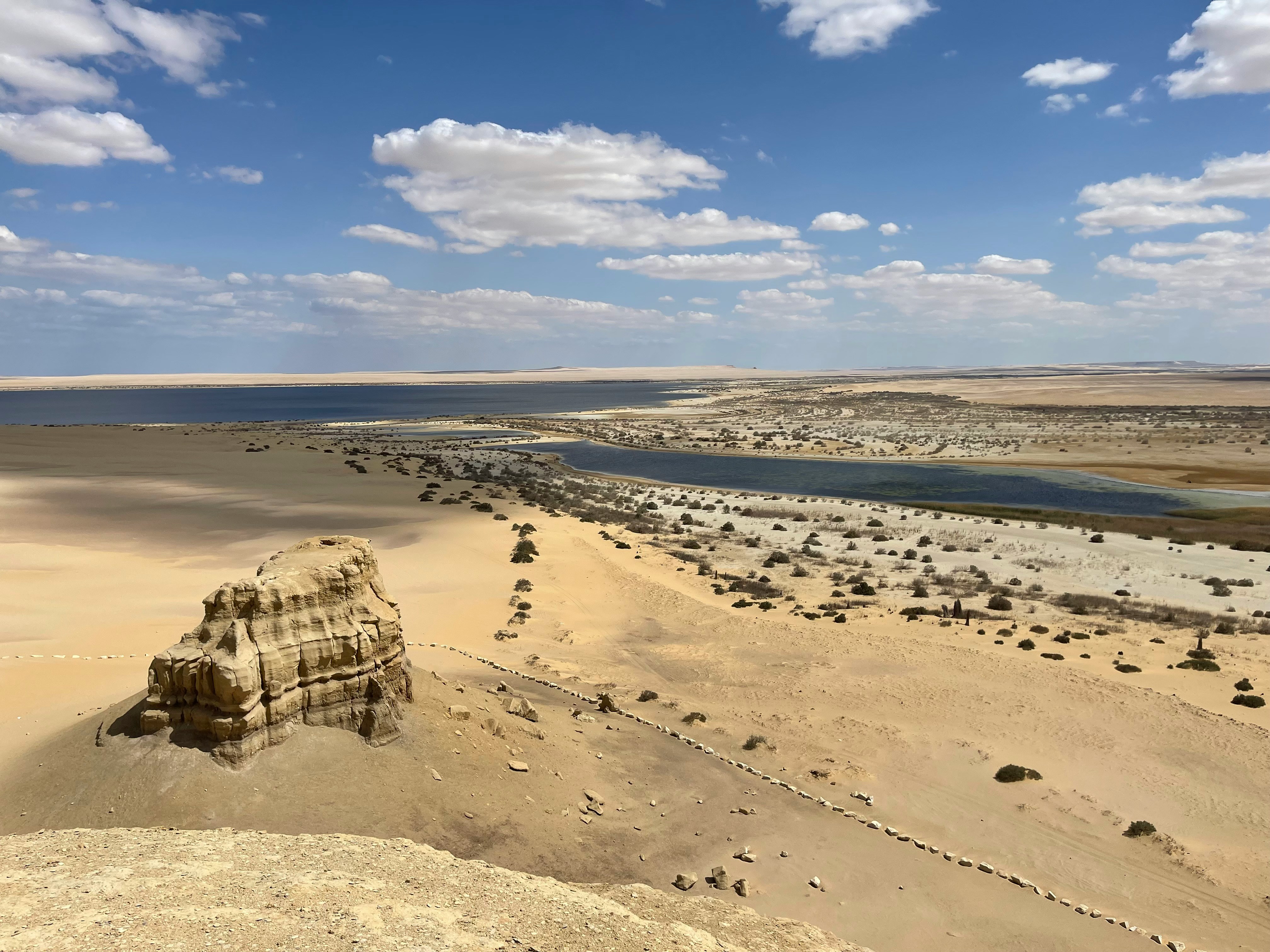
It doesn't explode into the sky the way it does over Cairo. Here, it emerges. First a thin line of fire along the desert's edge, then a slow spill of gold across the palm groves, the salt flats, the clustered domes of Bawiti's old town, the white limestone cliffs of the White Desert visible fifty kilometers to the southwest. The shadows retreat. The date palms catch fire, each frond outlined in light. Below us, the oasis wakes — the call to prayer from the mosque, the clatter of a donkey cart, the distant bark of a dog.
I've watched this sunrise maybe two hundred times. It never feels repeated. Each dawn writes a new version of the same ancient story: light returning to the desert, life stirring in the palms, water rising from the deep.
Travelers often stand in silence for long minutes. Some cry. I don't ask why. The desert doesn't need explanations.
Sunset at the Black Desert: Where Volcanic Stone Holds the Day's Heat
If sunrise at English Mountain is about revelation, sunset at the Black Desert is about retention. The Black Desert (Sahra al-Sawda) lies thirty kilometers south of Bawiti, its hills capped with black basalt — the remnants of volcanic activity from the Oligocene epoch, thirty million years ago. These stones absorb the desert's fierce heat all day, then release it slowly as the sun drops, creating a warm embrace that lingers long after darkness falls.
The contrast with the White Desert — chalk formations sculpted by wind into surreal mushrooms, arches, and sphinxes — couldn't be sharper. The Black Desert feels ancient, heavy, grounded. The White Desert feels like a dream. Together they frame Bahariya's geological soul.
We time our arrival for the "golden hour" — that magical window when the low sun turns the black basalt into burnished bronze, when shadows stretch long and the texture of every rock face becomes visible. This is when photographers get their shots. But it's also when the desert's energy shifts. The wind drops. The temperature settles into something perfect. Bedouin guides brew tea over a small fire, the scent of sage and cardamom mixing with woodsmoke.
I've seen travelers who arrived stressed, speaking in clipped sentences, checking their phones — slowly uncoil here. The Black Desert at sunset doesn't demand anything of you. It simply offers presence. The stones have held this heat for thirty million years. They can hold yours for an evening.
The Healing Springs: A Living Pharmacy Beneath the Palms
Bahariya has over three hundred natural springs. Not all are developed. Not all are accessible. But the ones that matter — the ones locals use — form a map of healing that predates modern medicine by millennia.
Bir Al-Matar (Spring of Rain)
Temperature: 37°C (98.6°F) — body temperature. Minerals: high in sulfur, calcium, magnesium, and trace lithium. The ancient name suggests it was once fed by seasonal rains; today it's purely artesian. Roman bath ruins sit beside the modern concrete pool. I've seen a seventy-year-old Bedouin woman lower herself into this water with a sigh that sounded like prayer. She told me her grandmother brought her here as a child for "the stiffness that comes with the cold winds." Three generations. Same spring. Same relief.
Bir Al-Ghaba (Spring of the Forest)
Hidden in a palm grove near the village of Mandisha. Cooler — 28°C (82°F). High in silica, giving the water a silky texture. Traditionally used for skin conditions and what locals call "nervous exhaustion." The setting matters as much as the water: you bathe under date palms, surrounded by the sound of wind in fronds and the drip of irrigation channels. No concrete. No changing rooms. Just stone steps worn smooth by centuries of feet.
Bir Sigam (The Hot Spring)
Near the Black Desert turnoff. 42°C (107.6°F). High sulfur content — you smell it before you see it. This is the one for deep muscle pain, for the ache that sits in joints after months of desk work or heavy labor. Bedouin herders bring their camels here in winter; the animals know the water before the humans do. I've watched a camel herd surround the spring at dawn, steam rising from their backs and the water both, a scene that could have happened two thousand years ago.
These springs aren't tourist attractions. They're community infrastructure. When I bring travelers, I introduce them to the spring's caretaker — usually an elderly man who inherited the role from his father. We ask permission. We leave dates or tea as thanks. This isn't performance. It's how things work here.
Bedouin Wisdom: The Desert's Original Wellness Practitioners
The Awlad Ali Bedouin have lived in and around Bahariya for at least four hundred years, migrating from the Libyan Desert in the 17th century. Before them, other tribes. Before them, the ancient oasis dwellers whose DNA still runs in the veins of today's families. Their wellness knowledge isn't written in books. It's carried in bodies, in recipes, in the rhythm of daily life.
Take shih (desert sage, Artemisia herba-alba). Bedouin women harvest it in spring, dry it in the shade, store it in clay jars. It treats digestive issues, menstrual pain, fever, anxiety. The essential oil has been studied by Cairo University's pharmacology department — confirmed antimicrobial, anti-inflammatory, anxiolytic. But the Bedouin didn't need a lab to know. They knew because their mothers knew, and their mothers' mothers.
Or hammad (saltwort, Salsola species) — the young shoots eaten raw in salad, the older stems burned for ash used in traditional bread-making. The ash adds minerals and a distinctive flavor to libba, the flatbread baked in sand ovens. I've eaten this bread hot from the ashes, dipped in olive oil and dukkah (spiced nut and seed blend), sitting on a woven mat in a Bedouin tent while the wind howled outside. That meal did more for my nervous system than any supplement.
Then there's the zaar — not the famous spirit possession ceremony of the Nile Valley, but a quieter Bahariya variant: a nighttime gathering where women chant, drum, and share tea infused with herbs chosen for the season and the participants' needs. I've been invited twice in fifteen years. Both times, I left feeling like I'd shed a layer of something I didn't know I was carrying.
This knowledge is fragile. Young Bedouin leave for Cairo, for the coast, for office jobs. The elders who hold the deepest knowledge are passing. When I bring travelers to meet them, it's not for a cultural show. It's to witness. To listen. To carry a piece of it forward.
The Valley of the Golden Mummies: Where Death Became Art
No discussion of Bahariya's spiritual landscape is complete without the Valley of the Golden Mummies. Discovered in 1996 when a donkey stumbled into a tomb shaft, this necropolis has yielded over 250 mummies from the Greco-Roman period — the largest such find in Egypt. Many are gilded, their cartonnage masks covered in gold leaf, eyes inlaid with obsidian and glass, bodies wrapped in linen painted with scenes from the Book of the Dead.
But the wellness connection isn't in the gold. It's in the care.
These mummies show evidence of excerebration (brain removal) done with surgical precision, organ packets treated with resins and herbs, bodies positioned with amulets placed at specific chakra points — heart, throat, third eye. The embalmers here weren't just preserving flesh. They were preparing the ka (vital essence) and ba (personality) for a journey that required strength, clarity, and protection.
Dr. Hawass's team found residues of frankincense, myrrh, cedar oil, juniper, and a mysterious compound still being analyzed — possibly a local desert plant. These weren't imported luxuries. Bahariya produced frankincense and myrrh in the Roman period, traded them along the Darb al-Arba'in (the Forty Days Road) to the Nile. The oasis was both a healing center and a pharmacy for the ancient world.
Today, a small selection of mummies is displayed in Bawiti's Antiquities Inspectorate. The rest remain in climate-controlled storage, their secrets still unfolding. Standing before a gilded mask — a young woman, perhaps twenty, her eyes forever open — you feel the weight of a culture that treated the transition from life to death as the ultimate wellness practice: a preparation, not an ending.
Seasonal Rhythms: When to Meet Bahariya
The desert doesn't recognize calendars. It recognizes cycles.
Winter (November–February): The Season of Clarity
Days 18–22°C (64–72°F). Nights 5–8°C (41–46°F). Crystal air. Zero humidity. This is when the desert shows its bones — every geological layer visible, every star sharp enough to cut. The springs feel hottest against the cold air. Bedouin tents are warm with fires. This is the season for deep work: meditation, writing, grief processing, the kind of silence that rearranges your interior landscape.
Spring (March–April): The Season of Bloom
Days 25–30°C (77–86°F). The desert erupts. After winter rains (if they came), the wadis fill with yellow gundelia, purple eremurus, white ziziphus blossoms. The air smells of honey and herbs. Bedouin families move their herds to the greening pastures. This is the season for renewal, for shedding winter's heaviness, for walking the desert floor and finding fossils of nummulites — ancient single-celled organisms that built the limestone beneath your feet.
Early Summer (May–June): The Season of Light
Days 35–40°C (95–104°F). The light is fierce, almost violent in its clarity. Shadows are razor-sharp. The springs become sanctuaries — the only places where the body can fully relax. This is the season for early mornings and late evenings, for siesta in the palm shade, for night walks under a moon so bright you can read by it. Few tourists come. The oasis belongs to its people.
Late Summer–Autumn (July–October): The Season of Dates
The date harvest. Every palm grove hums with activity — men climbing barefoot up trunks, women sorting fruit on woven mats, children carrying baskets. The air is thick with date syrup steam from the pressing vats. This is the season of abundance, of community, of sweetness. The wellness here is communal: shared meals, shared labor, the satisfaction of a year's work gathered in.
What to Wear: Dressing for the Desert's Respect
This isn't about fashion. It's about relationship. The desert respects those who respect it.
Loose, long layers. Linen or cotton — synthetics trap heat and don't breathe. Long sleeves protect from sun and biting flies. Long pants or skirts. A wide-brimmed hat that won't blow off. Sturdy closed shoes for walking on sharp limestone and hot sand. A light scarf — for your head when the sun is brutal, for your shoulders when entering a mosque or a Bedouin home, for your face when the wind carries sand.
Colors matter. Earth tones — ochre, sand, olive, terracotta — blend with the landscape. Bright colors startle wildlife and signal "tourist" to every vendor within kilometers. White reflects heat but shows every dust stain. Black absorbs heat but hides stains and commands a different kind of respect in Bedouin culture.
For the springs: modest swimwear. Egyptian culture is conservative. Women — a one-piece or rash guard with board shorts. Men — swim trunks with a liner, not briefs. A lightweight robe or oversized shirt for walking to and from the water. Towels are rarely provided; bring your own.
At night: layers. The temperature drop is real. A fleece or light down jacket. Warm socks. The desert gives heat freely by day and takes it back ruthlessly by night.
Is Bahariya Worth Visiting? The Honest Answer
Yes. But not for the reasons Instagram sells you.
It's worth visiting if you want to feel small in a way that expands you. If you want to drink water that fell as rain before the pyramids were built. If you want to sit in silence that isn't empty — it's full of wind, palm rustle, distant goat bells, the breathing of the earth. If you want to meet people whose wellness practice isn't a weekend workshop but a survival technology refined over centuries.
It's not worth visiting if you want luxury spas, Instagram backdrops, air-conditioned comfort, or a curated "authentic experience" delivered on a schedule. Bahariya doesn't perform. It reveals. The difference is everything.
I've had travelers tell me their three days in Bahariya changed how they sleep, how they breathe, how they understand their own bodies. I've had others complain about the bumpy roads, the flies, the lack of WiFi. Both experiences are real. The difference is what you bring.
Nearby Worlds: Where Bahariya Leads
Bahariya is a gateway. From here, the desert opens into landscapes that each carry their own healing signature.
White Desert (Sahra al-Beida) — 50 km Southwest
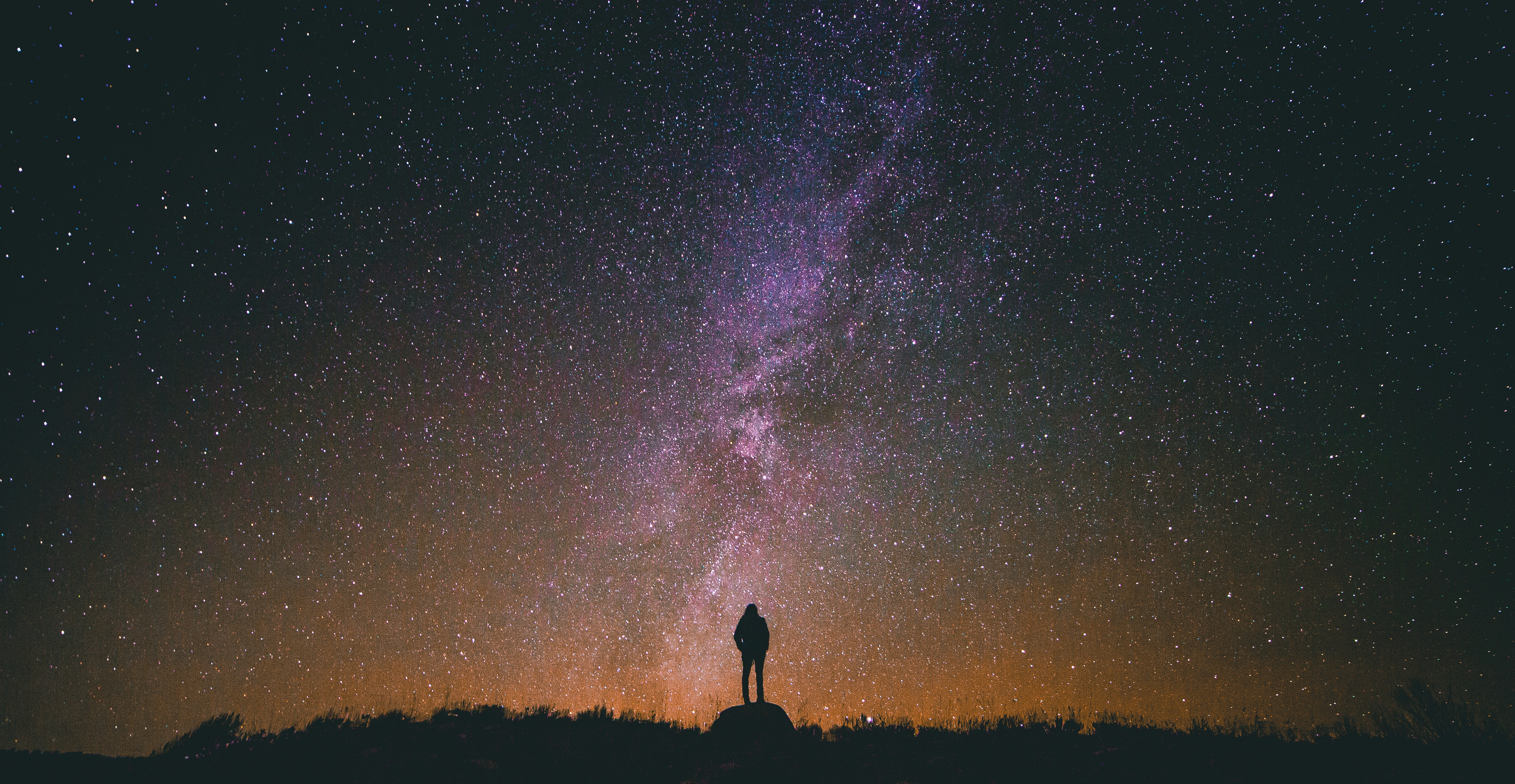
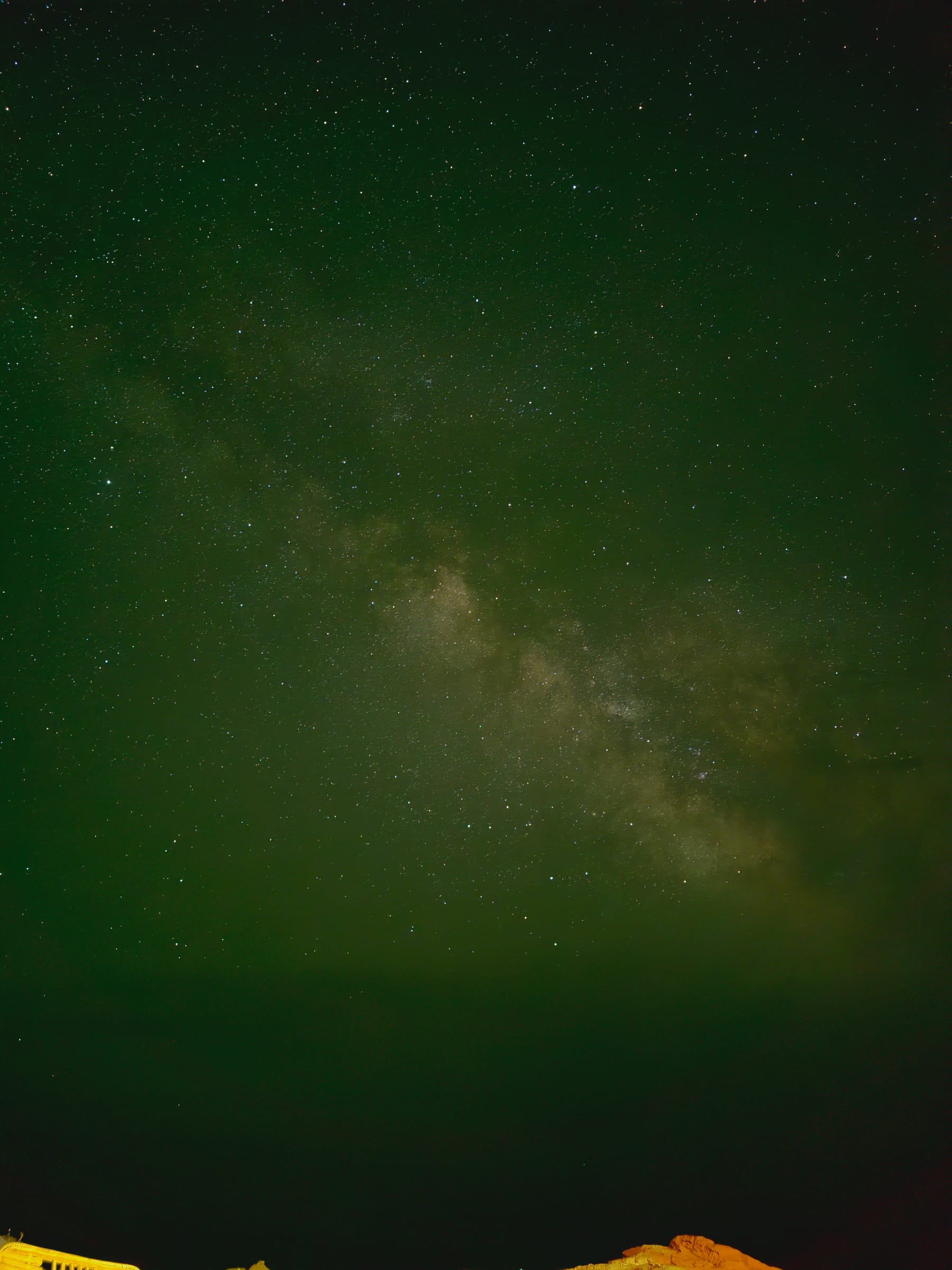
Chalk formations sculpted by wind into shapes that defy naming: mushrooms, sphinxes, tents, a chicken, a rabbit, a human face. Camping here under the Milky Way — no light pollution, no sound but wind — resets circadian rhythms in ways science is only beginning to measure. The chalk glows in moonlight. You can walk at midnight without a flashlight. Bodda Tours runs overnight camping here with Bedouin guides who know every formation's name and story.
Crystal Mountain (Gebel al-Izzaz) — 90 km South
A ridge of quartz crystals embedded in limestone, glittering like a broken crown. Formed when hydrothermal fluids forced their way through rock fractures millions of years ago. Bedouin believe the crystals hold the desert's memory. Geologists see a rare mineralogical window. Both are true. Touching a crystal that formed before humans existed puts time in perspective.
Siwa Oasis — 300 km West
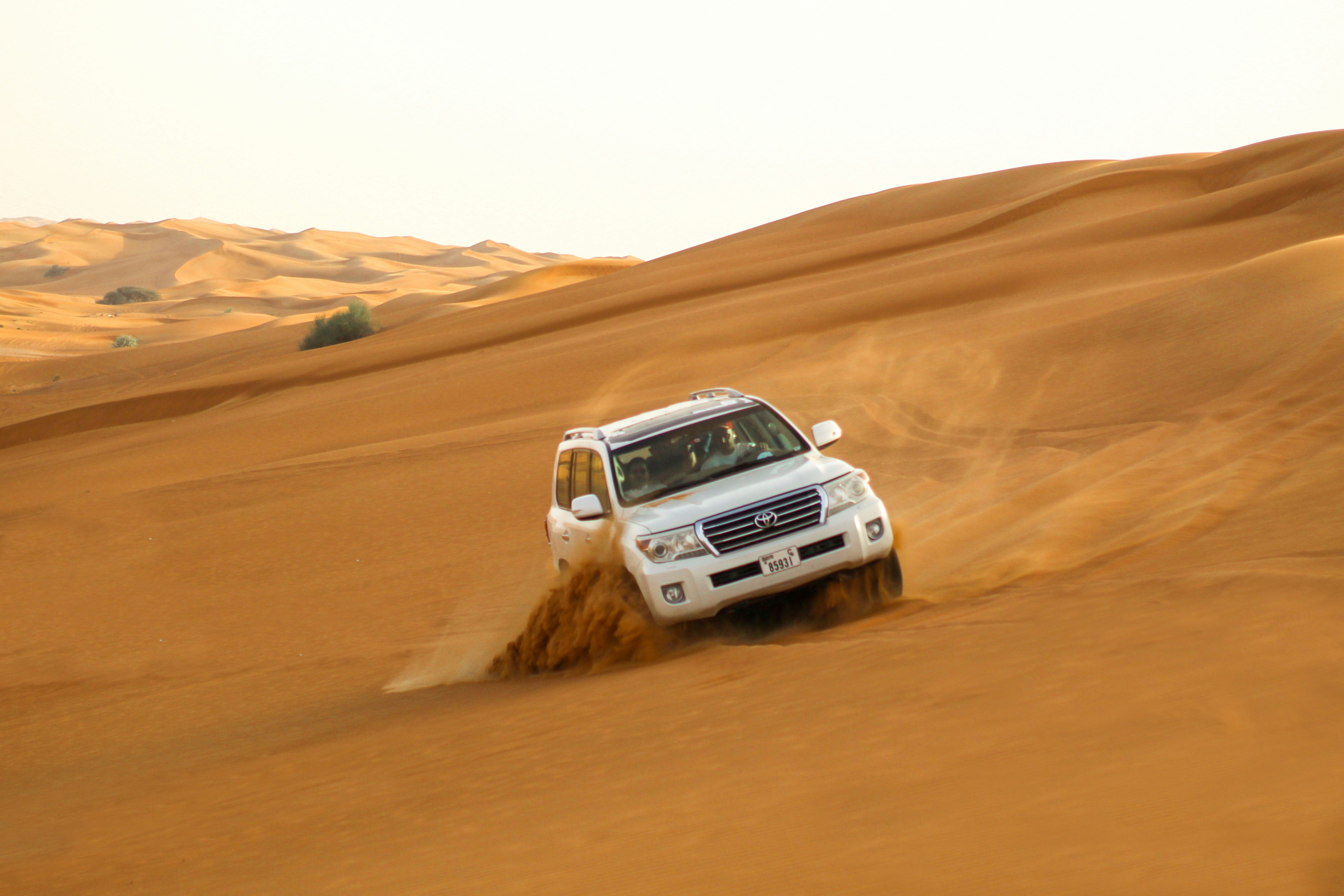
The most remote of Egypt's oases, home to the Oracle of Amun that Alexander the Great crossed the desert to consult in 331 BCE. Siwa has its own rhythm — slower, deeper, more insular. Its salt lakes (Bir Wahed, Fatnas) offer buoyancy that mimics the Dead Sea. Its mud-brick fortress of Shali rises like a dream from the palm groves. Bodda Tours offers Siwa Oasis private tour packages (2-day and 3-day from Cairo) that include desert safari in real 4x4 jeeps — not the fake tuktuk safaris some operators sell — salt lake floating, Shali Fortress exploration, Cleopatra Spring, and stargazing camping with Bedouin hosts.
Fayoum Oasis — 200 km Northeast
Closer to Cairo, greener, richer in water. Valley of the Whales (Wadi Al-Hitan) UNESCO World Heritage site — fossilized archaeoceti whales proving this desert was once a sea. Magic Lake changing colors through the day. Wadi El-Rayan waterfalls — Egypt's only natural waterfalls. Tunis Village pottery community where Swiss potter Evelyne Porret founded a school in the 1980s that transformed local economy. Bodda Tours runs Fayoum day trip from Cairo covering all these sites with a Korean-speaking guide who knows the fossil beds like the lines on his hand.
Black Desert & Bahariya Combined — The Classic Circuit
Most travelers do Bahariya + Black Desert + White Desert as a 2-night loop from Cairo. Day 1: drive to Bahariya, springs, English Mountain sunset. Day 2: Black Desert sunrise, Crystal Mountain, White Desert camping. Day 3: White Desert sunrise, return via Bahariya springs. This is the Egypt desert safari tour that shows you the Western Desert's full palette — gold, black, white, crystal, palm, salt, star.
Why Choose Bodda Tours for Your Bahariya Journey
I started Bodda Tours because I watched too many travelers get sold "desert experiences" that were anything but. Shared buses with cracked windows. Tuktuk "safaris" in Siwa that never reach the real dunes. Guides who recite Wikipedia. Hidden fees that appear at the end. Middlemen taking commissions from middlemen.
Bodda Tours is different because it's me — and a small team of Egyptian guides and drivers I've known for years. We're not a platform. We're not a reseller. We're the people who drive the cars, cook the meals, set up the tents, know which spring is best for which ache, know which Bedouin elder still remembers the old star names.
What this means for you:
- 100% private tours — no shared buses, no cramped seats, no strangers' schedules. Your car, your guide, your pace.
- Korean-speaking guides — zero language anxiety. You ask, you understand, you connect. No translation apps, no guessing.
- Real 4x4 jeeps with professional drivers — no tuktuk fake safaris in Siwa. Some operators sell tuktuk "safaris" that are a total scam; they can't handle real dunes and they're not safe. We use proper desert vehicles driven by men who learned these tracks from their fathers.
- Direct booking, direct service — you book with the people who run the tours. No commission fees, no agent markups, no hidden charges. The price you see is the price you pay.
- Door-to-door service — airport pickup, hotel drop-off, clean air-conditioned vehicles, polite professional drivers.
- Custom itineraries — photography stops, food preferences, shopping time, meditation sessions, fossil hunting, birdwatching, whatever draws you.
- Real traveler reviews available on request — ask us for recent guest contacts and hear directly what others experienced.
- If something goes wrong, we make it right — compensation guarantee. We stand by our work because our name is on it.
We offer private Egypt tours covering Cairo & Giza (Pyramids, Sphinx, Grand Egyptian Museum, Khan el-Khalili, Islamic Cairo), Saqqara & Dahshur (Step Pyramid, Red Pyramid, Bent Pyramid, Memphis), Alexandria (Bibliotheca, Qaitbay Citadel, Catacombs), Luxor & Aswan (Valley of the Kings, Karnak, Philae Temple, Abu Simbel), and multi-city packages combining Siwa + Cairo + Fayoum + Luxor + Bahariya.
Ready to Explore Egypt? Contact Bodda Tours Today
Whether you dream of Bahariya's healing springs, Siwa's salt lakes, Fayoum's whale fossils, or a private pyramid tour at dawn, Bodda Tours is here to make it happen. Reach out anytime between 07:00-22:00 daily — a real human answers, not a chatbot.
- WhatsApp: wa.me/201040541153
- KakaoTalk: open.kakao.com/o/smU92Hfi
- Email: info@boddatours.me
- Website: boddatours.me
Sources & References
- Egyptian Ministry of Tourism and Antiquities — Official site for Bahariya Oasis archaeological sites and Valley of the Golden Mummies
- UNESCO World Heritage Centre — Wadi Al-Hitan (Valley of the Whales) designation documentation
- Hawass, Z. (2000). Valley of the Golden Mummies. American University in Cairo Press.
- Cairo University Faculty of Pharmacy — Pharmacological studies on Artemisia herba-alba (desert sage) traditional uses
- Geological Survey of Egypt — Nubian Sandstone Aquifer System mapping and Bahariya spring mineral analysis
![[2026 Egypt Tours] Siwa Oasis Honest Review (Desert Safari & History)](https://boddatours.me/images/hq/siwa-salt-lake-hq.jpg)