![[2026 Egypt History Tours] Amarna Egypt Tour: Where Akhenaten's Sun Still Warms the Desert Sand (People's Lives & Traditions)](https://boddatours.me/images/fallback-post.png)
The Desert Remembers What Kings Tried to Forget
You drive three hours south of Cairo along the Nile's eastern bank, past Minya's sugar cane fields and the limestone cliffs that have watched empires rise and fall. The road narrows. The traffic thins. And then — there it is. A crescent-shaped plain framed by cliffs that glow gold at sunset. No ticket booth. No souvenir stalls. Just silence and sand and the ghost of a revolution that lasted seventeen years.
This is Amarna Egypt tour territory. Not a tourist site. A time capsule.
I've brought travelers here dozens of times. Every single one stands at the edge of the Great Palace ruins and whispers the same thing: "It's bigger than I imagined." Then they go quiet. Because Amarna doesn't perform for you. It waits.
Pharaoh Akhenaten built this city around 1346 BCE — Akhetaten, "Horizon of the Aten." He tore down the old gods, elevated the sun disk Aten to supreme deity, moved his court 300 kilometers from Thebes, and commanded a city rise from nothing in mere years. Seventeen years later, he was dead. His successors erased his name. The city was abandoned. The desert swallowed it whole.
But the desert preserves what power tries to bury.
────────────────
Why Amarna Egypt Tour Feels Different from Every Other Ancient Site
Most Egyptian sites show you the official version — temples built to last forever, inscriptions polished by priests, tombs designed for eternity. Amarna shows you the messy middle. The experiment. The failure. The human beings who lived through it.
When you walk the Royal Road — the broad processional way that once saw the royal family in golden chariots, the Aten's rays carved above them — you're not following a tourist path. You're tracing commute routes. The baker's walk to work. The scribe's rush to the palace archives. The glassblower's cough from furnace smoke.
This is Egypt history tours at their most intimate. Not monuments. Lives.
────────────────
The Heretic King and the Woman Who Ruled Beside Him
Akhenaten — born Amenhotep IV — didn't wake up one day and decide to overthrow two thousand years of theology. His father Amenhotep III had already elevated solar worship. The Aten appeared in court art years before the move. But Akhenaten took it further. He closed the temples of Amun. He defaced the god's name on monuments across Egypt. He changed his own name to "Effective for the Aten."
And Nefertiti — "The Beautiful One Has Come" — stood beside him. Not behind him. Beside him.
In the tomb of the nobleman Ay at Amarna, you see them together: Akhenaten with his elongated skull, heavy hips, protruding belly — the famous "Amarna style" that makes Egyptologists still argue whether it's religious symbolism, genetic disorder, or artistic revolution. Nefertiti wears the flat-topped blue crown, driving her own chariot, smiting enemies — a queen's pose reserved for kings.
They had six daughters. Meritaten, Meketaten, Ankhesenpaaten (later Tutankhamun's wife), Neferneferuaten, Neferneferure, Setepenre. Their names all honor the Aten. You see them in reliefs: nursing, playing, mourning. The youngest, Setepenre, dies young. Her parents grieve openly in carved stone — a father kissing his dead daughter's hand. Three thousand years later, that gesture still breaks something in your chest.
────────────────
The Artisans Who Built a Revolution in Mudbrick
South of the Royal Road, the ground rises into a low ridge. Here lies the Workmen's Village — a planned community for the craftsmen who decorated royal tombs. Think Deir el-Medina near Luxor, but earlier, rawer, frozen mid-breath.
Seventy-two houses. Nearly identical. Each: four rooms, a staircase to the roof, a cellar. Mudbrick walls whitewashed against the sun. You can still see the niches where they kept oil lamps. The low benches where women ground grain. The stairs where children sat learning hieratic script on ostraca — limestone flakes used as scratch paper.
One house yielded a treasure: the studio of the sculptor Thutmose. In 1912, German archaeologist Ludwig Borchardt uncovered it — and found the famous bust of Nefertiti, now in Berlin's Neues Museum. But also: plaster studies of royal faces. An older woman with lined forehead and sagging jaw — possibly Queen Tiye, Akhenaten's mother. A young prince with sidelock of youth. The artist's thumbprints still in the clay.
These weren't slaves. They were state employees with titles: "Servant in the Place of Truth," "Outline Draftsman," "Chief of the Gang." They struck for better rations. They wrote complaint letters. They worshipped household gods — Bes, Taweret, Hathor — in secret shrines behind their front doors, even as the king preached Aten-only above.
I always tell my guests: press your palm against a mudbrick wall here. The straw mixed into the clay? That's wheat straw from 1340 BCE. Someone's harvest. Someone's labor. The desert air has preserved fingerprints in the plaster.
────────────────
The Tombs That Tell Two Stories at Once
Twenty-five tombs cut into the northern and southern cliffs. Not for pharaohs — for nobles who bet everything on the new religion. Their decorations are a masterclass in hedging bets.
Take the tomb of Panehsy, First Servant of the Aten. The entrance shows him and his wife worshipping the Aten — sun rays ending in tiny hands offering ankhs. Standard Amarna art. But go deeper. In the inner chamber, almost hidden: a small scene of Osiris, god of the dead, seated in judgment. The old religion, tucked away where the king's inspectors wouldn't look.
Or the tomb of Meryre II, Royal Scribe and Steward. His walls show the royal family at the Window of Appearances — Akhenaten and Nefertiti showering gold collars on courtiers below. But Meryre's own burial shaft? Sealed with a stone bearing the name of Amun. He covered his bases.
The royal tomb itself — cut deep into a remote wadi east of the city — was never finished. Akhenaten's sarcophagus was smashed. His mummy? Still debated. Some say KV55 in the Valley of the Kings. Others say it was destroyed. The uncertainty is part of Amarna's power.
────────────────
Letters from a Lost Diplomatic Archive
1887. A local woman digging for sebakh (nitrogen-rich mudbrick fertilizer) strikes a cache of clay tablets. Three hundred eighty-two survive — the Amarna Letters. Cuneiform Akkadian, the diplomatic language of the Bronze Age. Correspondence between Akhenaten's court and vassal kings in Canaan, Syria, Mitanni, Babylon, Assyria, Hatti.
They're not grand proclamations. They're complaints. Requests. Gossip.
"Why has the king not sent archers? The Habiru are taking our cities!" — Rib-Hadda of Byblos, desperate, writing again and again. "Send gold! My brother, the king of Egypt, gold is dust in your land!" — Burna-Buriash II of Babylon, blunt and entitled. "My wife has given birth to a son! Send greetings!" — a Mitannian king sharing joy across empires.
These tablets sit now in the British Museum, the Egyptian Museum in Cairo, the Vorderasiatisches Museum in Berlin. But their words were dictated right here, in the Record Office near the Great Palace, by scribes who spoke Egyptian but wrote in wedge-shaped signs pressed into wet clay.
When I stand at the Record Office foundations with travelers, I read them a letter. Rib-Hadda's plea. The dust lifts. The sun hits the cliffs. And for a moment, the Bronze Age feels like yesterday's news.
────────────────
Best Time to Visit Amarna: When the Light Does the Work for You
October through April. That's the window. November to February offers crisp mornings — 15-20°C — and golden afternoons that make the cliffs burn. March and April bring wildflowers in the wadis after rare rains. The desert blooms purple and yellow for weeks.
May through September? Brutal. 40°C+ in the shade. The cliffs radiate heat like ovens. If you must come in summer, start at 6 AM. Finish by 10. Carry three liters of water per person. Wear a wide-brimmed hat, not a cap. The sun here doesn't negotiate.
Ramadan shifts opening hours — sites may close earlier. Christmas and New Year bring Egyptian family tourists to Minya, but Amarna itself stays quiet. That's the gift.
────────────────
How to Get to Amarna from Cairo: The Journey Is Part of the Story
Three hours by road. That's the honest answer. The desert highway from Cairo to Minya is smooth, four-lane, patrolled. Then you turn east at Malawi onto a narrower agricultural road — sugar cane, date palms, water buffalo in canals, children waving from donkey carts.
No train station at Amarna. No airport. The nearest is Minya, 55 kilometers north. Some travelers combine Amarna with Beni Hasan's Middle Kingdom tombs (same day, 30 minutes north) or Tuna el-Gebel's catacombs (south, near Hermopolis).
Bodda Tours runs private Amarna Egypt tour departures from Cairo — door to door, air-conditioned vehicle, Korean-speaking guide, no shared buses, no fixed schedule. We leave when you're ready. We stop for tea at a roadside ahwa where the owner knows my father. We linger at the Boundary Stelae — Akhenaten's carved markers defining his city's limits — because the light is right and you want photos.
That's the difference. Your time. Your pace.
────────────────
What to Expect When You Walk the Horizon of the Aten
No crowds. That's the first thing. I've had days where we saw three other people — guards, mostly. The silence is thick. You hear the wind in the tamarisk trees. A lizard skittering over stone. Your own breathing.
The site spans 12 kilometers north to south. You'll drive between clusters: North Palace, North Tombs, Central City (Great Palace, Great Aten Temple, Record Office, King's House), South Tombs, Workmen's Village, Royal Tomb. Walking is essential at each stop. Uneven ground. Loose gravel. Sand drifts.
The Great Aten Temple — 800 meters long — was open to the sky. No roof. No cult statue. Just hundreds of offering tables where food was laid daily for the sun. You stand on the foundation stones and look west. The cliffs frame the sunset perfectly. Akhenaten designed it that way.
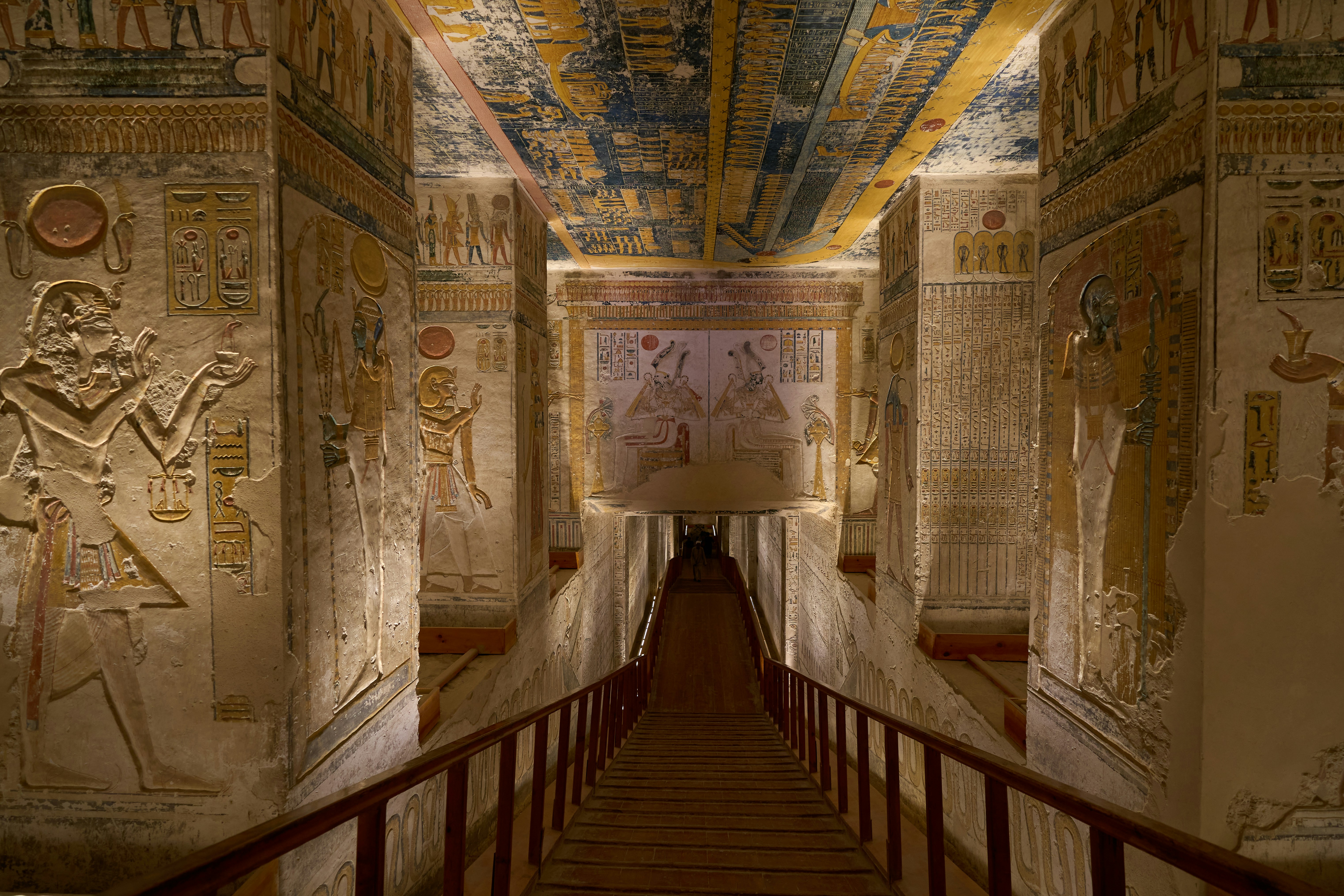
Bring a flashlight for the tombs. The guards have keys. The paintings inside — families dining, princesses shaking sistra, the Aten's rays touching everything — retain color that vanished everywhere else because Amarna was abandoned, not rebuilt.
────────────────
What to Wear: Respect the Dead, Protect the Living
Loose, long layers. Linen or cotton. Long sleeves, long pants — not because anyone will scold you, but because the sun bites and the cliffs reflect UV. A scarf for your neck. Sturdy closed shoes with grip — the tomb floors are polished limestone, slippery as ice.
Women: nothing revealing at the shoulders or knees. Men: no tank tops. It's not about rules. It's about the families farming the fields beside the site, the guards who pray toward Mecca five times daily, the schoolchildren on donkeys who wave. You're a guest in their landscape.
Hat. Sunglasses. Sunscreen reapplied every two hours. A small backpack for water, tissues (no facilities at most stops), camera, notebook.
────────────────
Is Amarna Worth Visiting? The Honest Answer
If you want postcard pyramids and sound-and-light shows — no. Go to Giza. If you want to stand where a king tried to rewrite the cosmos, where artists left thumbprints in wet plaster, where a queen drove her own chariot and a father mourned his daughter in carved stone — yes. A thousand times yes.
Amarna is the only place in Egypt where you touch a moment, not a monument. The experiment failed. The city died. But the human truth of it — ambition, faith, doubt, love, grief — survives in every mudbrick.
Travelers tell me years later: "I still dream about that light on the cliffs." That's the measure.
────────────────
Nearby Wonders That Bodda Tours Also Covers
Amarna sits in a corridor of layered history. Forty minutes north: Beni Hasan — thirty-nine Middle Kingdom tombs carved into cliffs above the Nile, their paintings showing wrestling matches, gazelle hunts, siege warfare, daily life in startling detail. The nomarchs (regional governors) who built them ruled semi-independently while Memphis pharaohs watched warily.
Thirty minutes south: Tuna el-Gebel — the necropolis of Hermopolis, city of Thoth, god of wisdom. Catacombs for thousands of mummified ibises and baboons. The tomb of Petosiris, a high priest whose chapel blends Egyptian and Greek styles — a Ptolemaic-era fusion that feels like a preview of Alexandria.
Two hours south: Asyut — gateway to the Western Desert, with its own rock-cut tombs and a living Coptic heritage. The Monastery of the Virgin Mary at Durunka draws pilgrims each August.
And of course, Minya itself — the "Bride of Upper Egypt" — with its colonial-era corniche, the Aten Museum (designed by a German architect, still awaiting full opening), and the best grilled fish on the Nile.
Bodda Tours designs multi-day itineraries weaving these together. Egypt history tours don't have to be isolated stops. They can be a narrative.
────────────────
Why Choose Bodda Tours for Your Amarna Egypt Tour
I started Bodda Tours because I watched too many travelers get herded through Egypt like luggage. Shared buses. Rushed stops. Guides reading Wikipedia aloud. Tuktuk "safaris" in Siwa that break down in the desert. Hidden fees appearing at the end.
Here's what we do differently:
- 100% private — always. Your vehicle. Your guide. Your schedule. No strangers. No waiting for latecomers. No "quick photo only" pressure.
- Korean-speaking guides who are actually Egyptian. Not translators. Locals who grew up on these stories, who know which guard at which tomb has the best flashlight, which ahwa makes the strongest mint tea.
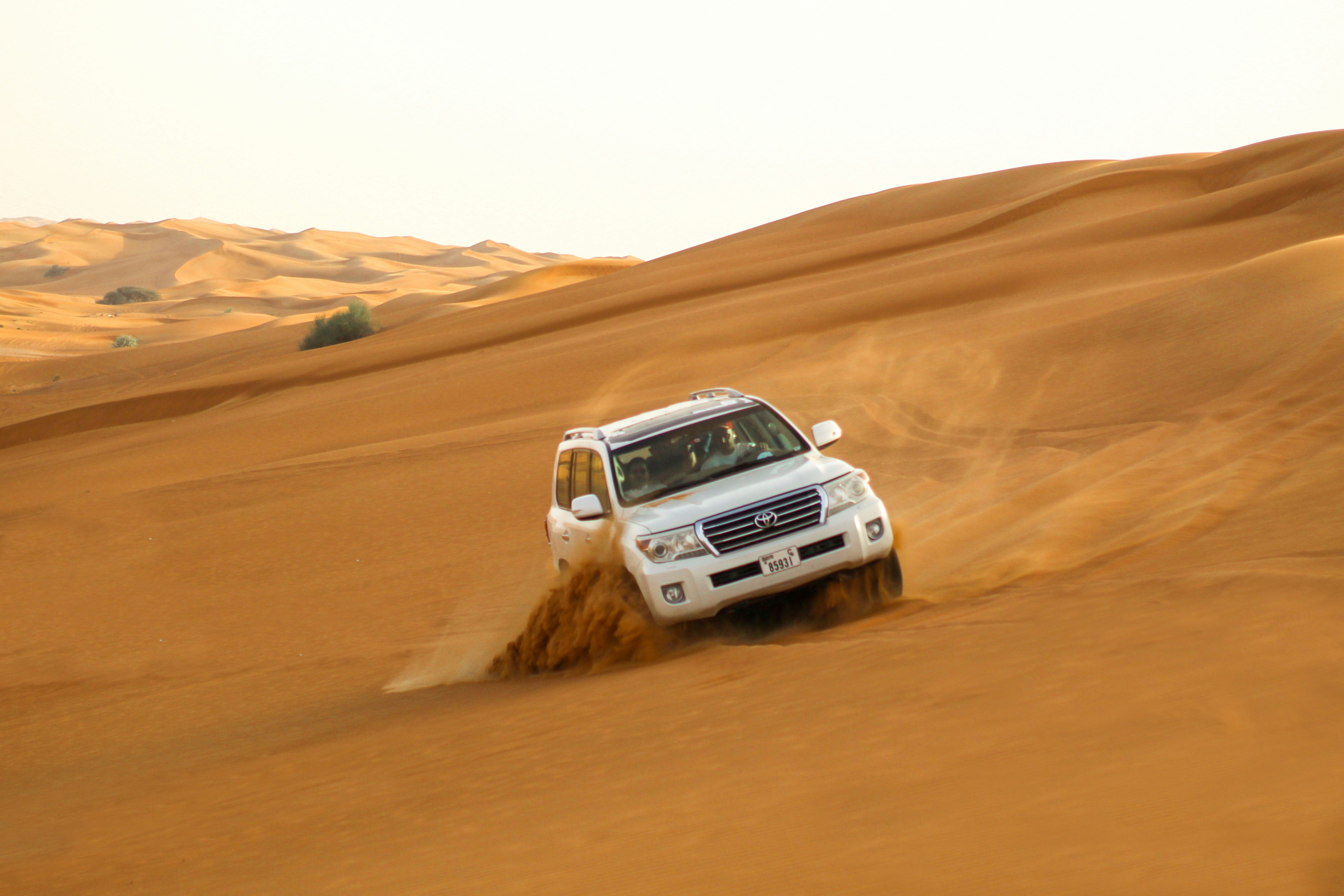
- Real 4x4 jeeps for desert sections. Some operators sell Amarna trips with sedans that bottom out on the wadi track to the Royal Tomb. We use proper vehicles with professional drivers.
- No scams, no surprises, no commission markups. You book direct with us — Cairo-based, Egyptian-run. The price you agree on is the price you pay. Tickets, meals, hotels arranged transparently if you want them.
- Custom itineraries built around you. Photography focus? We chase light. Food focus? We stop at the family restaurant in Malawi where the molokhia remembers every hand that stirred it. Slow pace? We bring camp chairs and sit at the Boundary Stelae until the shadows stretch.
- If something goes wrong, we make it right. Vehicle issue? Weather delay? Site closure? We have backup plans and compensation guarantees. Your trip isn't a transaction to us. It's a trust.
- Real traveler reviews on request. Ask us. We'll send recent guests' WhatsApp contacts. No curated testimonials. Real people.
────────────────
Ready to Walk the Horizon of the Aten?
Amarna doesn't advertise. It doesn't need to. The cliffs have held their secret for thirty-three centuries. They'll hold it for you too — until you're ready to listen.
When you are, I'll be here. Same number. Same Cairo office. Same promise: your Egypt, your way, no compromises.
Reach out anytime between 07:00-22:00 daily:
- WhatsApp: https://wa.me/201040541153
- KakaoTalk: https://open.kakao.com/o/smU92Hfi
- Email: info@boddatours.me
- Website: boddatours.me
Sources & References
- Egyptian Ministry of Tourism and Antiquities — Official Site Data for Tell el-Amarna
- UNESCO World Heritage Centre — Amarna Tentative List Documentation
- Kemp, Barry J. "The City of Akhenaten and Nefertiti: Amarna and Its People." Thames & Hudson, 2012.
- Moran, William L. "The Amarna Letters." Johns Hopkins University Press, 1992.
- Wikipedia — "Amarna" and "Akhenaten" entries (verified against academic sources)
![[2026 Egypt Tours] Siwa Oasis Honest Review (Desert Safari & History)](https://boddatours.me/images/hq/siwa-salt-lake-hq.jpg)

![[2026 Egypt Tours] Siwa Oasis Private Tour (Desert Safari & History)](https://boddatours.me/images/hq/milky-way-hq.jpg)