![[2026 Egypt History Tours] Saqqara Step Pyramid (Djoser's Genius)](https://boddatours.me/images/fallback-post.png)
The Groundbreaking Vision at Saqqara: Djoser's Step Pyramid
Imagine standing before something that completely changed the world. Not just a building, but an idea made stone. That's what the Step Pyramid of Djoser at Saqqara feels like. It’s the very first pyramid, the ancestor of all the grand pyramids you see in Egypt. I’ve been to Saqqara countless times, and every single visit still gives me chills. It’s like touching the dawn of ancient Egyptian civilization.
You've probably seen the Giza Pyramids, right? They're absolutely stunning. But before them, there was this. This incredible structure, designed by a genius named Imhotep, was the first time anyone thought to build a tomb of such monumental scale, and in such a revolutionary shape. It’s not just a pile of rocks; it’s a testament to human ingenuity and ambition from over 4,600 years ago.
For anyone fascinated by Egypt history tours, Saqqara is non-negotiable. It’s where the story of the pyramid really begins. It’s a place that whispers tales of pharaohs, gods, and the incredible minds that shaped them.
────────────────Feeling the Weight of History: Saqqara's Ancient Necropolis
The air at Saqqara feels different. It's quiet, vast, and heavy with millennia of stories. You can almost hear the echoes of the past. It’s a sprawling ancient burial ground, a necropolis that served the capital city of Memphis for thousands of years. It’s not just about the Step Pyramid itself, though that's the star. The entire complex is an archaeological treasure trove.
When you’re here, you’re walking through an active archaeological site. New discoveries are still being made, which is just mind-blowing. I’ve seen discoveries announced on the news that are literally just a few steps away from where visitors stand. It makes you realize how much history is still hidden beneath the sands.
The feeling here is one of deep reverence. It’s a place where you can truly connect with the ancient Egyptians, their beliefs about the afterlife, and their incredible organizational skills. It's a huge contrast to the bustling energy of modern Cairo, and that transition is part of the magic. It’s a journey back in time, a profound experience for any traveler looking for more than just a postcard view.
────────────────The Genesis of Pyramids: Djoser and Imhotep's Masterpiece
So, let’s talk about the main event: the Step Pyramid of Djoser. It’s located in the Saqqara necropolis and was built for Pharaoh Djoser of the Third Dynasty. This wasn't just a sudden idea; it was a radical departure from earlier mastaba tombs, which were flat-roofed structures. Imhotep, who was not just an architect but also a physician and high priest, envisioned stacking these mastabas on top of each other, creating a staircase-like structure that reached towards the heavens.
Initially, it was a mastaba. Then Imhotep added more layers, making it taller. He kept adding, and eventually, it became this six-stepped pyramid. It stands at about 62.5 meters (204 feet) high. Think about that for a second. In 27th century BC, this was an engineering marvel. It’s a symbol of Djoser’s power and his connection to the divine, designed to protect his soul and ensure his eternal rebirth.
The complex surrounding the pyramid is just as fascinating. It includes temples, courtyards, and chapels, all enclosed by a massive wall. There’s a long colonnaded entrance hall that is utterly breathtaking. Walking through it, you can almost feel the grandeur of the ancient ceremonies that took place there. It’s a complete city of the dead, designed to serve the pharaoh in the afterlife.
This architectural innovation at Saqqara Step Pyramid wasn't just about aesthetics; it was deeply symbolic. The steps were seen as a stairway for the pharaoh's soul to ascend to join the gods in the circumpolar stars. It’s a profound concept that speaks volumes about ancient Egyptian cosmology.
────────────────Exploring the Saqqara Complex: More Than Just the Pyramid
When you visit Saqqara with a private tour, you get to explore beyond just the main structure. The entire necropolis is a vast site, and it’s incredible to have the time and flexibility to see its different facets. I always recommend taking your time here. There are so many hidden gems.
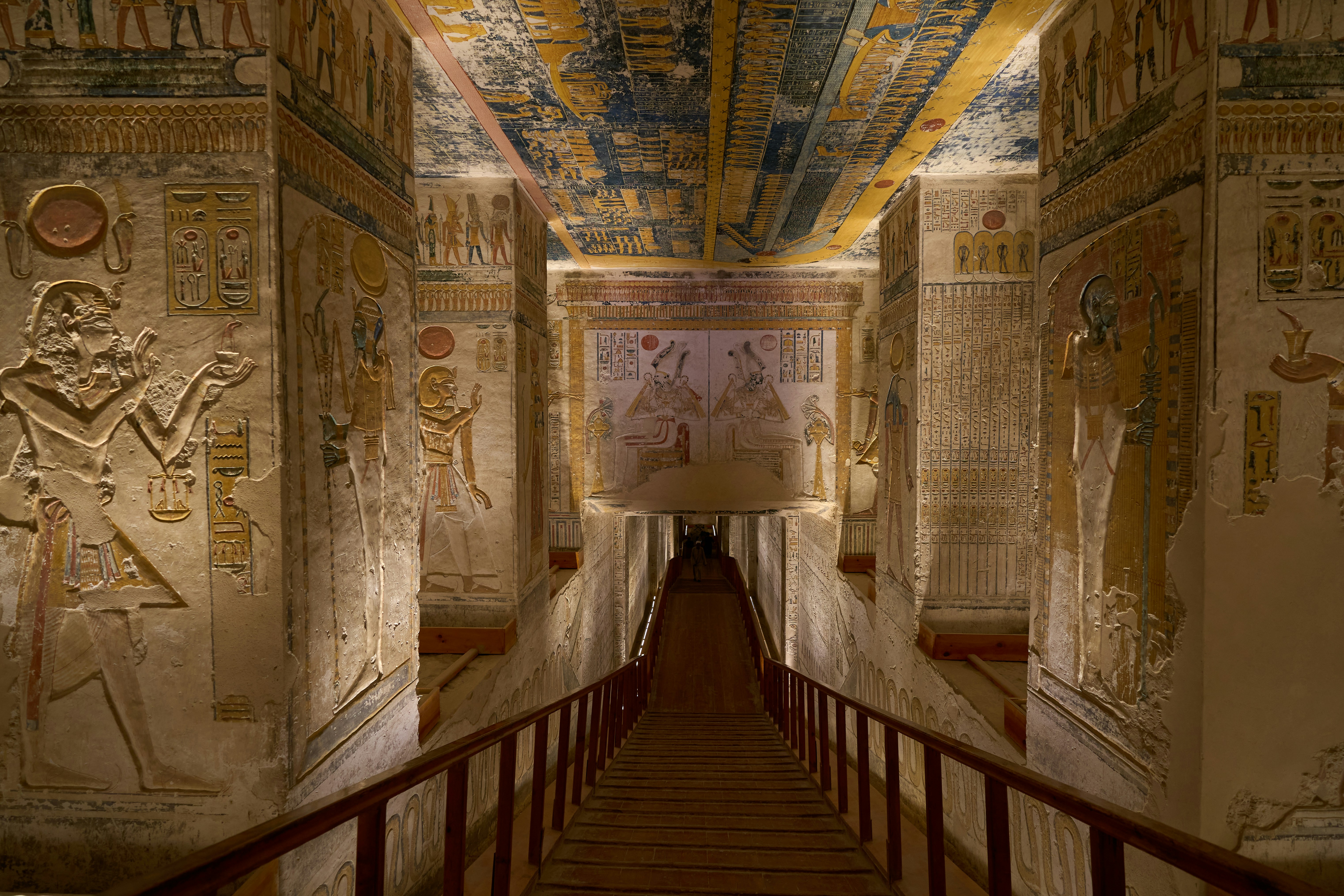
One of the highlights for me is the **Pyramid of Unas**. It’s smaller and less imposing than Djoser’s, but it’s incredibly significant because it contains the oldest known examples of the Pyramid Texts. These are hieroglyphic inscriptions that cover the walls of the burial chamber, containing spells and prayers intended to help the pharaoh navigate the afterlife. It’s like reading an ancient Egyptian guidebook to eternity.
Then there’s the Serapeum, an underground burial place for the sacred Apis bulls. The sheer scale of the granite sarcophagi is awe-inspiring. The Apis bulls were considered divine manifestations of the god Ptah, and their burial here was a highly sacred ritual. Walking through these massive chambers, you can’t help but feel the immense power and devotion associated with these sacred animals.
We also often visit the tombs of nobles, like the Mastaba of Ti and the Mastaba of Mereruka. These tombs are decorated with incredibly detailed reliefs that offer vivid snapshots of daily life in ancient Egypt – farming, hunting, fishing, and religious rituals. They are like ancient storybooks, showing us what life was like for the elite thousands of years ago. They provide a human element to the grand scale of the pharaonic tombs.
For anyone interested in private Egypt tours, exploring Saqqara this way allows you to truly absorb the atmosphere and understand the context of these ancient wonders. It’s not a rushed tick-box exercise; it’s a deep dive into history.
────────────────The Ancient Capital: Memphis and its Legacy
Saqqara was the necropolis for Memphis, which was the capital of ancient Egypt during the Old Kingdom. So, when you’re at Saqqara, you’re essentially visiting the graveyard of a city that was once the center of the known world. Memphis was founded by King Menes (or Narmer), who unified Upper and Lower Egypt, around 3100 BC. For over 800 years, it was the seat of pharaonic power, a thriving metropolis.
Today, Memphis isn't as visually grand as Saqqara or Giza. It's an open-air museum with a significant statue of Ramesses II lying down and an alabaster sphinx. While it might not have the colossal scale of the pyramids, its historical importance is immense. It was a major administrative, religious, and economic hub. The Colossus of Ramesses II is particularly impressive; it's a massive statue that gives you a sense of the scale of the city and the power of its rulers.
The site of Memphis is also a UNESCO World Heritage site, alongside Saqqara and Dahshur. It’s a reminder that ancient Egypt was a complex civilization with sophisticated urban planning and a profound understanding of governance and religion. The presence of the Colossus and the sphinx, though weathered by time, still evokes a sense of awe and the power that once emanated from this ancient capital.
When I take guests to Saqqara, I always include a stop at Memphis. It’s crucial to understand the context of the necropolis, and Memphis provides that vital link. It completes the picture of Old Kingdom Egypt and its capital.
────────────────Why Choose Bodda Tours for Your Saqqara Experience
You might be thinking, “I can just go to Saqqara on my own, or with a big group tour.” And you can. But I’ve seen firsthand what makes the difference, and honestly, it’s about the experience. It’s about feeling safe, comfortable, and truly understanding what you're seeing.
With Bodda Tours, it’s always 100% private tours. This means no cramped seats on a bus, no fixed schedules dictating your pace, and no feeling rushed. We pick you up from your hotel, and we take you door-to-door. Your driver is polite, professional, and focused on your comfort. You get a clean, modern car with A/C, which is a lifesaver in Egypt, especially during warmer months.
What I’m really proud of is that we offer Korean-speaking local guides. For many travelers, this is a huge comfort. No language anxiety, clear communication, and someone who genuinely understands your perspective and can share insights in your language. It makes the whole experience so much richer and more accessible. We’re not just guides; we’re your local friends showing you our home.
We focus on verified tours only. You won’t find any scams or tricks with us. We believe in transparent service, and there are no hidden fees. We also want to be crystal clear about something specific to tours like this: in Siwa Oasis, some operators try to sell fake tuktuk ‘safaris’. It’s a scam, and frankly, it’s dangerous. Bodda Tours does NOT do tuktuk fake safaris. We only use real 4x4 jeeps with professional drivers for any desert excursions, ensuring your safety and a genuine experience. This commitment to honesty and safety extends to all our tours.
When you book with Bodda Tours, you're booking directly with us, the people who run the tours. We are real local Egyptians who actually care. We’re not a middleman or a reseller. This means no commission fees, no agent markups, and no hidden charges. The price you see is the price you pay. We have a fast WhatsApp response time, usually under 10 minutes, because we're real people, not chatbots. And if anything goes wrong, or a delay happens, we’ll make it right or provide compensation. We’re here to make your Egyptian adventure as smooth and amazing as possible. We can even share recent guest reviews if you want to hear from other travelers.
────────────────Planning Your Visit to Saqqara: Practical Tips
The best time to visit Saqqara, and really most of Egypt, is during the cooler months. From October to April, the weather is much more pleasant for exploring outdoor sites. Summers (June to August) can be extremely hot, so if you're traveling then, an early morning start is essential, and a private tour with A/C is a must!
Getting to Saqqara from Cairo is straightforward with a private car. It typically takes about 45 minutes to an hour, depending on traffic. We offer door-to-door service, so we’ll pick you up from your hotel in Cairo or Giza and take you directly there, and back again.
What to wear is important. Egypt is a conservative country, and while tourist sites are more relaxed, it's always best to dress respectfully. Lightweight, loose-fitting clothing is ideal for the heat. Covering your shoulders and knees is a good practice, especially when visiting religious sites or less tourist-heavy areas. Comfortable walking shoes are an absolute must; you'll be doing a lot of walking on uneven ground.
Is Saqqara worth visiting? Absolutely, yes. It’s the birthplace of pyramid building. It’s a foundational site for understanding ancient Egyptian history and architecture. It provides context that even the Giza Pyramids alone cannot offer. It’s a place that sparks curiosity and deepens your appreciation for this incredible civilization. It’s a core part of any comprehensive Egypt history tour.
Nearby attractions that Bodda Tours also covers include the Pyramids of Giza, the Sphinx, the Grand Egyptian Museum (GEM), and the ancient capital of Memphis. We can easily combine Saqqara with Dahshur (home to the Bent Pyramid and Red Pyramid) for a full day exploring the evolution of pyramid construction. It’s a fantastic way to see the progression of this iconic architectural form.
────────────────Ready to Step Back in Time at Saqqara? Contact Bodda Tours Today
Imagine walking where pharaohs and architects of the ancient world once stood, marveling at the very first pyramid. Saqqara is an essential stop for anyone wanting to truly understand the depth of Egypt's history. Let me and my team at Bodda Tours guide you through this incredible place with comfort, knowledge, and a personal touch.
- WhatsApp: wa.me/201040541153
- KakaoTalk: open.kakao.com/o/smU92Hfi
- Email: info@boddatours.me
- Website: boddatours.me
Sources & References
- UNESCO World Heritage Centre. (n.d.). Memphis and its Necropolis – the Pyramid Fields from Giza to Dahshur. Retrieved from [UNESCO World Heritage Centre website]
- Egyptian Ministry of Tourism and Antiquities. (n.d.). Saqqara. Retrieved from [Official Ministry of Tourism website - specific page if available, otherwise general site]
- Wikipedia. (n.d.). Saqqara. Retrieved from [Wikipedia Saqqara page URL]
![[2026 Egypt Tours] Siwa Oasis Honest Review (Desert Safari & History)](https://boddatours.me/images/hq/siwa-salt-lake-hq.jpg)
![[2026 Egypt Tours] Cairo Cafes & Mint Tea (Local Experience)](https://boddatours.me/images/hq/moez-st-hq.jpg)