![[2026 Egypt Tours] Ramesses II's Grandeur: Abu Simbel & Ramesseum](https://boddatours.me/images/fallback-post.png)
The Enduring Echoes of Ramesses II: Abu Simbel and the Ramesseum
You know, sometimes when I stand in front of these colossal statues, it hits me. The sheer scale of ambition, the dedication of thousands of hands, all for one man. Ramesses II. He really wanted to be remembered, didn't he? And wow, did he succeed. If you're even thinking about Egypt, you *have* to feel the presence of his legacy. It’s not just history; it’s like stepping into a story that’s still being told.
When people ask me about the absolute must-sees in Egypt, especially for those who want to feel the weight of history and art, my mind always goes to the monuments of Ramesses II. He was a builder, a warrior, a pharaoh who left his mark on *everything*. His reign, the 19th Dynasty, was a peak for Egyptian power and artistry. And two of the most breathtaking examples are the temples at Abu Simbel and the Ramesseum in Luxor. I've guided countless travelers to these spots, and every single time, their jaws drop. It’s that kind of awe you can’t fake.
────────────────Abu Simbel: A Temple Rescued by Global Effort
Imagine this: the sun is just starting to paint the desert sky in shades of orange and pink. You’re standing before these four colossal statues of Ramesses II, carved directly into the cliff face. It feels ancient, powerful, and utterly timeless. This is Abu Simbel. But what makes it even more incredible is its story of survival.
These temples, the Great Temple of Ramesses II and the smaller Temple of Nefertari, were actually built around 1264 BC. They were dedicated to the gods Amun, Ra-Horakhty, and Ptah, and to Ramesses himself and his queen Nefertari. For centuries, they were magnificent. But then, the landscape changed. The Nile flooded, and the temples were eventually buried by sand. For over 3,000 years, they were largely lost to the world, known only to local Bedouins.
Then came the 20th century, and a new threat: the Aswan High Dam. Its construction created Lake Nasser, and the rising waters would have submerged Abu Simbel forever. This is where the world stepped in. In a monumental feat of engineering and international cooperation, between 1964 and 1968, the temples were painstakingly dismantled, block by block, and reassembled on higher ground. It was an incredible undertaking, a testament to how much these sites mean to humanity. I always tell my guests that when you visit Abu Simbel, you're not just seeing a pharaoh's temple; you're witnessing a miracle of modern preservation. It truly is one of the most special Egypt tours you can experience.
The Grandeur of Ramesses at Abu Simbel
The Great Temple is the star. Its facade is dominated by four seated figures of Ramesses, each over 20 meters tall. Walking inside is like entering another realm. The hypostyle hall has eight massive pillars depicting Ramesses as Osiris, and the walls are covered in detailed reliefs showing his military victories, most famously the Battle of Kadesh. This battle, where Ramesses fought the Hittites, was a defining moment of his reign, and he ensured it would be immortalized.
What’s fascinating is the alignment. Twice a year, on February 22nd and October 22nd, the sun’s rays penetrate deep into the sanctuary, illuminating the statues of Amun, Ra-Horakhty, and Ramesses himself. The statue of Ptah, the god of darkness, remains in shadow. This astronomical precision is mind-blowing for an ancient civilization. It shows their deep understanding of the cosmos and their desire to connect their divine rulers with celestial events.
The smaller temple, dedicated to Nefertari, is equally beautiful, with six colossal statues on its facade – four of Ramesses and two of Nefertari, a rare honor for a queen. The reliefs inside are more focused on love and devotion, showcasing the strong bond between Ramesses and his Great Royal Wife. It’s a softer, more intimate side of this powerful pharaoh’s legacy.
Getting to Abu Simbel: A Journey Worth Taking
Abu Simbel is quite far south, near the Sudanese border, so it’s not exactly a quick day trip from Cairo. Most travelers visit it as part of a Nile cruise between Aswan and Abu Simbel, or they fly from Aswan. I highly recommend flying if you're short on time, as the flight is quick and avoids a long drive. The drive itself is about three hours one way from Aswan through the desert. While it’s a long journey, the reward is immense. When you plan your Egypt history tours, make sure Abu Simbel is high on your list. It's an experience that stays with you long after you've left.
────────────────The Ramesseum: Ramesses' Mortuary Temple in Luxor
Now, let’s journey north to Luxor, the ancient city of Thebes. Here, on the west bank of the Nile, lies another testament to Ramesses II’s ambition: the Ramesseum. While not as perfectly preserved as Abu Simbel, its ruins still exude an immense power and offer a profound glimpse into the pharaoh's mortuary cult and his divine kingship.
The Ramesseum was his grand mortuary temple, a place where priests would perform rituals to ensure his ka (spirit) would live on and where offerings would be made to the gods on his behalf. Built around the 13th century BC, it was once one of the largest and most magnificent temples in Egypt. Imagine it in its prime: towering pylons, vast courtyards, intricate reliefs covering every wall, and at its center, a colossal statue of Ramesses himself, said to have been one of the largest ever erected.
A Glimpse of Lost Majesty
What remains today is a powerful skeleton of its former glory. The most iconic feature is the fallen colossus. You can still see its massive torso and head lying in the ruins, a stark reminder of the temple's former grandeur. It’s estimated to have weighed over 1,000 tons! Standing next to it, you feel incredibly small, contemplating the engineering and labor required to move such a stone. Diodorus Siculus, a Greek historian, described it as “a single stone, weighing 3,000 talents.”
The temple complex itself was vast, with an inner sanctuary, halls, and chambers. The walls are adorned with scenes depicting Ramesses' victories, his religious rituals, and his coronation. One particularly famous relief shows the Battle of Kadesh, similar to Abu Simbel, but here it’s more integrated into the temple’s narrative. There are also scenes of the Opet Festival, a significant religious procession where the statues of gods were moved between temples. The sheer detail and artistic skill are astounding, even in their ruined state.
The Ramesseum also tells a story of time and nature. Earthquakes, floods, and the relentless desert wind have all taken their toll. But in its decay, there’s a profound beauty. The way the sand drifts, the way the stones are worn smooth, it all speaks to the passage of millennia. It’s a place that encourages contemplation, a quiet reflection on the rise and fall of empires and the enduring human desire to leave a lasting legacy. For anyone interested in Luxor tours, this site is a profound experience.
The Ramesseum and the Egyptian Pantheon
As a mortuary temple, the Ramesseum was deeply connected to the divine. Ramesses II presented himself as a living god, a son of the gods, and the earthly embodiment of divine order. The rituals performed here were meant to maintain Ma'at (cosmic balance) and ensure the pharaoh’s successful transition into the afterlife, where he would continue to reign in the spiritual realm. The temple’s dedication to Amun-Ra, the king of the gods, further emphasizes this deification.
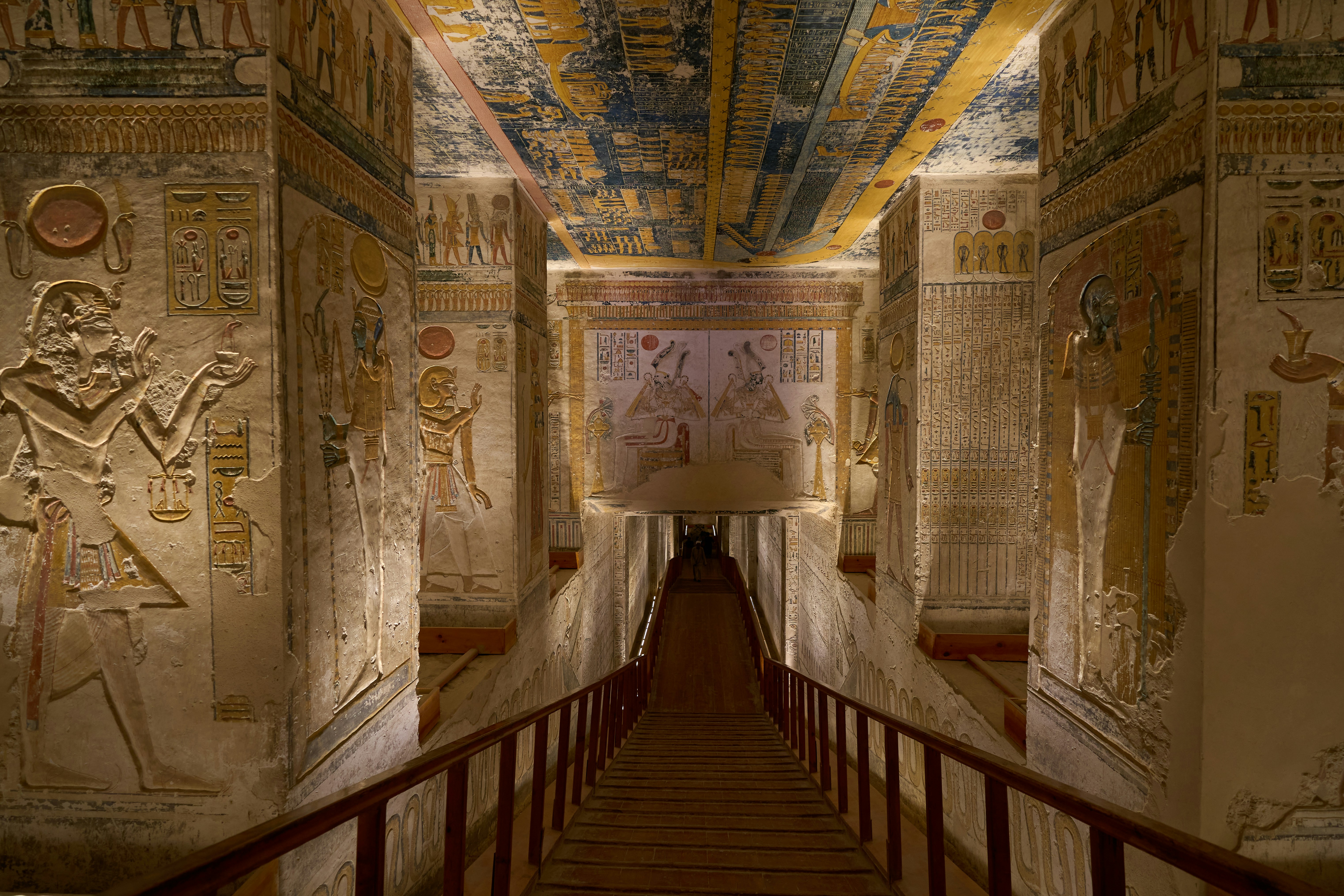
You can see depictions of Ramesses interacting with the gods, receiving blessings, and participating in sacred ceremonies. These reliefs weren't just art; they were functional, intended to magically perpetuate the pharaoh’s power and ensure the prosperity of Egypt. The scale of the temple, its elaborate decoration, and the sheer effort involved all underscore the immense resources and manpower that the pharaoh could command. It’s a powerful display of royal authority and religious ideology. When we talk about Egypt history tours that truly immerse you, the Ramesseum is a key piece.
The Ramesseum's Location in Luxor
The Ramesseum is located on the west bank of Luxor, an area that was traditionally associated with the setting sun and the land of the dead. This side of the Nile was considered the necropolis, where pharaohs and nobles were buried and where their mortuary temples were built to serve their eternal cults. It's a short drive from many of the other famous sites on the west bank, like the Valley of the Kings and the Colossi of Memnon. If you're exploring Luxor, it’s easy to incorporate a visit to the Ramesseum into your itinerary, perhaps as part of a comprehensive private Egypt tours package that covers the West Bank.
────────────────Why Choose Bodda Tours for Your Ramesses II Journey?
Look, Egypt is an incredible place, and seeing these wonders is a life-changing experience. But how you see them matters. I founded Bodda Tours because I saw too many travelers getting lost in large groups, dealing with language barriers, or worse, getting caught in tourist traps. I wanted to offer something different – a genuine, personal connection to my country.
When you travel with Bodda Tours, you’re not just a customer; you’re a guest. You’re experiencing Egypt through the eyes of locals who love this land and want to share its true magic with you. We focus on 100% private tours. That means no shared buses, no fixed schedules that rush you along. It’s your trip, your pace. We use private air-conditioned modern vehicles for ultimate comfort, and we offer door-to-door service, picking you up from your hotel and dropping you back, hassle-free.
One thing I’m really proud of is our commitment to authenticity and transparency. We offer verified tours only. This is especially important for places like Siwa Oasis, where some operators might try to sell you fake tuktuk 'safaris' – believe me, that’s a scam. With Bodda Tours, you get real 4x4 jeeps and professional drivers for desert adventures. We have a strict policy of no scams, no tricks, and no hidden fees. You know exactly what you’re getting. We don't work on commission from shops or other vendors, so our focus is solely on your experience.
And for my Korean friends, this is a big one: we offer Korean-speaking local guides. This means clear communication, no language anxiety, and deeper insights into the history and culture. You can ask all the questions you want and get real, nuanced answers. It’s about connecting you with the stories, not just showing you sights.
I believe in direct service. Bodda Tours is run by real local Egyptians who genuinely care. We're not a reseller or a middleman. You book directly with us, and you get direct service. This means better quality and a more personal touch. If anything goes wrong, or a delay happens, we make it right. We stand by our service.
If you’re dreaming of seeing the monumental legacy of Ramesses II at Abu Simbel and the Ramesseum, or exploring the unique landscapes of the Siwa Oasis, the natural wonders of the Fayoum Oasis, or the iconic pyramids of Giza, let me help you plan it. We can create custom itineraries tailored to your interests, whether you’re passionate about photography, food, shopping, or just want a relaxed pace. You can always ask us for recent guest reviews to see what others have experienced.
────────────────Is it Worth Visiting Abu Simbel and the Ramesseum?
Absolutely, a thousand times yes! If you're looking to connect with the profound history and artistic achievements of ancient Egypt, these sites are non-negotiable. Abu Simbel offers that breathtaking scale and a miracle of preservation, while the Ramesseum provides a poignant glimpse into the power and ambition of a legendary pharaoh, even in its ruined state. They represent different facets of Ramesses II's incredible impact, and experiencing both gives you a more complete picture of his reign. They are cornerstones for any serious exploration of Egypt history tours.
Best Time to Visit
For both Abu Simbel and the Ramesseum, the cooler months are ideal. From October to April, the weather is pleasant, with daytime temperatures being warm but manageable. Summer (June to August) can be intensely hot, especially in Aswan and Abu Simbel, so if you're traveling then, be prepared for the heat and focus on early morning or late afternoon visits. For Abu Simbel’s solar alignment, aim for February 22nd or October 22nd, but be aware these dates are very popular!
What to Wear
Comfort and respect are key. Lightweight, breathable clothing is a must, especially during warmer months. Think cotton or linen. Modest attire is recommended, covering your shoulders and knees, as these are historical and religious sites. Comfortable walking shoes are essential as you'll be doing a lot of exploring. Don’t forget a hat, sunglasses, and sunscreen – the Egyptian sun is powerful!
Nearby Attractions You Can Explore with Bodda Tours
Beyond the monumental legacy of Ramesses II, Egypt offers so much more. If you're in Aswan, after visiting Abu Simbel, you can explore the beautiful Philae Temple, take a relaxing felucca ride on the Nile, or visit the vibrant Nubian Villages. In Luxor, the Ramesseum is just one piece of the puzzle. We can arrange visits to the Valley of the Kings to see the tombs of pharaohs, the magnificent Karnak Temple, and the awe-inspiring Luxor Temple. If you’re looking for a desert adventure, our Siwa Oasis tour and Fayoum Oasis tour offer unique landscapes and experiences, far from the typical tourist trail. And of course, no trip to Egypt is complete without seeing the Giza Pyramids and the Sphinx, or exploring the treasures at the Grand Egyptian Museum (GEM).
How to Get to Abu Simbel and the Ramesseum
Abu Simbel: The most common ways are by flight from Aswan (approx. 50 minutes) or by a 3-hour road trip from Aswan. Some Nile cruises also include an excursion to Abu Simbel. While road trips are possible from Cairo, they are very long (over 10 hours each way) and not recommended for a single visit.
The Ramesseum: Located on the West Bank of Luxor, it’s easily accessible by car or taxi from your hotel on either the East or West Bank. If you’re doing a West Bank tour, it’s typically included in the itinerary.
Ready to experience the grandeur of Ramesses II?
These sites are more than just tourist attractions; they are gateways to understanding a civilization that shaped the world. Let me help you discover them with comfort, authenticity, and a personal touch. I’m here to make your Egyptian adventure unforgettable.
Plan Your Private Egypt Tour with Bodda Tours
Whether you dream of the monumental temples of Abu Simbel and the Ramesseum, the serene beauty of the Siwa Oasis, the natural wonders of the Fayoum Oasis, or the iconic Pyramids of Giza, Bodda Tours is here to make it happen. We specialize in creating personalized experiences that go beyond the ordinary. Reach out anytime between 07:00-22:00 daily, and let’s craft your perfect Egyptian journey.
- WhatsApp: wa.me/201040541153
- KakaoTalk: open.kakao.com/o/smU92Hfi
- Email: info@boddatours.me
- Website: boddatours.me
Sources & References
- Egyptian Ministry of Tourism and Antiquities
- UNESCO World Heritage Centre - Abu Simbel
- Wikipedia - Ramesseum
- Wikipedia - Ramesses II
![[2026 Egypt Tours] Siwa Oasis Honest Review (Desert Safari & History)](https://boddatours.me/images/hq/siwa-salt-lake-hq.jpg)
![[2026 Egypt Tours] Cairo Cafes & Mint Tea (Local Experience)](https://boddatours.me/images/hq/moez-st-hq.jpg)