![[2026 Egypt History Tours] Mentuhotep II's Legacy (Your Private Egypt Adventure)](https://boddatours.me/images/fallback-post.png)
The Echoes of Reunification: Mentuhotep II's Enduring Legacy
Imagine standing where a nation was reborn. Not just another pile of stones, but a place where history pivoted. That’s how I feel whenever I think about Mentuhotep II. He wasn't just a pharaoh; he was the architect of Egypt's resurgence, the man who stitched a fractured land back into one powerful kingdom. And for travelers who crave a deeper understanding of this ancient civilization, his story is absolutely essential.
You see, Egypt's history isn't a straight line. It has its golden ages, and it has its dark times. After the Old Kingdom's glory, Egypt stumbled into a period of chaos known as the First Intermediate Period. Local rulers fought, central authority vanished, and the land was divided. It was a mess. But then, from Thebes, a new power emerged. His name was Mentuhotep II, and he changed everything.
His reign, starting around 2055 BCE, marked the beginning of the Middle Kingdom, a period often hailed as a classical age for Egyptian art, literature, and political stability. He didn't just conquer; he reunified. He brought order back, re-established trade routes, and ushered in an era of prosperity. His monumental mortuary temple at Deir el-Bahari is a testament to this incredible achievement. It’s not as famous as some of the Giza Pyramids, but its historical significance is immense. It’s a place that whispers tales of resilience and renewed glory. And exploring it with someone who truly knows the stories, like on a private Egypt history tour, makes all the difference.
When I talk about private Egypt tours, I’m talking about experiences that go beyond ticking boxes. It’s about feeling the weight of centuries, understanding the context, and seeing these magnificent sites through the eyes of someone who grew up with their shadows. Mentuhotep II's story is a prime example of why this deeper dive is so rewarding. It’s about understanding the *why* behind the *what*.
───────────────────────────────────────────────────────────────────────────────────────────The First Intermediate Period: A Kingdom Adrift
To truly appreciate Mentuhotep II's accomplishment, we need to understand the world he inherited. The Old Kingdom, the age of the great pyramid builders, collapsed around 2181 BCE. For roughly 140 years, Egypt was not a unified entity. It was a collection of regional powers, each vying for influence. Think of it like a giant puzzle that had been smashed into a thousand pieces.
During this First Intermediate Period (roughly 2181–2055 BCE), the centralized administration that had kept Egypt running for centuries fell apart. The power of the pharaoh waned, and nomarchs (provincial governors) became increasingly autonomous. Some ruled their nomes like petty kings, building their own tombs and developing distinct local cultures. This fragmentation led to a decline in large-scale construction projects, and a sense of national identity weakened.
The social and economic order was also disrupted. Records from this time often speak of famine, lawlessness, and general hardship. It was a period of uncertainty, where the divine authority of the pharaoh was challenged, and the traditional elite structures were questioned. This era is often seen as a prelude to a more introspective and less grandiose artistic and literary style, but it was also a time of great upheaval.
It’s fascinating to consider that out of this very instability, a powerful movement for reunification would eventually emerge. It wasn't a sudden event, but a gradual process, with the southern city of Thebes rising as a potential center of power. The rulers of the 11th Dynasty, based in Thebes, began to assert their authority, slowly extending their influence northwards.
───────────────────────────────────────────────────────────────────────────────────────────Mentuhotep II: The Unifier of Egypt
Mentuhotep II, the son of Intef III, ascended to the throne of Thebes around 2055 BCE. His reign was exceptionally long, lasting for 51 years, which allowed him ample time to consolidate his power and achieve his monumental goals. He is credited with being the ruler who finally brought Upper and Lower Egypt back under a single, strong central government, effectively ending the First Intermediate Period and inaugurating the Middle Kingdom.
His military campaigns were crucial. He systematically pushed north, engaging and defeating the rulers of the rival dynasties that controlled Lower Egypt. The exact details of these campaigns are scarce, but inscriptions suggest a determined and strategic approach. He wasn't just a warrior; he was a statesman who understood the importance of re-establishing the institutions of state, reviving trade, and restoring the divine order that was so central to Egyptian kingship.
Mentuhotep II’s reunification was not merely a political act; it was a cultural and religious one. He re-emphasized the cult of the state gods, particularly Amun at Thebes, which had grown in prominence during the preceding period. He also presented himself as the embodiment of Horus and Ra, reinforcing the divine nature of kingship and providing a unifying ideological framework for the newly reconstituted nation.
His legacy is cemented by his innovative mortuary temple. Unlike the earlier pyramids, which were primarily tombs, Mentuhotep II's complex was designed as a place for the king to worship the gods and commemorate his achievements for eternity. It was a bold architectural statement that would influence subsequent pharaohs, most notably Hatshepsut.
───────────────────────────────────────────────────────────────────────────────────────────Deir el-Bahari: Mentuhotep II's Mortuary Temple
This is where the history truly comes alive. Mentuhotep II's mortuary temple, located on the west bank of the Nile at Deir el-Bahari, is a breathtaking testament to his reign and a groundbreaking architectural achievement. It's not a pyramid in the classic sense, but a series of terraces and colonnades that blend seamlessly with the dramatic cliffs behind it.
The temple complex was vast and elaborate. It featured a causeway leading from the Nile valley, a large forecourt, and a central structure that was once topped by a pyramid. What's truly remarkable is its design. It incorporated elements that were new to Egyptian temple architecture, anticipating later innovations. The layered terraces, accessible by ramps, created a sense of ascent and grandeur.
One of the most striking features was the pillared porticoes that lined the terraces, many of which would have once held statues of the king. The central part of the temple was particularly innovative. It included a terraced court with a large, rectangular platform, possibly representing the primeval mound of creation, and a unique structure that may have been the king's tomb or a symbolic representation of his royal palace.
The temple was also adorned with intricate reliefs depicting scenes from the king's life and religious ceremonies. These reliefs offer invaluable insights into the art and ideology of the Middle Kingdom. The overall effect was intended to be awe-inspiring, a fitting monument for the pharaoh who restored Egypt's glory. Walking through its ruins, even in its present state, you can feel the power and vision of Mentuhotep II. It’s a place that really makes you stop and think about the incredible minds of these ancient builders.
For anyone interested in ancient Egyptian architecture and the transition from the Old Kingdom to the Middle Kingdom, Mentuhotep II's temple is a must-see. It’s a site that tells a story of rebirth and innovation, a pivotal moment in Egyptian history that’s often overlooked but incredibly significant.
───────────────────────────────────────────────────────────────────────────────────────────The Middle Kingdom: A New Golden Age
Mentuhotep II's successful reunification ushered in the Middle Kingdom (c. 2055–1650 BCE), a period often considered a classical age of Egyptian civilization. This era saw a revival of arts, literature, and learning, building upon the foundations laid by the Old Kingdom but with its own distinct characteristics.
The pharaohs of the Middle Kingdom were not just divine rulers; they were often depicted as administrators and shepherds of their people, emphasizing their role in maintaining ma'at (truth, justice, and cosmic order). This more humanistic portrayal is reflected in the literature of the period, which includes some of the most sophisticated and enduring works of ancient Egyptian writing, such as the *Story of Sinuhe* and the *Eloquent Peasant*.
Artistically, the Middle Kingdom is known for its realism. Pharaohs were often depicted with more aged and careworn faces, reflecting the responsibilities of kingship rather than just idealized divinity. Architecture continued to evolve, with monumental building projects resuming, though often on a slightly smaller scale than the Giza pyramids. The focus shifted towards temples, fortresses, and sophisticated irrigation systems, demonstrating a practical approach to governance and infrastructure.
Politically, the Middle Kingdom was characterized by strong central authority, though it also saw Egypt expand its influence south into Nubia and east into the Sinai. The establishment of extensive trade networks brought wealth and new materials into Egypt, further enriching its culture and economy.
The Middle Kingdom was not without its challenges. Towards its end, internal weaknesses and the rise of foreign powers, particularly the Hyksos in the north, eventually led to the Second Intermediate Period. However, the legacy of Mentuhotep II and the era he founded left an indelible mark on Egyptian history, setting a standard for stability and cultural achievement that would be looked back upon for centuries.
───────────────────────────────────────────────────────────────────────────────────────────Why is Mentuhotep II Important for Egypt Tours?
You might be wondering, "Why focus on Mentuhotep II when there are the Pyramids, the Sphinx, and Tutankhamun's treasures?" It's a fair question. The immediate draw of Egypt is often its most iconic monuments. But for me, and for anyone wanting to truly *understand* Egypt, the story of Mentuhotep II is fundamental. He represents a crucial turning point.
His reign is the bridge between chaos and order, between fragmentation and unity. It���s the moment when Egypt, after a long period of decline, found its footing again and set the stage for centuries of prosperity and cultural flourishing. His mortuary temple at Deir el-Bahari is not just an impressive ruin; it's a tangible symbol of that rebirth. It shows a new approach to royal power and monumental architecture, one that directly influenced later, more famous constructions.
When you visit Egypt, you’re not just seeing old buildings. You're walking through layers of history, each era building on what came before. Mentuhotep II's story adds a vital chapter to that narrative. It helps explain how the Egypt of the Old Kingdom evolved into the Egypt that would later create the magnificent temples of Luxor and Karnak, and the tombs of the Valley of the Kings.
Exploring sites like Mentuhotep II's temple on a private Egypt history tour allows for a much deeper appreciation. We can discuss the political context, the artistic innovations, and the religious shifts that defined his era. It's about connecting the dots, seeing how one period led to another, and understanding the long, complex, and utterly fascinating journey of this ancient civilization. It’s about understanding the foundations upon which all the later wonders were built.
For travelers seeking a comprehensive understanding of Egyptian history, rather than just a superficial overview, delving into the Middle Kingdom and the achievements of Mentuhotep II is incredibly rewarding. It provides context that makes all the other sites even more meaningful. You begin to see the grand sweep of Egyptian history, not just isolated moments of glory.
───────────────────────────────────────────────────────────────────────────────────────────Visiting Deir el-Bahari Today
Deir el-Bahari is on the west bank of Luxor, a treasure trove of ancient wonders. It's home to Mentuhotep II's mortuary temple, but also the later, incredibly famous temple of Hatshepsut. This proximity means that when you visit, you get a fascinating comparison between architectural styles and royal ambitions across different periods.
The best time to visit is generally during the cooler months, from October to April. The Egyptian sun can be intense, especially during the summer, so early morning visits are ideal. Make sure you wear comfortable walking shoes, as there’s a fair bit of ground to cover. And of course, bring plenty of water and sun protection – a hat and sunscreen are absolute essentials.
What to wear? Respect is key in Egypt. While Deir el-Bahari is a historical site, dressing modestly is always appreciated. Light, breathable clothing is best for comfort. Think loose trousers or long skirts and tops that cover your shoulders. It shows respect for the history and the culture.
Getting there is easiest with a private tour. From Luxor, it’s a relatively short drive. Having a guide who can explain the significance of each part of Mentuhotep II's temple, point out the details in the reliefs, and provide the historical context makes the experience immeasurably richer. Without that context, it’s just impressive ruins. With it, it’s a window into a pivotal moment in Egyptian history.
Is it worth visiting? Absolutely. Mentuhotep II's temple is a UNESCO World Heritage site, and for good reason. It's a unique piece of Egyptian history, showcasing architectural innovation and the crucial moment of national reunification. It offers a different perspective on royal power and monument building compared to the Old Kingdom pyramids or the New Kingdom temples. It’s a site that speaks to resilience, ambition, and the enduring power of a unified nation.
────���──────────────────────────────────────────────────────────────────────────────────────Beyond Deir el-Bahari: Other Middle Kingdom Sites
While Mentuhotep II's temple is a highlight, Egypt offers many other glimpses into the Middle Kingdom. Understanding these sites adds further depth to your journey through Egypt's history.
Thebes (modern Luxor): The heart of the Middle Kingdom revival. While many of the famous New Kingdom sites like Karnak and Luxor Temples and the Valley of the Kings are more prominent, the area was crucial during the Middle Kingdom too. Thebes was the capital and the religious center, and the influence of Amun grew significantly.
Abydos: This ancient city was a major religious center, particularly for the cult of Osiris. Middle Kingdom rulers invested heavily in Abydos, building temples and dedications. The Temple of Seti I, though from the New Kingdom, stands on ground that has been sacred for millennia, and its reliefs often incorporate earlier traditions.
Saqqara & Dahshur: While most famous for Old Kingdom pyramids, these sites also saw activity during the Middle Kingdom. Pharaohs continued to build pyramids, though often using different construction methods and materials, and their scale was generally smaller than their Old Kingdom predecessors. For instance, the pyramid of Amenemhat III at Hawara is a significant Middle Kingdom site, though it's further south.
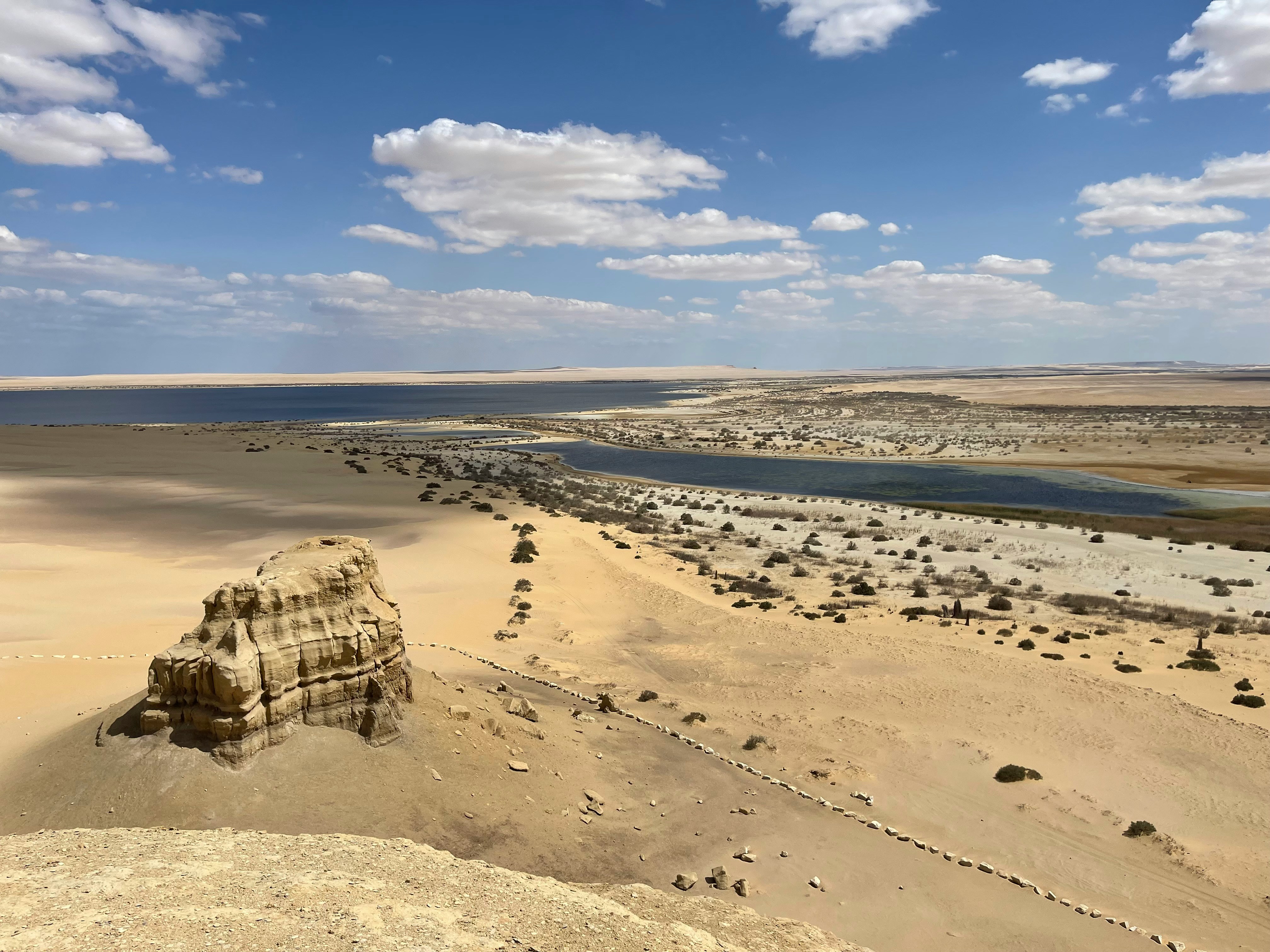
Fayoum Oasis: This fertile region was strategically important during the Middle Kingdom. Pharaohs developed irrigation projects and built royal residences and mortuary complexes here. The area around Medinet Madi, with its well-preserved temple from the reign of Amenemhat III and IV, is a testament to the Middle Kingdom's presence and influence in this vital oasis. A Fayoum Oasis tour with Bodda Tours can reveal these historical layers.
When you plan an Egypt history tour, it's essential to consider these sites that showcase the evolution of Egyptian civilization. Each offers a piece of the puzzle, contributing to a more complete picture of this ancient land. The Middle Kingdom, kickstarted by Mentuhotep II, was a period of profound development that shaped the Egypt we know today.
───────────────────────────────────────────────────────────────────────────────────────────Why Choose Bodda Tours for Your Egypt History Adventure?
You're looking for more than just a trip; you want an experience that connects you to the soul of Egypt. That's exactly what I aim for with Bodda Tours. It's not about ticking off sights; it's about feeling the history, understanding the stories, and creating memories that last a lifetime. When it comes to exploring places like Mentuhotep II's mortuary temple or the rich history of the Middle Kingdom, a private, guided experience makes all the difference.
Here’s what sets Bodda Tours apart:
- 100% Private Tours, Just for You: Forget crowded buses with tired seats and fixed schedules. On a Bodda Tours private tour, it's just you, your companions, and your guide. We tailor the pace and focus to your interests, whether it's ancient history, archaeology, or photography.
- Korean-Speaking Local Guides: Communication is key to a great experience. Our guides are not only knowledgeable about Egypt's history but are also fluent in Korean, ensuring clear understanding and zero language anxiety. They bring the ancient stories to life in a way that resonates perfectly.
- No Scams, No Surprises: I started Bodda Tours because I saw too many travelers getting ripped off or having disappointing experiences. We work only with verified tours and guides, offering transparent service with absolutely no hidden fees.
- Real Local Egyptians Who Care: Bodda Tours isn't a faceless corporation or a reseller. I’m Bodda, an Egyptian born and raised in Cairo, and I run this myself with my team. We are passionate about our country and dedicated to sharing its wonders with you in the most authentic and respectful way. We offer direct booking and direct service.
- Comfort and Convenience, Door-to-Door: We provide clean, air-conditioned modern vehicles for all our tours. Our service is door-to-door, meaning we pick you up from your hotel and drop you off, making your exploration effortless and comfortable.
- No Tuktuk Fake Safaris in Siwa: I need to be clear about this, especially for Siwa Oasis tours. Some operators sell fake tuktuk 'safaris' that are a total scam. Bodda Tours *only* uses real 4x4 jeeps with professional drivers for desert excursions, ensuring your safety and an authentic experience.
- Custom Itineraries Tailored to You: Want to spend extra time at a specific tomb? Interested in local cuisine? Need special photo stops? We can customize your itinerary to perfectly match your pace, preferences, and interests.
- Real Traveler Reviews Available: Don't just take my word for it. We're happy to share recent guest reviews so you can see firsthand the kind of experiences our travelers have.
When you travel with Bodda Tours, you’re not just a tourist; you’re a guest of Egypt, welcomed by someone who genuinely cares about your journey. We handle the logistics so you can immerse yourself in the magic of this incredible land.
Ready to explore the depths of Egyptian history with Mentuhotep II and beyond? Contact Bodda Tours today to plan your unforgettable private adventure.
- WhatsApp: wa.me/201040541153
- KakaoTalk: open.kakao.com/o/smU92Hfi
- Email: info@boddatours.me
- Website: boddatours.me
Sources & References
- Egyptian Ministry of Tourism and Antiquities. (Official Website).
- UNESCO World Heritage Centre. (Official Website).
- Wilkinson, R. H. (2011). *The Rise and Fall of Ancient Egypt*. Thames & Hudson.
- Shaw, I. (2004). *The Oxford History of Ancient Egypt*. Oxford University Press.
![[2026 Egypt Tours] Siwa Oasis Honest Review (Desert Safari & History)](https://boddatours.me/images/hq/siwa-salt-lake-hq.jpg)
![[2026 Egypt Tours] Cairo Cafes & Mint Tea (Local Experience)](https://boddatours.me/images/hq/moez-st-hq.jpg)