![[2026 Egypt Tours] Medinet Habu & Ramesses III (Cairo Private Tours)](https://boddatours.me/images/hq/citadel-hq.jpg)
Journey to Medinet Habu: The Grandeur of Ramesses III
Imagine standing before a massive temple, its walls alive with stories of epic battles, divine encounters, and the daily life of a powerful pharaoh. That’s the feeling I get every time I visit Medinet Habu. It’s not just stone and carvings; it’s a portal to the reign of Ramesses III, the last truly great pharaoh of Egypt. If you're looking for an Egypt tour that goes beyond the usual, this is it.
Many travelers dream of Egypt and picture the iconic pyramids of Giza, and rightly so. But Egypt's history is so vast, so layered, that to truly feel its pulse, you need to explore further. That’s where places like Medinet Habu come in. It’s a testament to a time when Egypt was still a dominant force, facing down powerful enemies and leaving behind an architectural legacy that still awes us today. I’ve personally guided countless travelers through these halls, and their amazement never fades. It’s a feeling I want you to experience too.
This isn't just a historical site; it's a narrative etched in stone. Ramesses III, ruling during the Late Bronze Age, faced immense challenges, most notably the invasions of the Sea Peoples. His victory, depicted in vivid detail on the temple walls, is one of the most significant military accounts from the ancient world. Visiting Medinet Habu is like stepping into a history book, but one that’s incredibly visceral and real. It’s a cornerstone of understanding the twilight of Egypt's imperial power and the resilience of its civilization.
For those seeking private Egypt tours that offer depth and exclusivity, Medinet Habu, often combined with other Luxor wonders, is a must. It allows for a paced, personal exploration, where you can truly absorb the details and the atmosphere without the rush of a large group. It’s the kind of experience that stays with you long after you've left Egypt.
When I think about planning an unforgettable Egypt history tour, Medinet Habu is always high on the list. It’s a place that speaks volumes about leadership, conflict, and divine power, all captured in one of the best-preserved temple complexes in Egypt. It truly embodies the spirit of a golden age, even as it marks its end.
────────────────The Majestic Mortuary Temple of Ramesses III
The feeling when you first see Medinet Habu is one of sheer scale. It's enormous, almost overwhelming, and remarkably well-preserved. This is the mortuary temple of Ramesses III, built on the West Bank of Luxor. Unlike many other temples that served cultic purposes for the gods, mortuary temples were primarily built for the king’s cult, to ensure his eternal life and worship after death. But Medinet Habu is more than just a tomb; it’s a fortress, a propaganda masterpiece, and a historical record.
The complex is vast, comprising the mortuary temple itself, administrative buildings, a royal palace, and even a sacred lake. What strikes you immediately are the immense pylons, the grand entranceways that draw you into the heart of the complex. These aren't just decorative; they are monumental statements of power and divine favor. Walking through them, you can almost hear the echoes of processions and royal pronouncements from over 3,000 years ago.
The outer walls are where the most dramatic narratives unfold. The reliefs here depict Ramesses III’s military triumphs, particularly his decisive victories against the invading Sea Peoples and the Libyans. These carvings are not just art; they are historical accounts, incredibly detailed and full of life. You see the pharaoh in his chariot, leading his armies, his arrows finding their mark. The depictions of the defeated enemies, their distinct clothing and features, offer a unique glimpse into the wider world of the ancient Near East at that time. This is a key reason why Medinet Habu is so vital for understanding the geopolitical landscape of the 12th century BCE. It’s a visual record of Egypt’s struggle for survival and its eventual triumph.
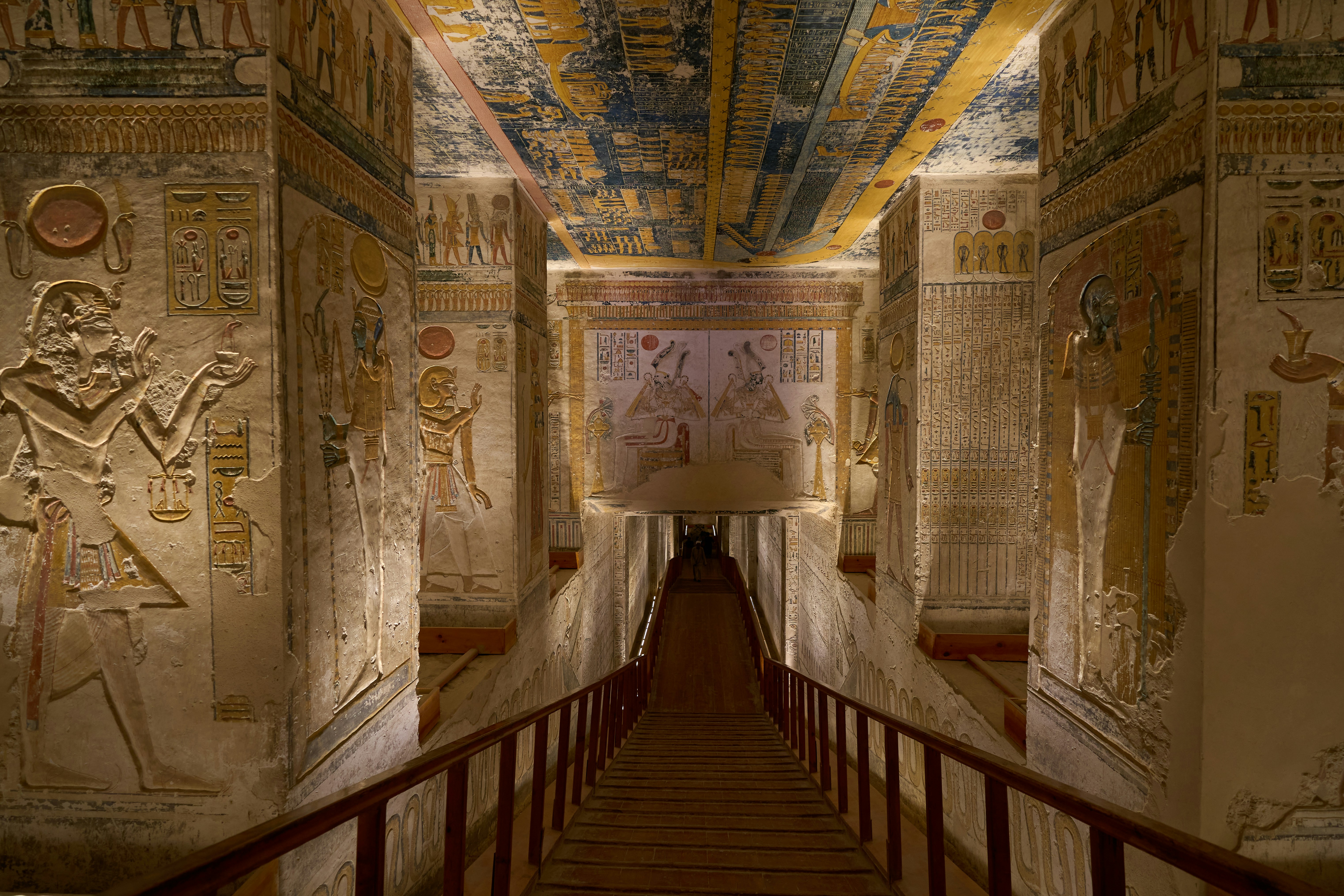
Within the temple proper, you’ll find courtyards, hypostyle halls, and sanctuaries. The quality of the craftsmanship is exceptional. The hieroglyphs are crisp, the colors, though faded in places, hint at a once-vibrant palette, and the sheer artistic skill is breathtaking. I often point out the intricate details to my guests – the way the artists captured movement, emotion, and texture. It’s this attention to detail that makes Medinet Habu stand out, even among the many magnificent temples of Luxor.
One of the most striking features is the 'Palace of Foreigners' or the 'Egyptian House' on the north side of the complex. This area, with its more intimate chambers and detailed reliefs, is believed to have been part of the royal palace complex. It offers a more personal glimpse into the pharaoh’s life and the administration of his vast domain. It’s a reminder that behind the grand pronouncements of war and religion, there was a complex human being and a functioning court.
The temple also served as a major administrative and economic center. granaries, workshops, and housing for priests and officials were part of the complex, demonstrating its importance not just as a religious monument but as a functional entity within the New Kingdom state. This multi-faceted nature makes Medinet Habu a treasure trove for anyone interested in ancient Egyptian civilization. It provides insights into military strategy, religious beliefs, royal propaganda, and daily life all in one place.
For anyone booking a private Egypt tour, especially one focused on Luxor, I can't recommend enough dedicating ample time to Medinet Habu. It’s a site that rewards slow exploration and thoughtful observation. The sheer volume of historical information carved into its walls is astounding. It’s a place that truly helps you connect with the past on a profound level, understanding not just *what* happened, but *how* the Egyptians wanted it remembered.
────────────────Ramesses III: The Last Great Pharaoh
Who was this pharaoh who built such an enduring monument? Ramesses III (reigned c. 1186–1155 BCE) was the second pharaoh of the Twentieth Dynasty and is often considered the last of the great warrior pharaohs to rule Egypt during the New Kingdom. His reign was a period of immense upheaval, marked by invasions and internal strife, yet he managed to preserve Egypt’s integrity and its vast empire, at least for a time.
His most famous achievement, and the one so vividly depicted at Medinet Habu, was his defense against the coalition of invaders known as the Sea Peoples. These were a confederation of maritime raiders who swept across the eastern Mediterranean, destabilizing empires and causing widespread destruction. Their exact origins are still debated by scholars, but their impact on the ancient world was profound, contributing to the collapse of several Bronze Age civilizations.
Ramesses III’s inscription at Medinet Habu details his battles against these invaders on both land and sea. The naval battle scenes are particularly remarkable, showing Egyptian ships clashing with the enemy, archers firing volleys, and the invaders being swept overboard. These reliefs served a dual purpose: to glorify the pharaoh and to reassure his people of his strength and divine protection. It’s a powerful example of royal propaganda, but also a genuine record of a critical moment in Egyptian history. It’s a testament to his skill as a leader that Egypt, unlike many of its neighbors, was not conquered.
However, Ramesses III’s reign was not without its challenges. Evidence suggests that Egypt was also suffering from economic decline, famine, and labor unrest. The famous Turin Papyrus Harem Conspiracy documents a plot against the pharaoh, involving members of his own court and even his wife. While the plot was ultimately foiled and the conspirators punished, it highlights the internal pressures and dangers that existed even at the highest levels of power during his time.
Despite these difficulties, Ramesses III is remembered for his extensive building programs. Medinet Habu is his most significant surviving monument, but he also made additions to temples at Karnak and Luxor, and at Abydos. His reign represents a period of transition, the last great surge of Egyptian power before the slow decline into the Third Intermediate Period. He is the final figure in the long line of pharaohs who commanded vast armies and built monumental temples that defined Egypt for centuries.
Understanding Ramesses III is crucial to understanding the later stages of the New Kingdom. He stands as a symbol of Egyptian resilience in the face of overwhelming external threats. When you stand at Medinet Habu, you are not just looking at a temple; you are contemplating the legacy of a pharaoh who fought to preserve his kingdom and his civilization. It’s a story of power, struggle, and ultimate remembrance, captured for eternity in stone. This is the kind of deep historical dive that makes an Egypt history tour truly meaningful.
────────────────Why Choose Bodda Tours for Your Egypt Adventure?
You might be wondering, with so many tour options out there, why should you consider Bodda Tours? It’s a question I love to answer because it’s all about the experience. I’ve lived in Cairo my whole life, and I started Bodda Tours (보따투어, 보따투어) because I wanted to share the real Egypt with travelers – the kind of authentic, personal journey that sometimes gets lost in larger, impersonal tours.
First off, it’s 100% private tours. No shared buses, no fixed schedules dictated by a large group. This means you set the pace. If you want to spend an extra hour marveling at the hieroglyphs at Medinet Habu, we do it. If you want to linger at a viewpoint overlooking the desert, we do that too. Your comfort and enjoyment are the absolute priority, with a clean car with A/C included and door-to-door service.
One thing I hear often from travelers is the language barrier. That’s why we offer Korean-speaking local guides. This isn't just about translation; it's about cultural understanding. A Korean guide who knows Egypt can explain nuances, share personal stories, and ensure you feel completely at ease, free from any language anxiety. It makes the entire experience so much richer.
We are all about no scams, no tricks. I’ve seen too many travelers get caught out by unreliable guides or misleading tours. At Bodda Tours, we only use verified tours. You won't find any hidden fees or unexpected charges. What you agree on is what you get. This transparency is a core part of building trust, and it’s something I’m very proud of.
And for those heading to Siwa Oasis, this is super important: Bodda has NO tuktuk fake safaris. In Siwa, some operators try to pass off short, uncomfortable tuktuk rides as desert safaris. It’s a scam and frankly, a waste of time and money. We only use real 4x4 jeeps with professional drivers for any desert excursions. It’s about genuine adventure and safety.
The biggest difference? We are run by real local Egyptians who actually care. I’m not a middleman or a reseller. You are booking directly with me and my team. This means direct service, direct communication, and a genuine commitment to making your trip unforgettable. We offer no commission fees, no agent markups, no hidden charges.
Need to get in touch? Our fast WhatsApp response (average under 10 minutes) means you’re always talking to a real person, not a chatbot. And if, for any reason, something doesn’t go as planned or is delayed, we are committed to making it right or providing compensation. Your peace of mind is paramount.
Whether you’re dreaming of a Siwa Oasis tour from Cairo, a Fayoum day trip from Cairo, or an in-depth Luxor tours experience, we can craft a custom itinerary tailored to your interests – photography, food, shopping, or just taking it all in at your own pace. We also have plenty of real traveler reviews available, just ask!
────────────────Planning Your Visit to Medinet Habu
Medinet Habu is located on the West Bank of Luxor, a treasure trove of ancient sites. It’s easily accessible, especially if you’re already exploring Luxor with a private guide. For many, a trip to Luxor is a highlight of any Egypt tour, and Medinet Habu is a key part of that experience. I often include it in our Luxor & Aswan tours or as part of a broader multi-city package.
Best time to visit: Like much of Egypt, the best time to visit Medinet Habu is during the cooler months, from October to April. The summer months (June to August) can be extremely hot, with temperatures soaring. Mornings are always a good idea to beat the heat and the crowds. For photography enthusiasts, the golden hour light in the late afternoon can be spectacular, casting long shadows and highlighting the temple’s details.
How to get there: Medinet Habu is on the West Bank of Luxor, across the Nile from the main city. If you’re staying on the East Bank, you’ll need to cross the river. Options include a local ferry, a private boat, or crossing by car over the bridge. Most visitors to Luxor will arrange transport through their tour operator. For a private tour from Cairo, it's usually part of a larger itinerary that includes flights or an overnight train to Luxor, followed by private vehicle transport within the city. Bodda Tours handles all the logistics for you, ensuring a seamless journey.
What to expect: Prepare to be amazed by the sheer size and preservation of the temple. Wear comfortable shoes, as you’ll be doing a lot of walking. The sun can be intense, so bring a hat, sunglasses, and plenty of water. The detailed reliefs are the main attraction; take your time to appreciate the stories they tell. It’s a site that truly benefits from the insights of a knowledgeable guide who can bring the hieroglyphs and history to life. Imagine the scenes of Ramesses III commanding his armies, or the religious ceremonies that took place here.
What to wear: As with all religious and historical sites in Egypt, it’s respectful to dress modestly. This means covering your shoulders and knees. Light, breathable fabrics are best for the climate. Comfortable walking shoes are essential. For women, a light scarf can be useful for added sun protection or if you wish to cover your head in certain areas, though it’s not strictly required at Medinet Habu itself.
Is it worth visiting? Absolutely. Medinet Habu is one of the most impressive and well-preserved temples in Egypt. It offers a unique perspective on the reign of Ramesses III, his military prowess, and the religious and administrative life of the New Kingdom. It’s a vital piece of the puzzle for anyone wanting to understand the full scope of ancient Egyptian history, beyond just the pyramids. It's a place that truly captures the power and artistry of ancient Egypt in its later, yet still mighty, stages.
Nearby attractions: Medinet Habu is part of the Theban Necropolis on the West Bank, which includes other significant sites like the Valley of the Kings, the Valley of the Queens, the Mortuary Temple of Hatshepsut, and the Colossi of Memnon. Many of these are covered in our comprehensive Luxor tours and can be easily combined for a full day of exploration. These sites collectively offer an unparalleled insight into ancient Egyptian beliefs about life, death, and the afterlife.
────────────────The Legacy of the New Kingdom
Medinet Habu stands as a monumental testament to the power and ambition of the New Kingdom pharaohs. This era, roughly from the 16th to the 11th century BCE, was a period of unprecedented territorial expansion, wealth, and artistic achievement for Egypt. Pharaohs like Thutmose III, Amenhotep III, Akhenaten, Tutankhamun, Seti I, Ramesses II, and finally Ramesses III, all left their indelible marks on the landscape and history of Egypt.
The construction of vast temple complexes like Karnak, Luxor, and Medinet Habu was not just about religious devotion; it was a sophisticated form of state propaganda and economic management. These temples were centers of worship, but also massive landowners, employers, and repositories of wealth. They projected the pharaoh's divine authority and the stability of the Egyptian state to both its own populace and foreign powers.
The New Kingdom saw Egypt at its imperial zenith. Its armies marched into Nubia and the Levant, bringing back tribute and slaves, and establishing a vast empire. This period also witnessed incredible artistic innovation, from the colossal statues of Amenhotep III to the unique religious revolution of Akhenaten and the exquisite treasures of Tutankhamun’s tomb. The mortuary temples on the West Bank of Luxor, including Medinet Habu, were designed to ensure the pharaoh's immortality and to serve as centers for his posthumous cult, reinforcing the divine kingship that was central to Egyptian society.
However, the late New Kingdom, the period of Ramesses III’s rule, also marked the beginning of significant challenges. Internal strife, economic pressures, and external threats like the Sea Peoples began to erode the foundations of Egyptian power. While Ramesses III managed to repel these threats, his reign was a last great stand. The subsequent dynasties saw a gradual fragmentation of power, the rise of priestly influence, and a decline in Egypt’s international standing.
Visiting Medinet Habu, therefore, offers a unique perspective. It’s a monument to a pharaoh who, while ruling in a period of decline, still commanded immense resources and projected an image of supreme power. The temple’s inscriptions are a vital historical source, providing details about military campaigns, diplomatic relations, and even legal proceedings. It allows us to see the New Kingdom not just at its peak, but also as it began to face the pressures that would eventually lead to its transformation.
For anyone undertaking an Egypt history tour, understanding the context of the New Kingdom is essential. Sites like Medinet Habu are not just ancient ruins; they are living narratives of a civilization that shaped the ancient world. They offer a glimpse into a time of gods and pharaohs, of epic battles and profound religious beliefs, and the enduring power of human ambition and artistry. It’s why I’m so passionate about guiding people through these incredible places.
────────────────Ready to Explore Egypt's Ancient Wonders? Contact Bodda Tours Today
Whether you dream of standing before the magnificent temple of Medinet Habu, exploring the unique landscapes of the Siwa Oasis, or uncovering the secrets of the Fayoum Oasis, Bodda Tours is your local connection to an unforgettable Egyptian adventure. I’m here to help you plan a trip that’s not just a vacation, but a genuine exploration of Egypt’s incredible history and culture.
- WhatsApp: wa.me/201040541153 (Fast response, typically under 10 minutes!)
- KakaoTalk: open.kakao.com/o/smU92Hfi
- Email: info@boddatours.me
- Website: boddatours.me
We are available daily from 07:00 to 22:00 Cairo time to answer your questions and help you craft your perfect private tour. Let's make your Egyptian journey a reality!
Sources & References
- Egyptian Ministry of Tourism and Antiquities. (Official Website Information). Retrieved from [Official Egyptian Ministry of Tourism Website - specific page if available, otherwise general link]
- UNESCO World Heritage Centre. (Theban Necropolis). Retrieved from [UNESCO World Heritage Centre website for Theban Necropolis]
- Wikipedia. (Ramesses III). Retrieved from [Wikipedia page for Ramesses III]
- Wikipedia. (Medinet Habu). Retrieved from [Wikipedia page for Medinet Habu]
![[2026 Egypt Tours] Siwa Oasis Honest Review (Desert Safari & History)](https://boddatours.me/images/hq/siwa-salt-lake-hq.jpg)
![[2026 Egypt Tours] Cairo Cafes & Mint Tea (Local Experience)](https://boddatours.me/images/hq/moez-st-hq.jpg)
![[2026 Egypt Tours] Red Sea Diving Secrets (Ras Mohamed & Blue Hole)](https://boddatours.me/images/fallback-post.png)