![[2026 Egypt Tours] Roman Egypt's Grain Basket (Fayoum Oasis)](https://boddatours.me/images/hq/magic-lake-hq.jpg)
Fayoum Oasis: The Breadbasket of Roman Egypt
It’s hard to imagine, standing here now, surrounded by the quiet beauty of the desert, that this place was once the beating heart of Egypt’s food supply, especially for the mighty Roman Empire. Fayoum Oasis is more than just stunning landscapes; it's a place where history feels incredibly close, almost tangible.
When most people think of Egypt, they picture the pyramids or the temples of Luxor. And yes, those are incredible. But there’s another layer to Egypt, a story of resilience, trade, and daily life that often gets overlooked. Fayoum Oasis is where that story really comes alive. It was the literal grain basket, feeding not just the Egyptians, but also the legions of Roman soldiers and the bustling city of Rome itself. The sheer scale of this ancient agricultural feat is mind-boggling.
I remember my first time exploring the Valley of the Whales, or Wadi Al-Hitan, as we call it. It’s a UNESCO World Heritage site, and for good reason. You’re in the middle of the desert, but you’re surrounded by the perfectly preserved fossilized skeletons of ancient whales. Whales! In the middle of the desert! It’s a surreal and humbling experience that makes you question everything you thought you knew about geography and time. It tells a story of dramatic environmental change over millions of years, long before humans even walked the earth.
This region’s importance stretches back millennia. Even before the Romans, the Pharaohs recognized Fayoum’s potential. They built canals and irrigation systems that were so advanced they remained in use for centuries. It was known as the ‘Land of the Fishes’ in ancient times, and you can still see evidence of that connection, especially with the ancient crocodile cults centered around Lake Qarun, which was then a much larger, vibrant body of water.
────────────────The Roman Province of Arsinoe
Imagine the hustle and bustle. The sun beating down on fields of wheat, the steady flow of boats on ancient canals, the watchful eyes of Roman administrators ensuring the grain quotas were met. That was Fayoum under Roman rule. After Egypt became a Roman province in 30 BCE, Fayoum, then known as Arsinoe, became critically important. Its fertile lands, sustained by the Bahr Yussef canal drawing water from the Nile, were the primary source of grain that kept the Roman Empire fed. This wasn't just a remote outpost; it was a vital economic engine.
The Romans didn't just exploit Fayoum; they also invested in it. They maintained and improved the irrigation systems, built new infrastructure, and even introduced new crops. This period saw an explosion of agricultural productivity. Think about it: the bread that fed Roman soldiers fighting on the frontiers of Britannia or along the Rhine was likely grown right here. It’s a profound connection to the past, linking the daily lives of ancient Romans to the very soil of Egypt.
This era also saw the rise of Christianity in Egypt, and Fayoum played its part. Early Christian communities flourished here, drawn to the relative peace and established infrastructure. You can still find remnants of this period, though they are less visible than the Pharaonic or Roman sites. The resilience of human faith and community in the face of changing empires is a powerful narrative woven into the fabric of this land.
For anyone interested in the less-told stories of ancient Egypt, the Roman period in Fayoum offers a rich tapestry of agricultural innovation, imperial administration, and the beginnings of a new faith. It’s a testament to how crucial this oasis was, not just to Egypt, but to the wider Mediterranean world.
────────────────Valley of the Whales: A Prehistoric Ocean Floor
This is where you feel truly small, in the best possible way. Standing in the middle of the desert, gazing at the perfectly preserved skeletons of ancient whales – some of them massive – is an experience that’s hard to put into words. It’s like stepping onto another planet, or perhaps more accurately, stepping back in time to a period when this very desert was a vast ocean.
Wadi Al-Hitan, the Valley of the Whales, is a UNESCO World Heritage site, recognized for its exceptional paleontological significance. Here, you can see the evolutionary transition of whales from land-dwelling mammals to fully aquatic creatures. The fossils here are incredibly complete, showing not just the skeletons but also their limbs and other anatomical features, providing invaluable scientific data. I've seen countless visitors moved to silence by the sight of these ancient giants lying peacefully under the desert sun.
The story this place tells is one of immense geological time. Millions of years ago, this area was part of the Tethys Sea. Over eons, tectonic shifts caused the sea to recede, leaving behind these incredible relics. It's a stark reminder of the Earth's dynamic nature and the long, slow march of evolution. It’s not just about the whales; it’s about understanding our planet’s deep history.
When you visit Wadi Al-Hitan with a knowledgeable guide, you’ll learn about the different species of whales found here, like the Basilosaurus and the Ambulocetus, and understand the scientific importance of these discoveries. It's a journey that sparks curiosity and wonder, making the vastness of time and space feel a little more comprehensible. It's a must-see for anyone who appreciates the natural history of our planet.
────────────────Magic Lake & Wadi El-Rayan: Desert Wonders
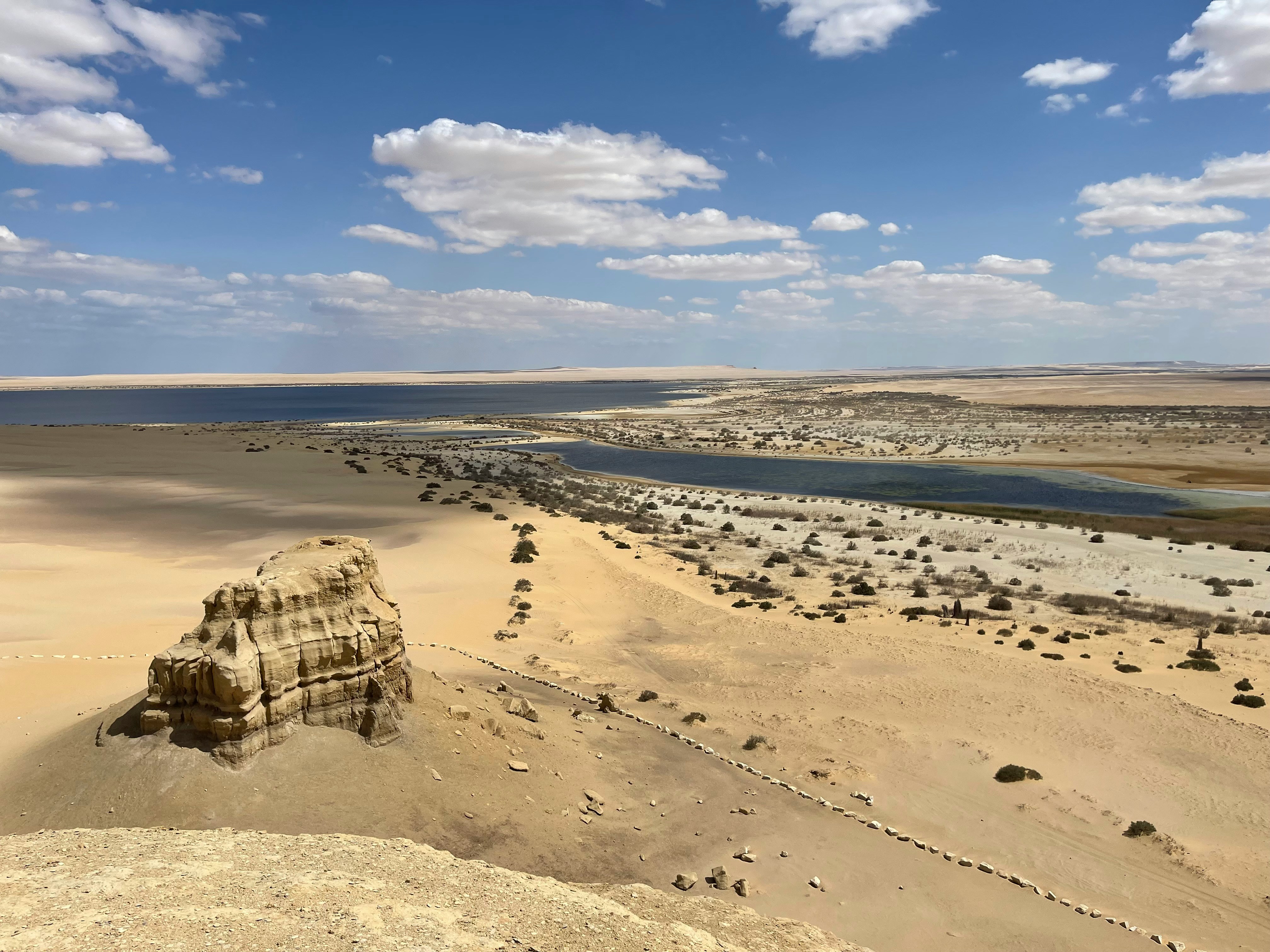
Picture this: you've been exploring ancient history, marveling at whale fossils, and suddenly, you're faced with a breathtaking expanse of turquoise water, shimmering in the desert heat. That’s Magic Lake, or Birkat Al-Qarun as it’s also known. It’s not really magic, of course, but its beauty can certainly feel enchanted. It’s a vibrant, almost impossibly blue lake set against the golden sands of the Fayoum desert, a true oasis within an oasis.
The lake’s changing colors, from deep blue to emerald green depending on the light and the minerals in the water, are captivating. It’s a popular spot for locals and travelers alike to relax, swim (though be mindful of the high salt content), and simply soak in the incredible scenery. The feeling of being so far from civilization, surrounded by such natural beauty, is profoundly peaceful.
Just a short drive from Magic Lake are the Wadi El-Rayan waterfalls. This is quite a unique sight in Egypt – cascading waterfalls in the middle of the desert! These man-made waterfalls were created when excess water from Lake Qarun was channeled into the Rayan depression. The result is a series of stunning waterfalls and lakes that create a surprisingly lush environment. It's a fantastic place for photography and for experiencing a different side of Egypt's desert landscape.
The contrast between the arid desert, the vibrant blue of Magic Lake, and the refreshing spray of the waterfalls is striking. It’s a sensory delight and a perfect opportunity to appreciate the diverse natural beauty that Egypt offers beyond its ancient monuments. For me, these places offer a sense of calm and rejuvenation that’s hard to find elsewhere.
────────────────Tunis Village: Art, Pottery, and Local Charm
After the grandeur of ancient history and the raw beauty of the desert, Tunis Village offers a gentle, artistic pause. Nestled on the edge of Lake Qarun, this charming village is known throughout Egypt for its vibrant pottery workshops and its warm, welcoming community. It feels like stepping into a different world, one filled with color, creativity, and a genuine sense of local life.
The pottery here is distinctive, often featuring bright colors and traditional Egyptian motifs. Many families have been practicing the craft for generations, and you can visit their workshops to see them at work, shaping clay into beautiful bowls, plates, and decorative items. It’s a chance to witness traditional craftsmanship firsthand and perhaps pick up a unique souvenir that carries the soul of the village.
What I love about Tunis is its unhurried pace. The villagers are proud of their heritage and happy to share it with visitors. You can wander through the narrow streets, admire the colorful houses, and chat with the artisans. There’s a real sense of community and a deep connection to the land and its traditions. It’s a place where art and life are beautifully intertwined.
Visiting Tunis Village is a chance to connect with contemporary Egyptian culture, to appreciate the skills of local artisans, and to experience the simple beauty of village life. It’s a delightful counterpoint to the monumental history of the rest of the region, offering a glimpse into the enduring spirit of Egyptian creativity.
────────────────Why Choose Bodda Tours for Your Fayoum Oasis Adventure?
When you’re planning a trip to a place like Fayoum Oasis, you want an experience that goes beyond just seeing the sights. You want to feel the history, understand the context, and travel in comfort and safety. That’s where I come in. At Bodda Tours, we’re not a faceless company; we’re local Egyptians who are passionate about sharing our country with you.
I’ve seen firsthand how travelers can feel overwhelmed by logistics or worry about language barriers. That’s why we focus on 100% private tours. This means no shared buses, no fixed schedules you have to adhere to, and no cramped seats with strangers. It’s just you, your companions, and the freedom to explore at your own pace. We use private, modern, air-conditioned vehicles, ensuring your journey is comfortable, no matter how long the drive.
One of the things my guests always appreciate is the Korean-speaking guide advantage. For many travelers, having a guide who speaks their language fluently makes a huge difference. It means clear communication, deeper understanding of the sites, and no language anxiety, allowing you to fully immerse yourself in the experience. I’ve found that this connection makes the journey so much richer.
We pride ourselves on offering no scams, no tricks. All our tours are verified, and our service is transparent. You won't find any hidden fees or unexpected charges. I want you to feel secure and trust that you're getting genuine value. This is especially important in places like Siwa Oasis, where some operators might try to sell fake tuktuk safaris – a total scam! With Bodda Tours, you’re always getting the real deal, like professional 4x4 jeeps for desert adventures.
The biggest advantage? You’re booking directly with us, real local Egyptians who care deeply about your experience. We’re not a middleman or a reseller. This means direct booking, direct service, and no agent markups. What you see is what you pay. I also guarantee a fast WhatsApp response; you'll be talking to a real person, not a chatbot, usually within minutes.
We can also create custom itineraries tailored to your interests, whether you’re a photography enthusiast, a food lover, or just want to explore at a relaxed pace. And if anything unexpected happens, we make it right or provide compensation. We have real traveler reviews available on request, so you can see for yourself what others have experienced.
Choosing Bodda Tours means choosing a genuine, comfortable, and enriching way to discover Egypt. It’s about experiencing the country through the eyes of someone who calls it home.
──────────────── ## Planning Your Fayoum Oasis TourFayoum Oasis is a fantastic destination for a day trip from Cairo, or it can be part of a longer, multi-city Egyptian adventure. Here’s what you need to know to plan your visit.
Best Time to Visit
The ideal time to visit Fayoum Oasis is during the cooler months, from **October to April**. The desert climate can be extremely hot during the summer months (June to August), making daytime exploration challenging. Spring (March-May) and Autumn (September-November) offer pleasant temperatures for outdoor activities. Winter (December-February) can be cool, especially in the evenings, so a light jacket is recommended.
How to Get There
The most convenient way to reach Fayoum Oasis from Cairo is by private car. The journey typically takes around 1.5 to 2 hours, depending on traffic and your specific destination within the oasis. While public transportation is available, it can be time-consuming and less comfortable, especially when trying to visit multiple sites within the oasis. Bodda Tours offers private, air-conditioned vehicles for door-to-door service, making the journey smooth and enjoyable.
What to Expect
A Fayoum Oasis tour offers a diverse range of experiences. You can expect to be amazed by the prehistoric marine life at the Valley of the Whales, relax by the strikingly colored Magic Lake, and witness the unique waterfalls of Wadi El-Rayan. You’ll also have the opportunity to immerse yourself in the artistic atmosphere of Tunis Village. The landscape shifts dramatically from agricultural land to stark desert, offering a beautiful visual contrast. Be prepared for some walking, especially at the Valley of the Whales and around the waterfalls.
What to Wear
Comfortable, light clothing is essential, especially if you’re visiting during the warmer months. Given the desert environment and the cultural context, it’s advisable to dress modestly. This means covering your shoulders and knees. Lightweight, breathable fabrics like cotton or linen are ideal. Comfortable walking shoes or sturdy sandals are a must, as you’ll be doing a fair amount of walking. Don’t forget a hat, sunglasses, and sunscreen to protect yourself from the strong desert sun.
Is Fayoum Oasis Worth Visiting?
Absolutely, yes! Fayoum Oasis offers a unique and rich experience that complements the more famous Egyptian attractions. Its UNESCO World Heritage site (Valley of the Whales), stunning natural beauty at Magic Lake and Wadi El-Rayan, and charming artistic village of Tunis make it a destination that appeals to a wide range of interests. It provides a deeper understanding of Egypt's history, from its ancient agricultural importance to its prehistoric past and its artistic present. It's a chance to see a different, yet equally captivating, side of Egypt.
Nearby Attractions Covered by Bodda Tours
While Fayoum Oasis is a destination in itself, Bodda Tours can also help you explore other incredible sites nearby or on your way:
- Siwa Oasis Private Tour: If you love desert landscapes and unique cultures, a trip to Siwa is a must.
- Cairo & Giza Private Tours: Explore the Pyramids, Sphinx, and the Grand Egyptian Museum.
- Saqqara & Dahshur Tours: Discover the Step Pyramid and other ancient burial sites.
- Alexandria Day Tours: Experience Egypt's Mediterranean charm with its historical sites.
Ready to Explore Egypt? Contact Bodda Tours Today
Whether you dream of Siwa's salt lakes, Fayoum's waterfalls, or a private pyramid tour, Bodda Tours is here to make it happen. Reach out anytime between 07:00-22:00 daily.
- WhatsApp: wa.me/201040541153
- KakaoTalk: open.kakao.com/o/smU92Hfi
- Email: info@boddatours.me
- Website: boddatours.me
Sources & References
- UNESCO World Heritage Centre. (n.d.). *Fayoum Oasis*. Retrieved from [UNESCO World Heritage website link - replace with actual URL if available]
- Egyptian Ministry of Tourism and Antiquities. (n.d.). *Fayoum*. Retrieved from [Ministry website link - replace with actual URL if available]
![[2026 Egypt Tours] Siwa Oasis Honest Review (Desert Safari & History)](https://boddatours.me/images/hq/siwa-salt-lake-hq.jpg)