![[2026 Egypt Tours] Dahshur Pyramids (Bent & Red) - Snofrus Legacy](https://boddatours.me/images/fallback-post.png)
The Dawn of Pyramid Building: Dahshur's Architectural Revolution
Ever stood somewhere and felt the weight of millennia pressing down, a tangible hum of history all around you? That's how I feel every single time I visit Dahshur. It’s not just rocks and sand; it’s where the whole idea of building a pyramid, a mountain of stone to touch the sky for eternity, truly took shape. You’re looking at the very blueprints, the trial-and-error, the moments of genius and near-disaster that led to the Giza giants we all know. For anyone wanting to understand the *why* and *how* of these ancient wonders, Dahshur is your starting point. It’s a place that whispers secrets of engineering and ambition from over 4,500 years ago.
My first trip to Dahshur was as a kid, tagging along with my dad who loved showing me these places. I remember the sheer scale of the Bent Pyramid, how it looks almost like it’s still deciding whether to be a smooth-sided pyramid or a step pyramid. It’s baffling and beautiful. Then, you see the Red Pyramid, the first true pyramid, standing proud and perfect. It’s a feeling you can’t get from a textbook or even a documentary. It's about being there, breathing the air, and seeing the very foundations of Pharaonic ambition.
If you're planning an Egypt history tour, or even just a private tour from Cairo, you absolutely have to put Dahshur on your list. It’s so much more than just another historical site; it’s a living, breathing testament to human ingenuity and the relentless pursuit of the eternal. It’s where the architects learned their craft, and you get to walk in their footsteps.
────────────────The Bent Pyramid: Snofrus Bold Experiment
Imagine being the king, Snofrus, in the 4th Dynasty, around 2600 BC. You’ve already commissioned a pyramid at Meidum, and it didn’t quite turn out as planned – it looks more like a tower now. You want a grander, more stable monument for your eternal rest. What do you do? You experiment. And that's exactly what happened at Dahshur with the famous Bent Pyramid.
This pyramid is a masterpiece of architectural evolution. You can see the distinct change in angle partway up. They started building it at a steep angle of about 54 degrees, which is quite ambitious. But as they were building, they must have realized that the angle was too acute, possibly leading to structural instability or simply being too difficult to complete. So, they changed the angle to a more manageable 43 degrees for the upper section. It’s this dramatic shift that gives it the iconic ‘bent’ appearance. It’s like watching a brilliant mind adjust its strategy mid-project. It’s not a mistake; it’s a calculated, monumental adjustment.
The feeling you get standing before the Bent Pyramid is one of awe mixed with a touch of curiosity. You’re witnessing the physical manifestation of problem-solving on a colossal scale. The smooth, polished limestone casing stones are mostly gone now, having been reused in later constructions, but you can still see some of the original structure beneath. It’s a humbling reminder that even the most magnificent achievements often involve learning from setbacks.
The inner chambers of the Bent Pyramid are also fascinating. They are accessed via two entrances: one on the north face, typical of pyramid construction, and another, unusual one, on the west face. This complexity hints at the developing architectural and religious ideas of the time. The sheer size and the boldness of the attempt are what strike me most. It shows the Pharaohs and their architects were not afraid to push boundaries, even if it meant a few detours.
────────────────The Red Pyramid: The First True Pyramid
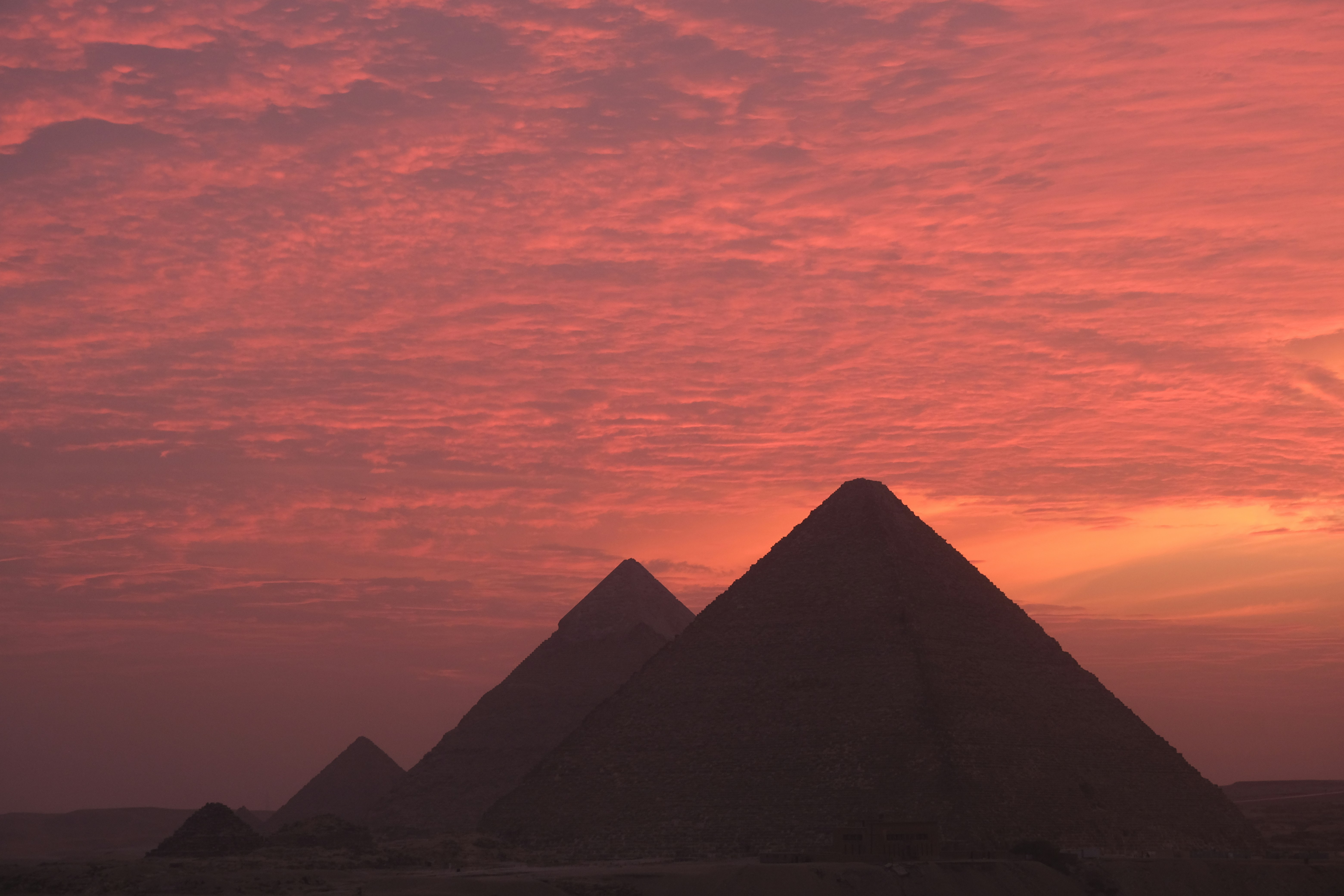
Right next to the Bent Pyramid, as if to say, “Okay, I learned my lesson, and now I’m going to nail it,” stands the Red Pyramid. And nail it, they did. This is widely considered the first successful attempt at building a true, smooth-sided pyramid. It’s named the Red Pyramid because of the reddish hue of its core stone blocks, which are made of a different type of limestone than the outer casing (which would have originally been covered in fine white Tura limestone). When the sun hits it just right, especially in the late afternoon, it glows with a warm, earthy color that’s just beautiful.
The Red Pyramid was commissioned by Snofrus himself, likely after the Bent Pyramid. Its angle is a consistent 43 degrees, the same as the upper section of the Bent Pyramid, but this time applied from the base upwards. The result is a perfectly proportioned, stable structure that has stood for over 4,500 years. It’s elegant, symmetrical, and profoundly majestic. Walking around its base, you can’t help but feel a sense of profound respect for the immense labor and brilliant minds that brought it into existence.
What makes the Red Pyramid even more special is that it's one of the pyramids you can actually go inside. The entrance is low, and you have to descend a long, steep passageway into the heart of the pyramid. It’s a bit dark and narrow, and you need to be comfortable with enclosed spaces, but the experience of standing in the central burial chamber, surrounded by those massive stones, is absolutely incredible. You’re inside a structure that was built as a tomb for a pharaoh, a vessel for his journey to the afterlife. The air inside feels different, ancient, charged with history. It's a feeling of being utterly connected to the past.
The Red Pyramid is often overlooked in favor of the Giza pyramids, but for me, it holds a unique significance. It’s the culmination of Snofrus’s architectural experiments, the proof of concept that would pave the way for Khufu, Khafre, and Menkaure. It represents a pivotal moment in Egyptian history and architecture, a step from ambitious innovation to perfected form. It’s a key piece of the puzzle when you’re exploring Egypt history tours.
────────────────The Engineering Marvels of Dahshur
The construction of these pyramids was no small feat. It required an unprecedented level of organization, labor, and technical knowledge. Think about it: moving and lifting millions of tons of stone, precisely shaping them, and stacking them to create these colossal structures. The ancient Egyptians were masters of logistics and engineering, centuries ahead of their time.
The quarries for the limestone were often miles away, and the stones, some weighing many tons, had to be transported. While the exact methods of lifting and placing the stones are still debated by archaeologists – with theories ranging from ramps and levers to ingenious internal systems – the sheer scale of the operation is undeniable. The precision with which these stones were cut and fitted, especially in the Red Pyramid’s burial chamber, is breathtaking. There are no mortar joints visible; the stones fit together so perfectly you can barely slide a piece of paper between them.
Beyond the pyramids themselves, Dahshur was a royal necropolis, a complex of tombs and mortuary temples designed to serve the pharaohs in the afterlife. While the main focus for visitors is usually the Bent and Red Pyramids, the site also includes other structures, like the Black Pyramid of Amenemhat III (though it's in much poorer condition and not typically visited) and smaller pyramids for queens and nobles. These surrounding structures further illustrate the importance of Dahshur as a royal burial ground during the Old Kingdom and Middle Kingdom periods.
Exploring Dahshur offers a unique perspective on the development of pyramid construction. It’s a tangible lesson in how architectural styles and techniques evolved over time, driven by royal ambition and a deep understanding of geometry and physics. It’s this evolution that makes it such a crucial stop for anyone interested in the history of ancient Egypt, especially when compared to the earlier, less successful attempts and the later, more refined structures.
────────────────Why Choose Bodda Tours for Your Dahshur Adventure?
When you’re exploring places as historically significant and profoundly beautiful as Dahshur, you want an experience that feels authentic, comfortable, and deeply personal. That’s where I come in with Bodda Tours.
I’ve seen firsthand how many travelers arrive in Egypt expecting one thing and then get something else entirely. Some end up on crowded buses with fixed schedules, feeling rushed and unable to truly soak in the atmosphere. Others fall victim to over-hyped tours that promise the world but deliver a generic experience. My goal with Bodda Tours is to give you the Egypt I know and love, the one that feels like a personal discovery.
Here's why I think Bodda Tours is different, especially for sites like Dahshur:
- 100% Private Tours: Forget the cramped seats and the forced camaraderie of shared buses. With Bodda Tours, it’s just you, your companions, and your private, air-conditioned vehicle. This means we go at your pace. Want to spend an extra 30 minutes marveling at the Red Pyramid? No problem. Need a quiet moment to just sit and absorb the view? We make it happen. It’s your trip, on your terms.
- Real Local Insight: I’m not a reseller or a middleman. Bodda Tours is run by me, Bodda, a Cairene who grew up here. I know these sites, their stories, and the local culture like the back of my hand. This isn’t just about seeing the pyramids; it’s about understanding their place in Egypt’s incredible narrative.
- Comfort & Convenience: We provide door-to-door service. We pick you up from your hotel and drop you back, no hassle. Our vehicles are modern, clean, and have A/C, which is a lifesaver, especially during the warmer months.
- No Scams, No Tricks: This is super important to me. I’ve heard too many stories of travelers being misled. With Bodda Tours, you get verified tours only. There are absolutely no hidden fees, no commission-based stops designed to pressure you into buying things you don't want. What you agree on is what you get.
- Korean-Speaking Guides: For our Korean guests, we offer the invaluable advantage of Korean-speaking local guides. This means clear communication, no language barriers, and a deeper connection to the history and culture being explained. It’s about feeling understood and truly engaged.
- No Tuktuk Fake Safaris: I need to mention this specifically for places like Siwa, but it applies to the principle of honest service everywhere. Some operators will try to sell you ‘tuktuk safaris’ which are often a scam. Bodda Tours only uses legitimate, professional vehicles and drivers for any desert excursions, ensuring safety and authenticity.
- Customized Itineraries: Whether you’re a photography enthusiast wanting the best light, a history buff eager for deep dives, or just someone who wants a relaxed pace, we can tailor your trip. We can combine Dahshur with Saqqara, Memphis, or even extend your exploration to other wonders of Egypt.
- Direct Service: When you book with Bodda Tours, you are booking directly with the people who provide the service. This means better communication, more flexibility, and a genuine commitment to making your trip unforgettable.
I want you to experience the magic of Dahshur without any worries, just pure wonder. It’s about making memories that last a lifetime, with a friend who knows the way.
────────────────Planning Your Trip to Dahshur
Dahshur is easily accessible from Cairo, making it a popular choice for a day trip or as part of a larger itinerary. It's located about 40 kilometers (25 miles) south of Cairo.
How to Get There:
The most comfortable and efficient way to visit Dahshur is with a private tour. This ensures you have a dedicated vehicle and driver, and often a guide who can bring the history to life. Public transport options are limited and can be time-consuming and confusing for tourists. A private car from Cairo typically takes about an hour, depending on traffic.
Best Time to Visit:
Egypt's climate is best enjoyed during the cooler months. The ideal time to visit Dahshur is from **October to April**. During these months, the weather is pleasant, with average temperatures ranging from 20-25°C (68-77°F). Summer (June to August) can be extremely hot, with temperatures often exceeding 40°C (104°F), making early morning visits essential if you travel during this period. Spring (May) and Autumn (September) can be transitional, with potential for heat.
What to Wear:
Comfort is key. Since you'll be doing a lot of walking and exploring, wear comfortable shoes. For visiting historical sites in Egypt, it’s always respectful to dress modestly. This means covering your shoulders and knees. Lightweight, breathable fabrics like cotton or linen are recommended, especially during warmer months. A hat and sunglasses are also essential for sun protection.
Is Dahshur Worth Visiting?
Absolutely, yes! If you are interested in the true evolution of pyramid construction, the story of Snofrus’s ambition, and seeing some of the most architecturally significant pyramids in Egypt, then Dahshur is a must-see. It offers a more intimate and less crowded experience than Giza, allowing for a deeper connection to the ancient past. It provides crucial context for understanding the subsequent masterpieces at Giza.
Nearby Attractions:
Dahshur is often visited in conjunction with other important historical sites in the Memphis region, including:
- Saqqara: Home to the iconic Step Pyramid of Djoser, the oldest stone structure of its size in the world. It’s an essential stop for understanding pyramid development.
- Memphis: The ancient capital of Egypt, now an open-air museum featuring a colossal statue of Ramesses II and a beautiful alabaster sphinx.
Bodda Tours can easily combine these sites into a comprehensive and enriching private tour, giving you a full picture of the Old Kingdom's architectural achievements. We can create a custom itinerary that perfectly suits your interests and pace.
────────────────Ready to Explore Egypt's Ancient Wonders with Bodda Tours?
If the idea of standing before the architectural marvels of Snofrus, understanding the very beginnings of pyramid building, and experiencing Egypt with a local friend excites you, then let's chat. We handle all the details so you can focus on the wonder.
- Reach out via WhatsApp anytime between 07:00-22:00 daily: wa.me/201040541153
- Connect on KakaoTalk: open.kakao.com/o/smU92Hfi
- Send an email: info@boddatours.me
- Explore more and see our offerings at: boddatours.me
Sources & References
- Egyptian Ministry of Tourism and Antiquities. (Official website and publications).
- UNESCO World Heritage Centre. (Information on Memphis and its Necropolis, including Dahshur). https://whc.unesco.org/en/list/86/
- Wikipedia. (General historical and architectural information on Dahshur Pyramids, Snofrus, and Egyptian pyramid construction).
![[2026 Egypt Tours] Siwa Oasis Honest Review (Desert Safari & History)](https://boddatours.me/images/hq/siwa-salt-lake-hq.jpg)
![[2026 Egypt Tours] Cairo Cafes & Mint Tea (Local Experience)](https://boddatours.me/images/hq/moez-st-hq.jpg)