![[2026 Egypt Tours] Atum's Genesis: Heliopolis Ennead (Ancient Egyptian Creation)](https://boddatours.me/images/fallback-post.png)
The Deepest Secrets of Creation: Atum and the Heliopolis Ennead (2026 Egypt Tours)
Imagine standing where the very concept of existence was first whispered into being. It's a feeling that washes over you, a profound connection to something ancient and immense. When people ask me about the true heart of Egypt, it's not just about the pyramids or the temples, though they are magnificent. It's about the stories, the beliefs, the very fabric of how this incredible civilization understood the universe. And at the very beginning of that understanding lies the myth of Atum and the Heliopolis Ennead. It’s a story that shaped not just religion, but art, kingship, and the Egyptian worldview for millennia. If you're looking for an Egypt history tour that goes beyond the surface, this is it.
I’ve spent my life in Cairo, exploring every corner, talking to elders, reading ancient texts in dusty libraries. And the more I learn, the more I realize how fundamental these creation myths are to understanding everything that came after. They’re not just old tales; they are the bedrock of Egyptian identity. For travelers seeking a truly immersive experience, understanding these foundational myths is key. It’s the difference between seeing a temple and feeling its sacred energy, between admiring a statue and understanding the divine power it represents.
When you book a private Egypt tour with Bodda Tours, we don't just show you the sights. We help you connect with the spirit of the land, and that spirit is deeply rooted in these ancient narratives. This journey into Atum and the Heliopolis Ennead is one of those connections, a chance to grasp the profound intellectual and spiritual achievements of the ancient Egyptians.
────────────────The Primordial Waters: Nun and the Birth of Atum
Before anything existed, there was only the endless, dark, silent, and formless primordial waters called Nun. Think of it as the ultimate void, the unmanifest potential from which everything would eventually emerge. It wasn't just water; it was chaos, the cosmic ocean that contained the seeds of all creation. This concept of a pre-existing, watery abyss is common in many ancient cosmogonies, and in Egypt, Nun held a special, almost sacred, significance. It was the source, the ultimate mystery that would never truly disappear, always lurking at the edges of existence, a reminder of the universe's ultimate origins.
From this boundless Nun, a single mound of land, the Benben, rose. This is a crucial image. The Benben represents the first solid ground, the point of emergence. It’s often depicted as a pyramid or an obelisk shape, a visual metaphor for the emergence of order from chaos. On this sacred mound, the self-created god Atum appeared. He is often called the 'Great One' or 'He Who Created Himself'. Atum is unique because he didn't have parents; he simply *was*. This self-creation is a powerful statement about divine power and independence, a concept that would resonate throughout Egyptian theology.
Atum’s arrival on the Benben is the moment creation truly begins. He is the first conscious being, the first divine spark in the emptiness. His appearance symbolizes the transition from the unconscious to the conscious, from the potential to the actual. This is the very beginning of the Egyptian cosmos, a universe born from darkness and water, coalesced into a single point of light and life.
When you visit sites like Heliopolis, even though much of its ancient glory is gone, you can still feel the echoes of this primordial moment. The sheer audacity of this concept—a universe spontaneously arising from nothingness—is breathtaking. It speaks volumes about the ancient Egyptians’ capacity for abstract thought and their deep contemplation of existence.
────────────────The First Gods: Shu and Tefnut
Once Atum existed, he felt lonely. He needed to create, to populate the nascent universe. This is where the concept of self-generation becomes fascinating. Atum masturbated, or sometimes spat or sneezed, to bring forth the first divine pair: Shu, the god of air and light, and Tefnut, the goddess of moisture and mist. This act of creation through bodily fluids, while perhaps startling to modern sensibilities, was a very natural concept for ancient peoples. It symbolized the generative power of the divine, the ability to bring life from within oneself.
Shu and Tefnut represent the fundamental elements needed for life to flourish beyond the primordial waters. Air to breathe, light to see, and moisture to sustain. They are the first step in separating the elements and establishing a more complex, ordered world. Shu's domain is the space between the earth and the sky, while Tefnut embodies the vital moisture that sustains life, the dew, the mist, the early rains.
Together, Shu and Tefnut had children: Geb, the god of the earth, and Nut, the goddess of the sky. This is where the cosmic drama really begins to unfold. Geb and Nut were lovers, inseparable, constantly embracing. Their union represents the earth and sky in their primal state, a tightly bound cosmos.
The separation of Shu and Tefnut is a critical moment. It signifies the beginning of differentiation in the cosmos. It’s the first act of establishing boundaries and distinct realms, a necessary step for a structured universe. Imagine the ancient Egyptians contemplating this: the very air we breathe and the moisture that nourishes us are divine children, born from the first god's own being. It imbues the natural world with profound divinity.
────────────────The Earth and Sky: Geb and Nut
Geb, the god of the earth, and Nut, the goddess of the sky, were deeply in love. Their union was so passionate and inseparable that they were locked in a constant embrace. This image of the earth and sky being one, eternally fused, was the state of the world for a long time. It represented a dense, undifferentiated cosmos, where light could not penetrate and distinct realms could not be established.
Atum, and later the Ennead, recognized that for life to truly flourish, for humanity and the other gods to exist in a structured world, the earth and sky needed to be separated. This monumental task was carried out by Shu, the god of air. With his immense strength, Shu pushed Nut, the sky goddess, upwards, creating the vast expanse we know as the sky. He then placed Geb, the earth god, beneath her. This act of separation created the space for life, the atmosphere, the day and night cycles.
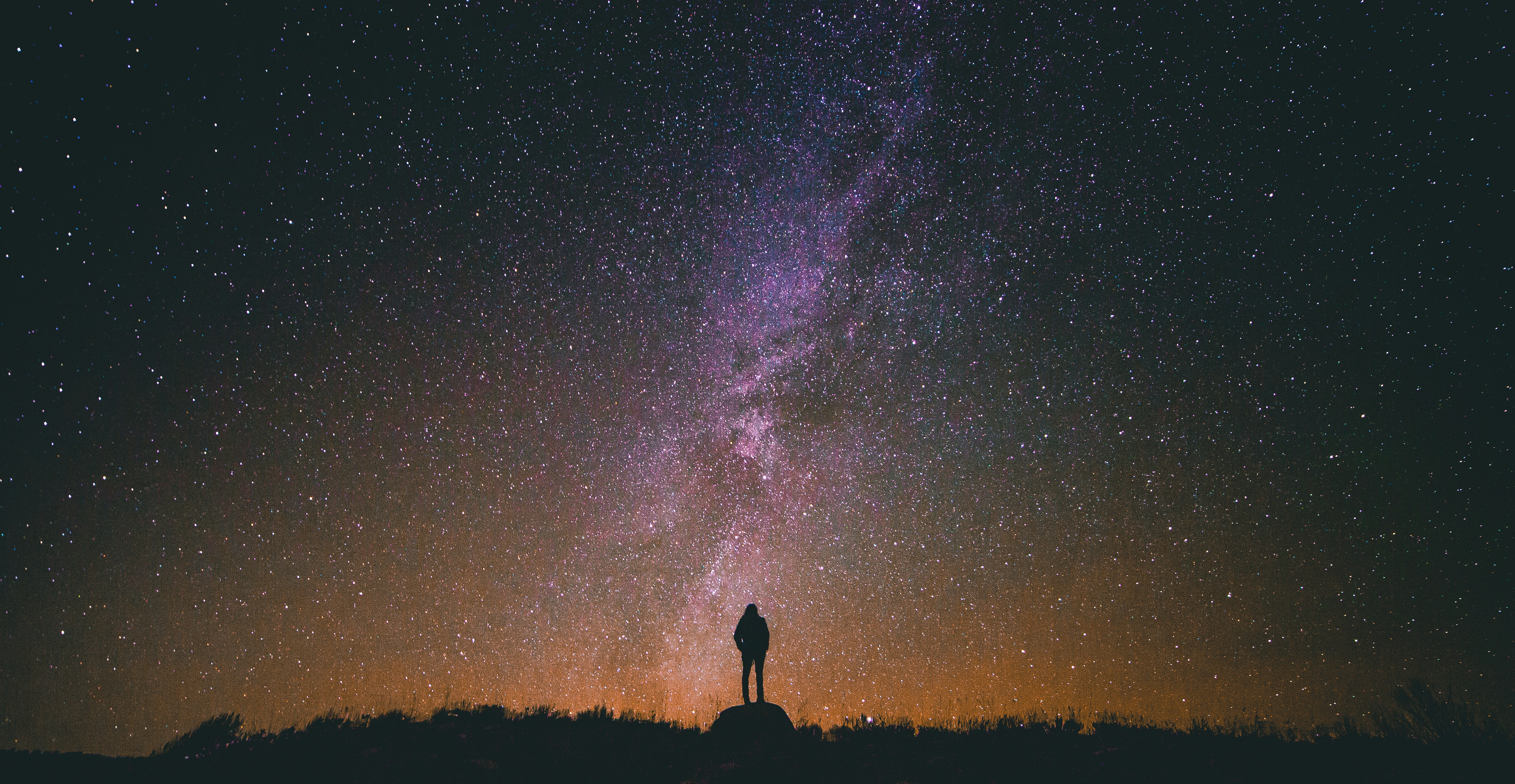
Nut, now stretched above Geb, became the celestial vault, her body adorned with stars. She is often depicted as a woman with her body arched over the earth, her hands and feet touching the ground. Geb lies beneath her, representing the solid ground upon which we stand. The space between them is filled by Shu, the air, the breath of life.
This dramatic separation is a visual metaphor for the establishment of order. The tight embrace of Geb and Nut represents chaos and undifferentiation; Shu's intervention signifies the imposition of divine will and structure. It’s a powerful image that explains the fundamental architecture of their perceived universe. The sky, with its stars and celestial bodies, was a living entity, a goddess watching over the earth. The earth itself was a god, nurturing and stable.
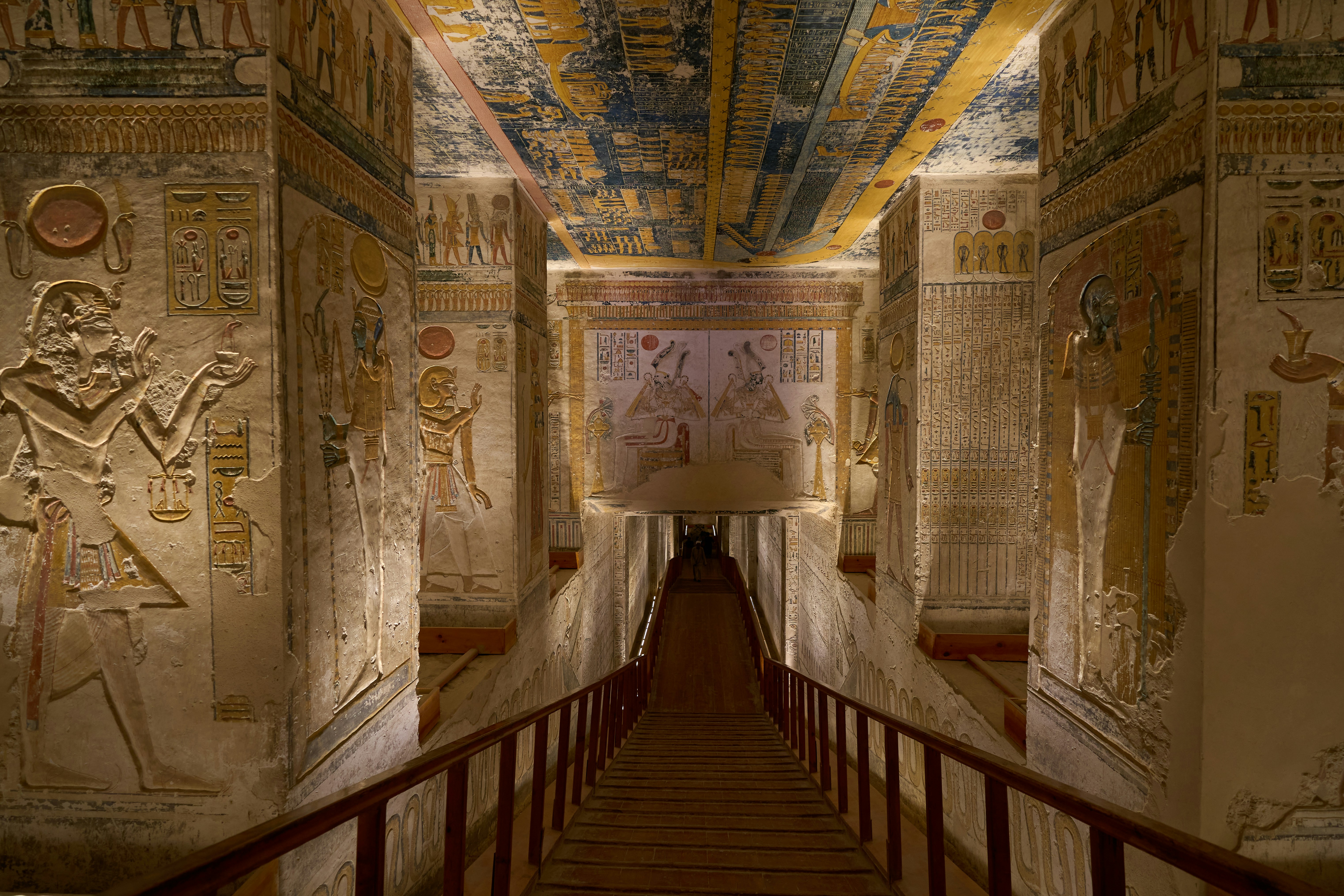
This imagery is incredibly potent and can be seen in countless temple reliefs and tomb paintings across Egypt. The arc of Nut over the land is a constant reminder of this divine separation and the life-giving space it created. Understanding this narrative adds so much depth when you stand before a hypostyle hall or gaze at the tomb ceilings in places like Luxor or Aswan.
────────────────The Ennead: A Divine Family Tree
The Heliopolis Ennead, named after the ancient city of Heliopolis (the 'City of the Sun'), is a group of nine principal deities who were central to Egyptian creation mythology. Atum is the progenitor, the self-created god who starts it all. The Ennead, in its most common form, comprises:
- Atum (the creator god)
- Shu (god of air)
- Tefnut (goddess of moisture)
- Geb (god of earth)
- Nut (goddess of sky)
- Osiris (god of the afterlife, underworld, and rebirth)
- Isis (goddess of magic, motherhood, and healing)
- Set (god of chaos, storms, and desert)
- Nephthys (goddess of mourning and protection)
The first generation is Atum. The second generation is Shu and Tefnut. The third generation is Geb and Nut. The fourth generation is Osiris, Isis, Set, and Nephthys. This systematic generation of deities reflects a highly organized, patriarchal (though with powerful female deities) worldview. Each deity embodies fundamental aspects of the natural world or human existence, demonstrating how the Egyptians saw the divine interwoven with every facet of life.
The stories of Osiris, Isis, Set, and Nephthys are arguably the most dramatic and influential within the Ennead. The myth of Osiris’s murder by his brother Set, his dismemberment, and his eventual resurrection by Isis and Nephthys, leading to the birth of Horus, is a foundational narrative of kingship, death, resurrection, and the triumph of order over chaos. Osiris becomes the ruler of the underworld, and his story sets the precedent for the pharaoh's journey into the afterlife.
This familial structure of the gods provided a framework for understanding the relationships between celestial powers and earthly phenomena. It also served as a model for the pharaoh, who was seen as the earthly representative of Horus, the son of Osiris and Isis, and the heir to the divine throne. This concept of divine kingship, deeply rooted in these creation myths, is something you feel when you stand before the colossal statues of pharaohs or wander through their mortuary temples.
The Ennead is not just a list of names; it's a complex system of divine relationships that explains the origins of the universe, the natural world, and the social and political order of Egypt itself. It's a testament to the intellectual sophistication of this ancient civilization.
────────────────The Significance of Heliopolis
Heliopolis, meaning 'City of the Sun' in Greek, was one of the oldest and most important religious centers in ancient Egypt. Its ancient Egyptian name was Iunu. It was the primary cult center for Atum and later for the sun god Ra, who was often syncretized with Atum as Atum-Ra. This city was considered the birthplace of the cosmos, the very location where creation began.
During the Old Kingdom, Heliopolis was the intellectual and religious capital of Egypt. The priests of Heliopolis were renowned for their knowledge of astronomy, theology, and cosmology. They developed the creation myth of Atum and the Ennead, which became highly influential throughout Egypt. While much of ancient Heliopolis has been lost to time and the expansion of modern Cairo, its legacy as the cradle of Egyptian civilization is undeniable.
The great obelisks, symbols of the sun god and the Benben stone, were strongly associated with Heliopolis. Many of these magnificent structures were erected by pharaohs seeking favor from the sun god. The surviving obelisks, such as the one at Al-Matariyyah, believed to be part of Heliopolis, offer a tangible link to this ancient past.
When you are in Cairo, I always recommend visiting sites that connect you to this ancient past. Even if the physical structures of Heliopolis are largely gone, understanding its role as the spiritual and intellectual heart of ancient Egypt adds an incredible layer to your visit. It’s where the ideas that shaped millennia of Egyptian history and culture first took root. The concept of the sun god’s supreme power, so central to Egyptian kingship and belief, was most powerfully articulated here.
The sheer scale of influence this one city had, originating these fundamental ideas that permeated every aspect of Egyptian society, is astounding. It’s a reminder that behind the grand monuments, there were profound intellectual and spiritual currents that powered the civilization.
────────────────The Myth's Enduring Legacy
The Atum and Heliopolis Ennead myth wasn't just a creation story; it was a blueprint for the Egyptian universe. It explained the existence of the gods, the natural world, and the order of society. The concept of divine kingship, where the pharaoh was seen as the earthly embodiment of Horus, a member of the Ennead, was directly supported by these narratives.
The cyclical nature of the myth, from the primordial waters to the established order, and the constant struggle between order (Ma'at) and chaos (Isfet), is a theme that runs through all of Egyptian thought. The death and resurrection of Osiris, a key part of the Ennead's story, provided hope for an afterlife and a model for personal rebirth. This belief in an eternal afterlife was a driving force behind the construction of tombs, temples, and funerary rituals.
The influence of these myths can be seen in Egyptian art, architecture, and literature for over 3,000 years. The iconography of the gods, their relationships, and their powers are depicted in countless temples, from the grand Karnak Temple in Luxor to the smaller, more intimate tombs in the Valley of the Kings. The very concept of Ma'at, the cosmic principle of truth, balance, and justice, is intrinsically linked to the Ennead's struggle to maintain order against chaos.
Even as Egypt evolved, absorbing influences from Greece, Rome, and later Christianity and Islam, the foundational concepts laid down by the Heliopolis Ennead continued to resonate. They provided a cultural and spiritual bedrock that remained remarkably consistent.
For travelers interested in the deep history of Egypt, understanding these creation myths is like finding the key to a treasure chest. It unlocks a deeper appreciation for the pharaonic civilization and its worldview. It’s the difference between admiring the art and understanding the profound meaning behind every symbol and depiction.
────────────────Why Choose Bodda Tours for Your Egypt History Tour?
When you're planning a trip to Egypt, especially one focused on uncovering the deep historical and mythological roots, you want someone who truly understands the stories. I've seen too many travelers disappointed by generic tours that skim the surface. That's why I started Bodda Tours. We are not a faceless company; we are a team of passionate Egyptians who live and breathe this history.
Here’s what makes a Bodda Tours experience different:
- 100% Private Tours: Forget crowded buses and fixed schedules. Your trip is tailored to your pace and interests. We travel in comfortable, air-conditioned vehicles, ensuring door-to-door service.
- Korean-Speaking Local Guides: My team includes guides fluent in Korean, making communication effortless and enriching. No language barriers mean deeper understanding and connection.
- No Scams, No Surprises: We pride ourselves on transparent service. All our tours are verified, and we operate with integrity. You can trust that there are no hidden fees.
- Real Local Expertise: I founded Bodda Tours because I wanted to share the *real* Egypt with people. We’re not a reseller; we’re the direct service providers, run by locals who care deeply about your experience.
- No Tuktuk Fake Safaris in Siwa: This is important! In places like Siwa Oasis, some operators offer misleading "tuktuk safaris." Bodda Tours only uses professional drivers with real 4x4 jeeps for desert adventures, ensuring safety and authenticity.
- Customized Itineraries: Whether you're passionate about mythology, photography, food, or shopping, we can craft an itinerary that fits your desires.
- Direct Service, No Markups: You book directly with us, meaning no agent commissions or hidden markups. What you agree on is what you get.
- Personalized Attention: We offer fast WhatsApp responses and a genuine human connection from start to finish.
- Compensation Guarantee: If anything goes wrong or is delayed, we are committed to making it right or providing compensation.
We believe that understanding the Heliopolis Ennead and other ancient Egyptian narratives transforms a trip into a profound journey of discovery. Let us guide you through the origins of everything.
────────────────Planning Your Journey into Ancient Egyptian Creation
While the physical remains of Heliopolis itself are scarce, the understanding of the Atum and the Heliopolis Ennead myth can be integrated into various tours across Egypt, especially those focusing on history and mythology. For a truly comprehensive experience, combining this knowledge with visits to key sites is essential.
Best Time to Visit
For exploring Egypt's historical sites, the cooler months from October to April are ideal. The weather is pleasant for sightseeing, with temperatures ranging from the low 20s to the high 20s Celsius (70s Fahrenheit). Summer months (June to August) can be extremely hot, especially in Upper Egypt, making early morning or late afternoon visits more practical.
How to Get There and Explore
Understanding these myths often involves exploring various sites. While Heliopolis is within Cairo, many related concepts are best understood at museums and temples elsewhere:
- Cairo & Giza Private Tours: To grasp the foundational concepts, a private tour of the Grand Egyptian Museum (GEM) or the Egyptian Museum in Tahrir Square is invaluable. These museums house artifacts that illustrate the Ennead's influence, including sarcophagi, statues, and papyri. Exploring the Pyramids of Giza and the Sphinx also connects to the concept of divine kingship that evolved from these myths.
- Saqqara & Dahshur Tours: Visiting the Step Pyramid of Djoser at Saqqara, the oldest stone pyramid, is a tangible link to the early development of Egyptian monumental architecture, which was deeply influenced by cosmological beliefs. The Red Pyramid and Bent Pyramid at Dahshur also showcase the evolution of pyramid building, a practice tied to the pharaoh's divine journey.
- Luxor Tours: The temples of Karnak and Luxor are vast open-air museums of Egyptian history and religion. Reliefs and inscriptions here frequently depict the gods of the Ennead and their roles. The Valley of the Kings, with its royal tombs, is a testament to the belief in an afterlife and the pharaoh's divine transition, concepts heavily influenced by the Osiris myth within the Ennead.
- Aswan Tours: Philae Temple, dedicated to Isis, offers a beautiful glimpse into the worship of a key member of the Ennead. Optional trips to Abu Simbel, the colossal temples of Ramesses II, demonstrate the enduring power of the pharaoh as a divine ruler, a concept that originated in these early creation myths.
Bodda Tours specializes in private Egypt tours that can be customized to focus on historical and mythological themes. We arrange seamless travel between these locations, ensuring comfort and in-depth understanding.
What to Wear
Comfortable, breathable clothing is key. Lightweight trousers or long skirts and shirts that cover your shoulders are recommended for visiting religious sites and for general respect. Comfortable walking shoes are essential. During cooler months, a light jacket or shawl is advisable for evenings.
Is it Worth Visiting?
Absolutely. Understanding the Atum and Heliopolis Ennead is like unlocking a secret language of ancient Egypt. It provides context for everything you see, transforming a sightseeing trip into a profound cultural and spiritual immersion. It allows you to appreciate the intellectual depth and enduring legacy of this remarkable civilization. For anyone seeking to truly understand Egypt's soul, this is an essential piece of the puzzle.
Nearby Attractions & Related Tours
Your exploration of creation myths can naturally extend to other significant historical and archaeological sites. Bodda Tours offers comprehensive private tours that connect these narratives:
- Cairo & Giza Private Tours: Pyramids, Sphinx, Grand Egyptian Museum (GEM), Khan el-Khalili Bazaar, Saladin Citadel.
- Saqqara & Dahshur Tours: Step Pyramid, Memphis, Red Pyramid, Bent Pyramid.
- Fayoum Oasis Day Tour from Cairo: Valley of the Whales UNESCO, Magic Lake, Wadi El-Rayan.
- Alexandria Day Tour: Bibliotheca Alexandrina, Qaitbay Citadel, Roman Catacombs.
- Luxor & Aswan Tours: Valley of the Kings, Karnak Temple, Philae Temple, optional Abu Simbel.
- Multi-city Egypt Packages: Combining themes across Siwa Oasis, Cairo, Fayoum, and Luxor.
Ready to Explore Egypt's Divine Origins? Contact Bodda Tours Today
If you’re captivated by the idea of uncovering the ancient Egyptian creation myths, from Atum’s genesis to the complex relationships of the Ennead, Bodda Tours is here to guide you. We offer personalized private tours designed to bring history and mythology to life. Reach out to us anytime between 07:00-22:00 daily to start planning your unforgettable journey.
- WhatsApp: wa.me/201040541153
- KakaoTalk: open.kakao.com/o/smU92Hfi
- Email: info@boddatours.me
- Website: boddatours.me
Sources & References
- Egyptian Ministry of Tourism and Antiquities. (n.d.). *Official Tourism Website*. Retrieved from [https://www.egypt.travel/](https://www.egypt.travel/) (Note: Specific page for mythology not directly linked, but serves as official source)
- UNESCO World Heritage Centre. (n.d.). *Memphis and its Necropolis – the Pyramid Fields from Giza to Dahshur*. Retrieved from [https://whc.unesco.org/en/list/86/](https://whc.unesco.org/en/list/86/)
- Wilkinson, Richard H. (2003). *The Complete Gods and Goddesses of Ancient Egypt*. Thames & Hudson.
- Wikipedia contributors. (2026, July 16). *Heliopolitan creation myth*. Wikipedia. Retrieved July 17, 2026, from [https://en.wikipedia.org/wiki/Heliopolitan_creation_myth](https://en.wikipedia.org/wiki/Heliopolitan_creation_myth)

![[2026 Egypt Tours] Siwa Oasis Honest Review (Desert Safari & History)](https://boddatours.me/images/hq/siwa-salt-lake-hq.jpg)
![[2026 Egypt Tours] Cairo Cafes & Mint Tea (Local Experience)](https://boddatours.me/images/hq/moez-st-hq.jpg)