![[2026 Egypt Tours] Abu Simbel: Ramesses II's Majesty (Aswan's Jewel)](https://boddatours.me/images/hq/philae-temple-hq.jpg)
Abu Simbel: Ramesses II's Monumental Legacy (Your Essential 2026 Egypt Tour Guide)
Imagine standing before colossal statues, carved directly into a mountainside, that have defied millennia. That’s the feeling Abu Simbel gives you. It’s not just a place; it’s a testament to human ambition, divine power, and a love story etched in stone. If you’re planning an Egypt tour, Abu Simbel absolutely has to be on your radar. I’ve seen it countless times, and it never fails to awe me.
Many travelers ask me about the best way to experience this wonder, especially when planning a trip from Cairo or as part of a broader Aswan tour. It’s a journey that takes you south, deep into the heart of ancient Nubia, a region steeped in its own unique history and culture. This isn’t just about seeing old rocks; it’s about connecting with a past that feels incredibly alive.
────────────────The Emotional Impact of Abu Simbel: More Than Just Temples
The sheer scale hits you first. Four towering statues of Ramesses II, the Great, guard the entrance to his main temple. They look down on you, serene yet powerful, as if they’ve been watching over this land forever. It’s a moment that makes you feel small, yet incredibly connected to something vast and ancient. I remember the first time I saw them; the sun was just starting to rise, casting a golden glow on the sandstone. It was pure magic.
Then there’s the story. This wasn’t just a temple; it was a propaganda masterpiece, a declaration of Ramesses II’s divine right to rule and his military triumphs. The inner chambers, with their intricate reliefs and statues, tell tales of battles, offerings to the gods, and the pharaoh’s own divine status. It’s like walking through a history book, but one that’s been brought to life by the sheer artistry and dedication of its creators.
And the engineering! The fact that these temples were *moved* in the 1960s to save them from the rising waters of Lake Nasser is an incredible feat in itself. It’s a story of international cooperation and modern ingenuity preserving ancient wonders. Thinking about how they meticulously dismantled, numbered, and reassembled these colossal structures is mind-boggling. It adds another layer of wonder to an already awe-inspiring site.
────────────────A Tale of Two Temples: Ramesses II and Nefertari
Abu Simbel is actually two temples, carved side-by-side into the cliff face. The larger one is dedicated to Ramesses II himself, and the smaller one, just as exquisite, is dedicated to his beloved chief wife, Queen Nefertari, and the goddess Hathor. This dual dedication speaks volumes about their relationship and Nefertari’s significant status.
The Great Temple of Ramesses II
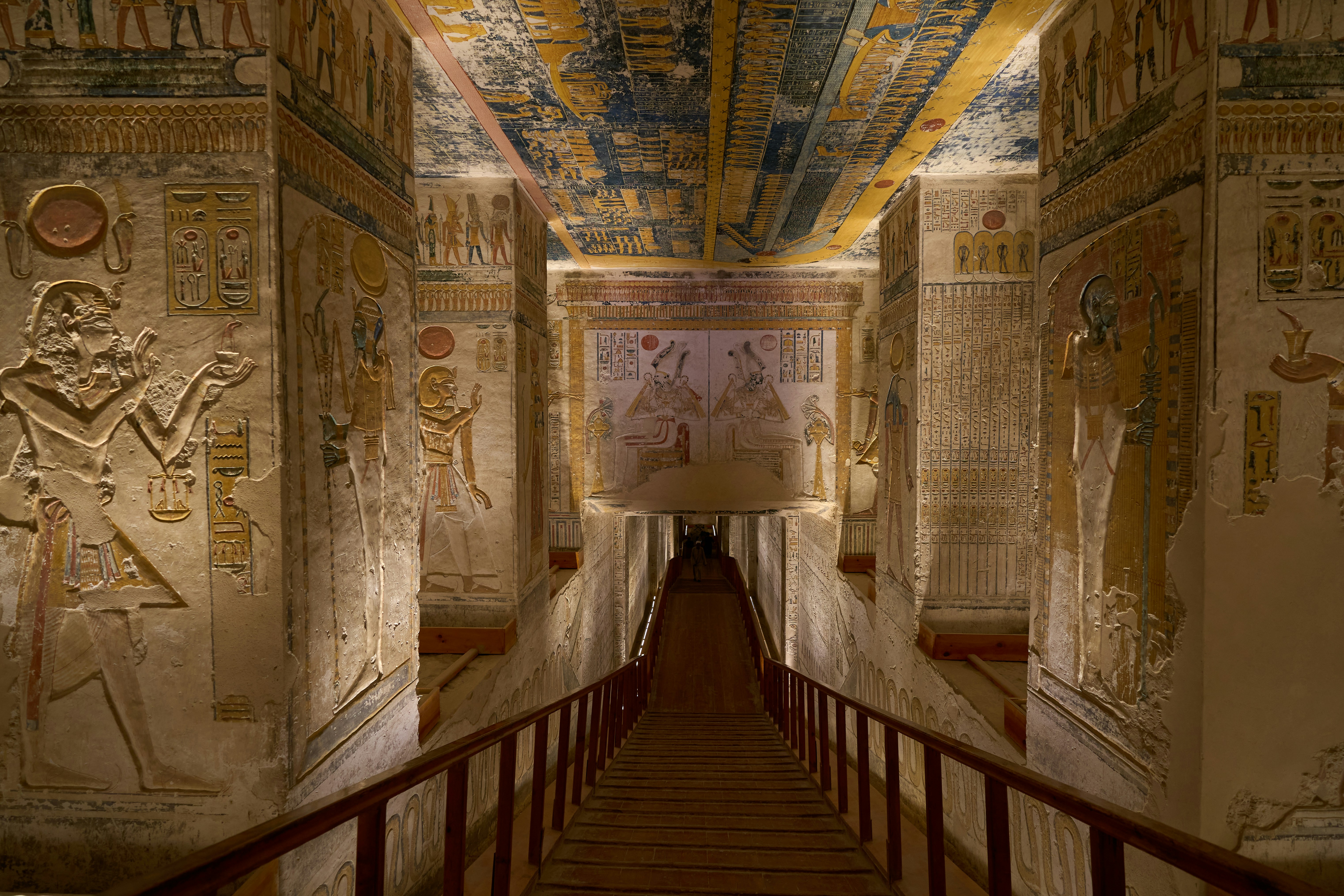
This is the one with the famous colossal statues. Inside, you’ll find halls supported by pillars carved into figures of Osiris, the god of the afterlife, representing the pharaoh in his divine form. The walls are covered in detailed bas-reliefs depicting Ramesses II’s greatest military victory – the Battle of Kadesh against the Hittites. It’s a vivid, almost cinematic, portrayal of ancient warfare. The sheer detail in these carvings is astonishing; you can see the chariots, the soldiers, the chaos of battle frozen in time. The temple’s axis is precisely aligned so that twice a year, on February 22nd and October 22nd, the sun’s rays penetrate deep into the sanctuary to illuminate the statues of Ramesses II, Ptah, Amun-Re, and Re-Horakhty. This solar alignment is a testament to the advanced astronomical knowledge of the ancient Egyptians.
The Temple of Nefertari
Just a short walk away, the Temple of Nefertari is a jewel. While smaller, it's incredibly well-preserved and radiates an intimate beauty. The six statues in its facade are of Ramesses II and Nefertari, the queen appearing as beautiful as the pharaoh himself. Inside, the reliefs celebrate Nefertari’s beauty and her divine connections, often depicting her dancing or making offerings. It’s a beautiful glimpse into the royal couple’s relationship and Nefertari’s prominence. The presence of Hathor, the goddess of love, beauty, music, and motherhood, further emphasizes the temple’s dedication to love and devotion.
────────────────The Astonishing Engineering Feat: Saving Abu Simbel
The story of Abu Simbel’s relocation is as dramatic as the temples themselves. When the Aswan High Dam was built in the 1960s, it created Lake Nasser, which threatened to submerge these invaluable monuments. It was a race against time. An international campaign, led by UNESCO, was launched to save them.
Over 1,000 workers, engineers, and archaeologists from dozens of countries worked for four years. They meticulously cut the temples into over 1,000 blocks, each weighing up to 20 tons. These blocks were then transported to a new, higher location, about 65 meters above the original site and 200 meters inland. The temples were then reassembled, with painstaking attention to detail, ensuring the original orientation and solar alignments were preserved as much as possible. It was a monumental undertaking, costing over $40 million at the time, and it’s a story of global heritage preservation that deserves to be told.
I often tell my guests to take a moment and just appreciate this feat. It’s a reminder that history isn’t just about the past; it’s also about how we, in the present, choose to protect and cherish it for the future. It’s a story of human ingenuity and collective will that makes the experience even more profound.
────────────────Planning Your Abu Simbel Tour: Practical Tips from a Local Friend
Getting to Abu Simbel is an adventure in itself. For most travelers, especially those focused on Egypt history tours and wanting a comprehensive experience, it’s typically done as a day trip from Aswan. This is where knowing the options makes a big difference.
How to Get There from Aswan
There are a few ways to make the journey, and the best choice depends on your pace and desire for comfort. I always recommend options that prioritize a smooth, enjoyable experience.
- By Air: This is the fastest and most comfortable option. There are daily flights from Aswan to Abu Simbel, usually operated by EgyptAir. The flight is short, about 45 minutes. This allows you to maximize your time at the temples and return to Aswan the same day, often with time for other activities.
- By Private Car/Van: For a more flexible and comfortable overland journey, a private car or van is ideal. The drive takes about 3 to 4 hours each way, depending on road conditions and any stops you might make. This is a great option if you enjoy seeing the Nubian landscape unfold. You can arrange stops, take photos, and travel at your own pace. This is a service Bodda Tours excels at providing.
- By Bus (Shared Tour): Many tour operators offer shared bus tours. While this is a more budget-friendly option, it means you’ll be on a fixed schedule with other travelers. You’ll likely have less flexibility for photos or lingering at certain spots. The journey is similar in duration to a private car.
- By Nile Cruise: Some longer Nile cruises between Luxor and Aswan will include a stop at Abu Simbel. This is part of a larger itinerary and offers a very relaxed way to see the temples as part of a grander journey.
Best Time to Visit Abu Simbel
The weather in southern Egypt can be intensely hot, especially during the summer months. For the most comfortable experience, I always suggest aiming for the cooler seasons:
- October to April is generally the best time to visit. The temperatures are more pleasant, making exploration enjoyable.
- May to September can be extremely hot, with temperatures often soaring above 40°C (104°F). If you must travel during these months, start your visit as early in the morning as possible.
The early morning is also when the sun starts to illuminate the temples, creating a magical atmosphere, and it’s often less crowded than later in the day.
What to Wear
Comfort is key, but so is respect. Given the religious and historical significance of the site, modest dress is appreciated. Think light, breathable fabrics like cotton or linen. A hat, sunglasses, and sunscreen are essential, as there is very little shade at the site itself. Comfortable walking shoes are a must, as you’ll be doing a fair amount of walking.
If you’re visiting during the holy month of Ramadan, be mindful that some services might operate on a reduced schedule, and it’s respectful to avoid eating or drinking publicly during fasting hours in more populated areas.
Is Abu Simbel Worth Visiting?
Absolutely, yes! It's not just a UNESCO World Heritage site; it's one of the most iconic and awe-inspiring places in Egypt. The sheer scale, the historical significance, the engineering marvel of its relocation, and the breathtaking beauty make it a truly unforgettable experience. For anyone interested in ancient Egyptian history, monumental architecture, or simply experiencing the grandeur of the pharaohs, Abu Simbel is a must-see. It’s a journey south that rewards you tenfold.
────────────────Why Choose Bodda Tours for Your Egypt Adventure?
Planning a trip to Egypt can feel overwhelming, especially when you want to see places like Abu Simbel, the pyramids, or explore the serene Siwa Oasis. You want an experience that’s smooth, authentic, and memorable, without any of the stress or potential pitfalls of less reputable operators. This is exactly why I started Bodda Tours.
I’m Bodda, and I’ve been helping travelers discover the real Egypt for years. I’m not a faceless company; I’m a local friend who knows this country inside and out. We offer private Egypt tours designed for travelers who want genuine experiences, not just ticking off a checklist.
- 100% Private Tours: Forget crowded buses and fixed schedules. With Bodda Tours, it’s just you, your companions, and our expert team. We tailor every aspect of your journey to your interests and pace. Whether it’s a Siwa Oasis tour, a Fayoum tour, or an exploration of Luxor and Aswan, your experience is exclusively yours.
- Comfort-Focused Travel: We provide private, modern vehicles with air conditioning for all our tours, including door-to-door service. From airport pickup to hotel drop-off, your comfort is our priority.
- No Scams, No Tricks: This is crucial. I’ve seen too many travelers get caught out by misleading tours. We work only with verified guides and sites, ensuring transparency and honesty. You won't find any hidden fees or unexpected charges with us.
- No Tuktuk Fake Safaris in Siwa: This is a specific scam I want to highlight. In Siwa Oasis, some operators try to pass off uncomfortable and unsafe tuktuk rides as 'safaris.' Bodda Tours *only* uses professional drivers with real 4x4 jeeps for desert adventures, ensuring safety and an authentic experience.
- Direct Booking, Direct Service: Bodda Tours is run by real Egyptians who genuinely care about sharing our culture and history. We are not a middleman or a reseller. You book directly with us, meaning you get direct service and support from people who are invested in your trip.
- Korean-Speaking Guides: For our Korean travelers, we offer the incredible advantage of Korean-speaking local guides. This means clear communication, no language barriers, and a deeper connection to the history and culture, allowing you to ask questions and truly immerse yourself.
- Custom Itineraries: Love photography? Interested in local food? Want to spend more time shopping? We build tours around *you*. Let us know your passions, and we’ll craft an itinerary that fulfills them, whether it’s exploring the Valley of the Kings tour or an off-the-beaten-path Egypt desert safari tour.
- Real Traveler Reviews: Don't just take my word for it. We’re happy to share recent guest reviews so you can see the authentic experiences others have had with us.
- We Make It Right: If anything unexpected happens or a delay occurs, we are committed to making it right for you, often providing compensation to ensure your trip remains positive.
When you book with Bodda Tours, you’re not just booking a tour; you’re gaining a local friend dedicated to making your journey through Egypt as incredible as it can be. We handle the logistics so you can focus on the wonder.
��───────────────Nearby Attractions & Further Exploration
While Abu Simbel is a highlight, your journey in southern Egypt can be so much richer. If you're basing yourself in Aswan, there are incredible sites waiting for you:
- Philae Temple: A stunning temple complex dedicated to the goddess Isis, it was also painstakingly relocated to Agilkia Island. It's reached by a short boat ride and is incredibly picturesque, especially at sunset. It offers a different, more serene vibe than Abu Simbel.
- Aswan High Dam: An engineering marvel in its own right, it’s worth seeing to understand the scale of modern Egyptian development and its impact on the Nile.
- Nubian Villages: A short boat trip from Aswan can take you to vibrant Nubian villages. You can experience their unique culture, see their colorful houses, and even visit a local school. It’s a beautiful cultural immersion.
- Elephantine Island & Kitchener's Island: Explore ancient ruins on Elephantine Island and enjoy the botanical gardens on Kitchener's Island.
- Aswan Botanical Garden: A tranquil escape with a diverse collection of plants from around the world.
Many of these sites can be seamlessly integrated into a comprehensive private Egypt tour package that might also include Luxor’s famous temples and tombs. If you’re dreaming of a desert adventure, Bodda Tours also offers incredible Siwa Oasis private tour packages and Fayoum Oasis tours, showcasing Egypt’s diverse beauty beyond the Nile Valley. We can also arrange custom itineraries that combine the wonders of the south with the magic of Cairo and Giza, or the stark beauty of the Western Desert.
The Allure of Abu Simbel in Context
Abu Simbel is more than just a tourist destination; it's a symbol of ancient Egyptian power, religious devotion, and the enduring legacy of its greatest pharaoh. Ramesses II, often hailed as Ramesses the Great, reigned for an impressive 66 years during the New Kingdom, a period of immense prosperity and military might for Egypt. His reign saw the construction of more temples and monuments than any other pharaoh in Egyptian history, and Abu Simbel stands as perhaps his most audacious and personal statement.
The temple’s placement was not accidental. It was strategically positioned on the Nubian frontier, serving as a powerful symbol of Egyptian dominance over the region. The colossal statues, particularly the seated figures of Ramesses II, project an image of absolute authority and divine connection. The king is depicted as a god-king, a ruler chosen by the divine to govern and protect Egypt. The reliefs inside, particularly those detailing the Battle of Kadesh (circa 1274 BCE), were not just historical records but carefully crafted propaganda designed to elevate Ramesses II to legendary status, portraying him as a heroic warrior who single-handedly defeated the Hittite army. This battle, though historically a tactical draw, was spun by Ramesses into a monumental victory in his inscriptions across Egypt, solidifying his image as a formidable leader.
The smaller temple, dedicated to Nefertari, is equally significant. Nefertari was Ramesses II’s principal wife and is renowned for her beauty and intelligence. The temple’s facade, featuring statues of both Ramesses and Nefertari, highlights her elevated status within the royal family and her divine associations with the goddess Hathor, the patron of love, beauty, and motherhood. This is a rare instance where a queen receives such prominent depiction alongside the pharaoh in a rock-cut temple, underscoring her profound influence and the deep affection Ramesses held for her.
The relocation project, initiated by UNESCO in 1960, was a monumental undertaking born out of necessity. The construction of the Aswan High Dam led to the flooding of vast areas along the Nile, including the original site of Abu Simbel. The decision to move the temples was a global effort, a testament to the world’s recognition of their immense cultural and historical value. Over 250,000 blocks of stone, weighing an average of 20 tons each, were carefully cut, transported, and reassembled over four years. This incredible feat of modern engineering, under the direction of figures like the Swedish firm Ångström and the Egyptian Ministry of Culture, ensured that these magnificent monuments would not be lost to the waters of Lake Nasser, a testament to humanity's commitment to preserving its heritage for future generations.
For travelers seeking to understand the sheer ambition and artistic prowess of the New Kingdom, Abu Simbel offers an unparalleled window. It allows us to connect with a period when Egypt was at its zenith, projecting its power and culture across the ancient world. It���s a place that inspires awe and deep reflection on the achievements of one of history’s most celebrated pharaohs.
The Significance of the Solar Alignment
One of the most captivating aspects of the Great Temple of Ramesses II is its precise astronomical alignment. Twice a year, on February 22nd and October 22nd, the rising sun’s rays penetrate the temple’s dark interior, illuminating the statues of Ramesses II, Amun-Re, and Re-Horakhty in the inner sanctuary. The statue of Ptah, the god of darkness, remains in shadow, a symbolic representation of his connection to the underworld. This phenomenon, known as the solar alignment, was not accidental; it was a deliberate design by the ancient Egyptian architects and priests.
This alignment served multiple purposes. It likely coincided with significant dates in the royal calendar, possibly related to Ramesses II’s coronation anniversary and his birthday. It also reinforced the pharaoh’s divine connection, aligning him with the sun god Ra, the supreme deity of the Egyptian pantheon during the New Kingdom. The event was a profound religious and political statement, demonstrating the pharaoh’s power and his intimate relationship with the gods. For modern visitors, witnessing this solar spectacle is an unforgettable experience, offering a tangible link to the ancient Egyptians’ understanding of astronomy and their complex religious beliefs. While it requires careful planning to be present on these specific days, the anticipation and the eventual illumination are deeply moving.
The Nubian Context
It’s important to remember that Abu Simbel is located in Nubia, a region south of the first cataract of the Nile, which has its own rich and ancient history. For millennia, Nubia was a crucial neighbor and sometimes a part of Egypt, known for its gold, exotic goods, and skilled warriors. During the New Kingdom, Egypt exerted significant control over Nubia, building temples like Abu Simbel to assert its authority and integrate the region into its cultural and religious sphere. However, Nubia also had periods of strong independence, even ruling Egypt as the 25th Dynasty (the Kushite or Nubian Dynasty).
The relocation of Abu Simbel also impacted the local Nubian population, who were displaced from their ancestral lands. The modern Nubian villages near Aswan offer a glimpse into the enduring culture and traditions of these resilient people, whose history is intrinsically linked to the Nile and the lands of Nubia.
When you visit Abu Simbel, you are not just seeing a pharaonic monument; you are also engaging with the complex interplay between Egyptian and Nubian civilizations, a relationship that has shaped this region for thousands of years. Understanding this context adds a deeper layer of appreciation to the grandeur of Ramesses II’s temples.
The Experience of Visiting Abu Simbel
The journey to Abu Simbel, whether by air or road, builds anticipation. As you approach, the sheer scale of the temples carved into the desert cliffs begins to dawn on you. Walking up to the entrance, you can’t help but feel a sense of wonder. The detailed carvings, the imposing statues, and the vastness of the site are overwhelming in the best possible way.
Inside the temples, the air is cooler, and the hieroglyphs and reliefs tell stories of gods, kings, and battles. It’s an immersive experience, especially when you have a knowledgeable guide who can bring these ancient narratives to life. The smaller temple of Nefertari offers a more intimate, almost romantic, perspective on royal life. The entire experience is a journey back in time, a chance to stand in the presence of one of history's most powerful rulers and his beloved queen.
After exploring the temples, taking a moment to simply sit and absorb the atmosphere is highly recommended. The vast desert landscape surrounding the temples, the shimmering waters of Lake Nasser, and the imposing silhouettes of the monuments create a scene of profound beauty and tranquility. It’s a place that encourages contemplation and leaves a lasting impression.
Ready to Explore Abu Simbel and Beyond? Contact Bodda Tours Today
Whether you dream of standing before the colossal statues of Abu Simbel, exploring the mysteries of the Pyramids, or finding serenity in the Siwa Oasis, Bodda Tours is here to make your Egyptian adventure a reality. I, Bodda, and my team are dedicated to providing you with an authentic, comfortable, and unforgettable private tour experience. We operate daily from 07:00 to 22:00, ready to assist you.
- WhatsApp: wa.me/201040541153
- KakaoTalk: open.kakao.com/o/smU92Hfi
- Email: info@boddatours.me
- Website: boddatours.me
Sources & References
- Egyptian Ministry of Tourism and Antiquities. (Official Website).
- UNESCO World Heritage Centre. (Abu Simbel Temples Entry).
- Wilkinson, R. H. (2011). *The Complete Gods and Goddesses of Ancient Egypt*. Thames & Hudson.
- UNESCO World Heritage Centre - Abu Simbel Temples